When do Great Danes Stop Growing ( All you need to know)
Contents
- Height and Weight of Great Danes
- Great Dane Height
- Great Dane Weight
- What is the Average Size of a Great Dane?
- Great Dane Growth Chart
- How is the Great Dane's Height Measured?
- Great Dane Growth According to Months
- Stage 1: Newborn to 2 Months
- Stage 2: 2 to 5 Months
- Stage 3: 5 to 8 Months
- Stage 4: Adult
- What Should I do if my Great Dane is Too Small?
- Is Neutering/Spaying my Great Dane going to Affect his Growth?
- Which Factors Affect the Growth of the Great Dane?
- Genetics
- Feeding
- Neutering
- Common Great Dane Health Issues
- Great Dane Growth Spurt Symptoms
- Five tips for Steady and Healthy Growth of Great Dane
- High-Quality Kibble
- Make Sure your Puppy likes the kibble
- Avoid Over-Exercising
- Ensure that He Gets Enough Rest
- Maintain a Regular Check-up Schedule
- FREQUENTLY ASKED QUESTIONS
- What is the Size of a Two-Month-old Great Dane?
- How many Growth Spurts do a Great Dane Have?
- How long does a Great Dane live?
- What is the Pregnancy Period for Great Danes?
- How Many Puppies do Great Dane Have?
- Wrapping up
- Sources
Great Danes are one of the tallest dog breeds, and they get big while they are still puppies. As an owner, you probably wonder when your Great Dane will stop growing.
Typically, they stop growing at 18 to 24 months. Most reach close to their full height around 18 months, then keep adding muscle and weight until about 2 years. This article covers Great Dane height, weight, health and exercise.
Height and Weight of Great Danes
The American Kennel Club (AKC) breed standard is the best reference for adult size. Here is what to expect at full growth:
Great Dane Height
Some Great Danes reach their full height by 12 months, but most take about 18 months.
Great Dane Weight
Weight takes longer. Even after a Dane reaches full height, he keeps filling out, and some continue gaining muscle into their second year.
Puppies grow at different rates, and that is usually fine. If your Dane seems far behind or stops growing, ask your vet to check him.
What is the Average Size of a Great Dane?
The AKC standard sets a minimum height at the shoulder and prefers taller dogs, as long as they are well proportioned. AKC gives adult weights of up to about 175 pounds for males and 140 pounds for females.
The Average size of a Male Great Dane is:
- Height: at least 30 inches, preferably 32 inches or more
- Weight: up to about 175 pounds
The Average size of a Female Great Dane is:
- Height: at least 28 inches, preferably 30 inches or more
- Weight: up to about 140 pounds
Great Dane Growth Chart
These ranges are rough averages, not a standard. Ask your vet to assess your puppy's body condition rather than chasing a number on a chart.
| Age | Weight | Height |
| Birth | 1 to 2 lbs | N/A |
| 1 Week | 2 to 3 lbs | N/A |
| 2 Weeks | 3 to 5 lbs | N/A |
| 3 Weeks | 4 to 7 lbs | N/A |
| 4 Weeks | 5 to 8 lbs | N/A |
| 6 Weeks | 10 to 20 lbs | N/A |
| 2 Months | 18 to 26 lbs | 13 to 18 Inches |
| 3 Months | 30 to 45 lbs | 17 to 23 Inches |
| 4 Months | 45 to 65 lbs | 21 to 26 Inches |
| 5 Months | 60 to 85 lbs | 23 to 30 Inches |
| 6 Months | 70 to 105 lbs | 26 to 33 Inches |
| 7 Months | 75 to 110 lbs | 27 to 34 Inches |
| 8 Months | 80 to 120 lbs | 27 to 35 Inches |
| 9 Months | 85 to 125 lbs | 28 to 35 Inches |
| 1 Year | 90 to 140 lbs | 29 to 36 Inches |
| Full Grown Male | up to about 175 lbs | 30 to 32+ Inches |
| Full Grown Female | up to about 140 lbs | 28 to 30+ Inches |
Want Best Nutrition For your Great Danes? Checkout These Articles:
- Ultimate 6 Best Wet Dog Food For Great Danes In 2022
- 8 Best Dog Food For Great Danes With Skin Allergies In 2022
- Ultimate 10 Best Dry Dog Food For Great Danes In 2022
- The Ultimate Secrets To FEED A GREAT DANE PUPPY In 2022
- What Causes & Treatment Of Knuckling In Great Dane Puppy
How is the Great Dane's Height Measured?
Dogs are measured at the withers, the highest point of the shoulder blades, not at the head or ears. Weight is the easier number to track at home, but height is simple to check too.
Stand your Dane next to a wall on a level floor. Give him a treat to keep him still, and lay a flat object across the top of his shoulder blades to the wall.
Mark the spot, then measure from the floor to the mark.
Great Dane Growth According to Months
Every stage of your puppy's development comes with certain expectations:
Stage 1: Newborn to 2 Months
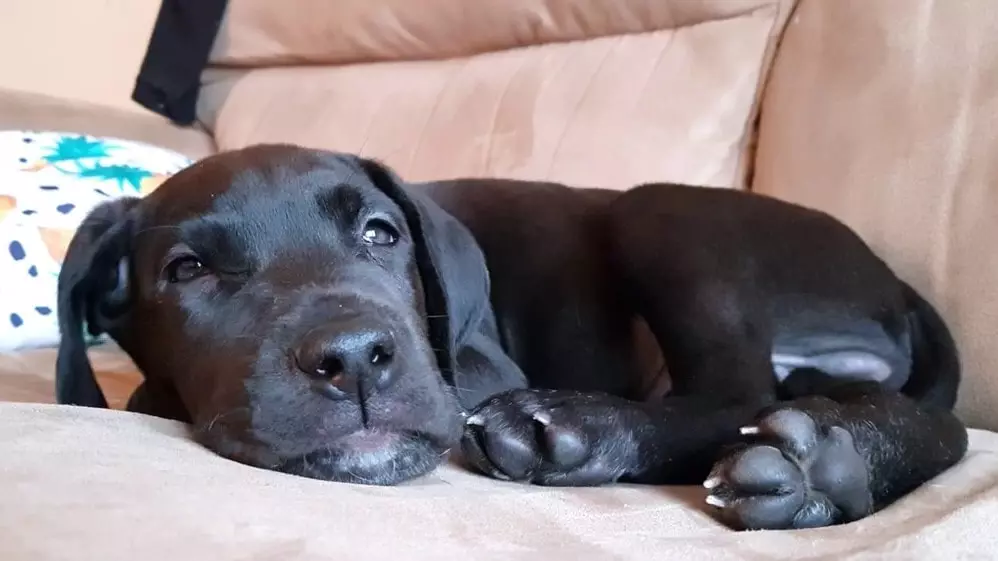
Newborn Great Danes weigh only a pound or two. By 2 months, many weigh roughly 18 to 26 pounds and stand 13 to 18 inches tall. They are all ears and paws at this age.
Stage 2: 2 to 5 Months
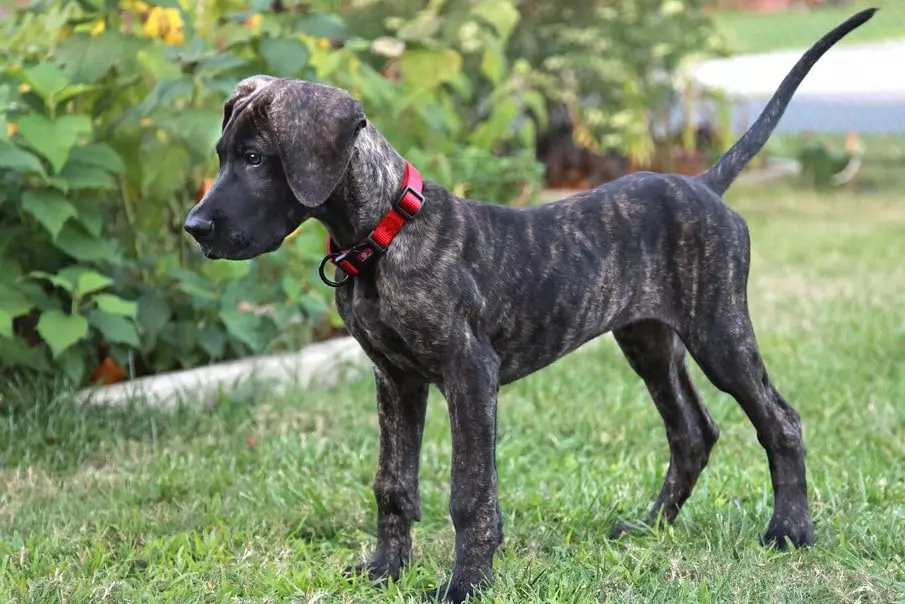
This is the fastest growth period. By 5 months, many Danes weigh roughly 60 to 85 pounds and stand 23 to 30 inches tall.
Stage 3: 5 to 8 Months
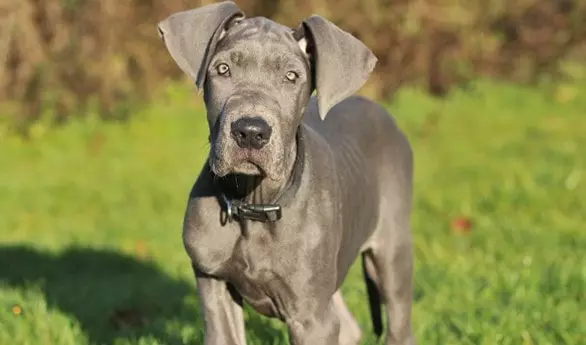
Growth is still fast, but your Dane is far from finished. By 8 months, many weigh roughly 80 to 120 pounds and stand 27 to 35 inches tall.
Stage 4: Adult
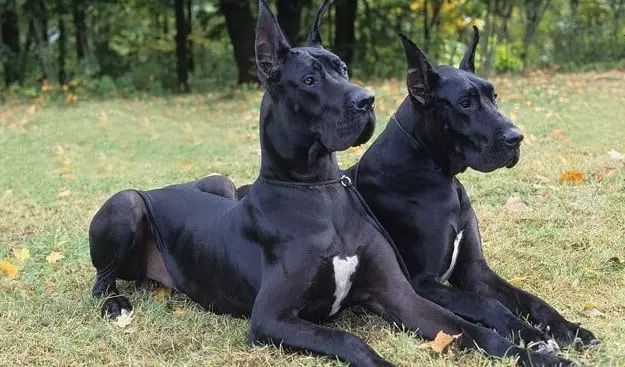
Most Danes reach close to adult height around 18 months and finish filling out around 2 years. Adult males stand at least 30 inches and females at least 28 inches under the breed standard.
What Should I do if my Great Dane is Too Small?
If your Great Dane seems small, don't panic, but do ask your veterinarian to check for health problems. Height is mostly set by genetics, so ask the breeder about the parents' size.
Feeding more will not make a Dane taller, and it can harm his joints. If he is healthy and simply on the smaller side, there is nothing you need to do.
Is Neutering/Spaying my Great Dane going to Affect his Growth?
Yes, timing can matter. Sex hormones help close the growth plates, so spaying or neutering before growth is finished can let the long bones grow longer, and some studies link early surgery in large breeds to joint problems.
Many vets now suggest waiting until a giant-breed dog has finished growing. Ask your vet about the best timing for your Dane, including whether to spay a female before or after her first heat.
Spaying and neutering prevent unwanted litters and some reproductive diseases. They are routine surgeries but still carry anesthesia and recovery risks, so follow your vet's aftercare instructions.
Cornell notes that a preventive gastropexy, which lowers the risk of a twisted stomach, is often done at the same time as a spay or neuter in at-risk breeds like the Great Dane.
Which Factors Affect the Growth of the Great Dane?
A Great Dane's height is mostly set by his genes, but diet and exercise affect how healthily he grows. The main factors are:
Genetics
Genetics play the biggest role in your Great Dane's adult height and weight.
Feeding
More food does not mean a bigger, healthier Dane. Overfeeding speeds up growth and raises the risk of bone and joint disease, which AKC says giant-breed puppies are prone to if they grow too quickly.
Ask your vet how much to feed, and use a complete puppy food made for large or giant breeds. Feed at least two meals a day, and note that Cornell lists a raised food bowl as a risk factor for bloat, so ask your vet before using one.
Neutering
Spaying or neutering can affect growth and height. Talk to your vet about timing.
Common Great Dane Health Issues
Great Danes are prone to several serious health issues. Bloat, or gastric dilatation-volvulus, is an emergency in which the stomach fills with gas and can twist, cutting off blood supply.
Cornell lists eating fast, one large meal a day, exercise soon after eating and raised bowls as risk factors. Signs include unproductive retching, drooling, a swollen belly and restlessness. Go to an emergency vet right away if you see them.
Great Danes also have a risk of cardiomyopathy, a heart muscle disease that enlarges the heart. Hip dysplasia, other joint problems and hypothyroidism also occur in the breed. Ask your vet before giving any joint supplement.
Great Dane Growth Spurt Symptoms
Great Danes grow fastest between about 2 and 6 months. They often look lanky during this time, and their muscles fill in later.
Puppies may sleep a lot and seem extra hungry during growth spurts. But limping, lameness, fever, loss of appetite or lethargy are not normal growing pains.
Painful bone conditions such as panosteitis and hypertrophic osteodystrophy can affect fast-growing giant breeds. See your vet if your puppy shows any of these signs.
Never overfeed or over-exercise a growing Dane. Both put pressure on developing joints and bones and raise the risk of orthopedic problems such as hip dysplasia.
Five tips for Steady and Healthy Growth of Great Dane
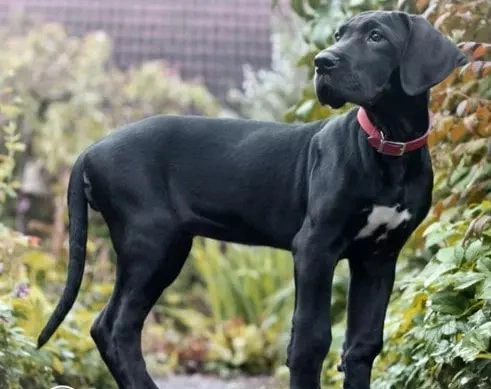
Here are the tips that will help your Great Dane grow up healthy.
High-Quality Kibble
Feed your Great Dane puppy a complete and balanced food made for large or giant breeds. These foods control calories and calcium to support steady growth. We recommend you feed your Great Dane [Purina One Smart Blend Large Breed Puppy Formula](https://www.amazon.com/Purina-Smartblend-Natural-Large-Formula/dp/B0098B7I4S?dchild=1&keywords=puppy giant breed&qid=1604500374&sr=8-2&linkCode=ll1&tag=animal-dome-20&linkId=077770332e5637b431d5ae56bffb1697&language=en_US&ref_=as_li_ss_tl).
Make Sure your Puppy likes the kibble
The best food is one your puppy will eat and digest well. If he refuses it, vomits or has diarrhea, call your vet before switching, and change foods gradually.
Avoid Over-Exercising
Be careful with exercise until your Dane is an adult. AKC advises waiting until a Great Dane is at least 2 years old before running with him regularly, because strenuous exercise can damage developing bones.
Ensure that He Gets Enough Rest
Puppies sleep a lot, and that rest supports growth. Give your puppy a quiet, comfortable place to sleep.
Teach children to let a sleeping puppy rest.
Maintain a Regular Check-up Schedule
Regular vet visits let your vet check growth, body condition and vaccines. Follow the schedule your vet recommends, especially during the first year.
FREQUENTLY ASKED QUESTIONS
What is the Size of a Two-Month-old Great Dane?
A two-month-old Dane is often around 13 to 18 inches tall and 18 to 26 lbs. These numbers are approximate because puppies vary.
How many Growth Spurts do a Great Dane Have?
Great Danes grow fastest between about 2 and 6 months, then keep growing more slowly until about 18 months.
How long does a Great Dane live?
AKC says most Great Danes live between 7 and 10 years.
What is the Pregnancy Period for Great Danes?
Dog pregnancy lasts about 63 days. Your vet can confirm the pregnancy and help you plan for the birth.
How Many Puppies do Great Dane Have?
Great Dane litters are often large, but litter size varies widely. Your vet can estimate the number of puppies with an X-ray late in pregnancy.
Wrapping up
Great Danes grow very big in very little time. Most stop growing taller around 18 months and finish filling out around 2 years.
Feed a giant-breed puppy food, limit hard exercise and see your vet regularly to keep growth on track.
Checkout Our These Guides:
- 5 Steps About Caring For A Great Dane Puppy
- What To Feed A Great Dane Puppies | Complete Guide In 2022
- How Much Does Great Dane Weigh | Growth & Lifespan Chart In 2022
- 11 SECRETS ABOUT DIFFERENCE BETWEEN EUROPEAN AND AMERICAN GREAT DANE
- How Much To Feed A Great Dane Puppy | Growth Chart
Sources
- Official Standard of the Great Dane, American Kennel Club
- Great Dane Life Span & Health Issues, American Kennel Club
- Facts About the Great Dane That You May Not Know, American Kennel Club
- Gastric dilatation volvulus (GDV) or "bloat", Cornell University College of Veterinary Medicine