11 Secrets About the Difference Between European and American Great Danes
Contents
- Basics Difference Between European and American Great Dane
- Who is Responsible For the Variations of European and American Great Dane?
- Breeders
- Dog Owners
- Breed Clubs
- Government
- Dog Shows and Their Judges
- European Great Dane vs American Great Dane Looks/Appearance
- Size
- Appearance
- Eyes
- Body Shape
- Ears
- Muzzle and Lips
- Coat
- European Great Dane vs American Great Dane Characteristics
- Exercise Needs
- Guard Dog Capabilities
- Temperament
- Training
- Health Issues
- Life Expectancy
- Cost of Puppies
- So, what is the Right Great Dane For your Family?
- Why Should you Own a European Great Dane?
- Why Should you Own an American Great Dane?
- FREQUENTLY ASKED QUESTIONS
- Do European and American Great Dane Bark a Lot?
- Which is the Largest Great Dane Dog Breed?
- What is the Rarest Color of a Great Dane?
- Are Great Dane High Maintenance?
- Do all Great Dane have Webbed Feet?
- Wrapping up
- Sources
Great Danes are admired for their size, elegance and gentle nature, and the AKC standard calls the breed "the Apollo of dogs." But what is the difference between a European and an American Great Dane?
They are the same breed. "European" and "American" describe two looks that breeders select for, shaped by two slightly different breed standards: the FCI standard used in most of Europe and the AKC standard used in the United States.
European-type Danes are usually bred heavier, with more bone, looser lips and a more mastiff-like head. American-type Danes are usually sleeker and tighter-skinned. Individual dogs vary a lot, so use these as general tendencies, not rules.
Basics Difference Between European and American Great Dane
| Key Differences | European Great Dane | American Great Dane |
| Standard | FCI (Deutsche Dogge) | AKC (Great Dane Club of America) |
| Height | Males at least 80 cm (about 31.5 in), females at least 72 cm (about 28.3 in) | Males at least 30 in, preferably 32+; females at least 28 in, preferably 30+ |
| Typical build | Heavier bone, broader head, looser lips | Leaner, tighter lips and skin |
| Ears | Natural, folded | Natural or cropped |
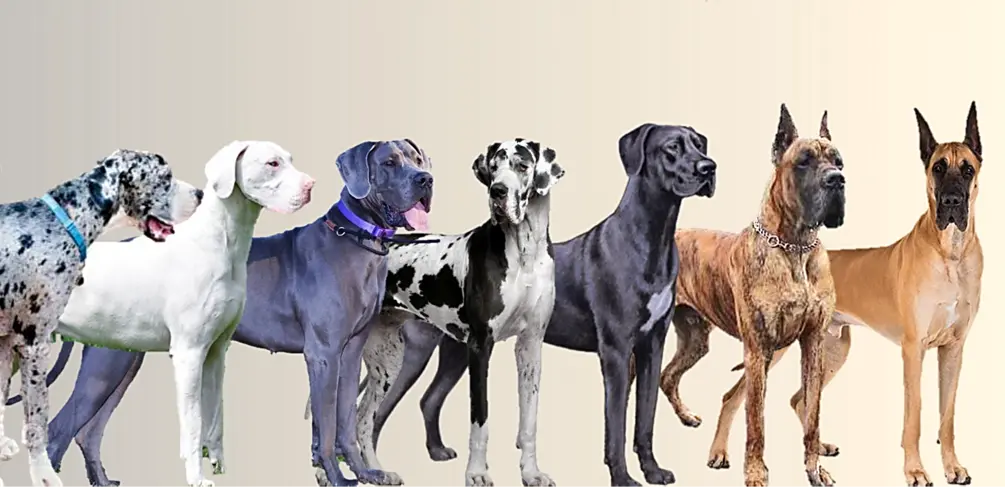
| Colors | Fawn, brindle, harlequin, merle, black, blue | Brindle, fawn, blue, black, harlequin, mantle, merle |
| Coat | Short, thick, glossy | Short, thick, glossy |
| Life Expectancy | 7-10 years for the breed (AKC) | 7-10 years for the breed (AKC) |
Who is Responsible For the Variations of European and American Great Dane?
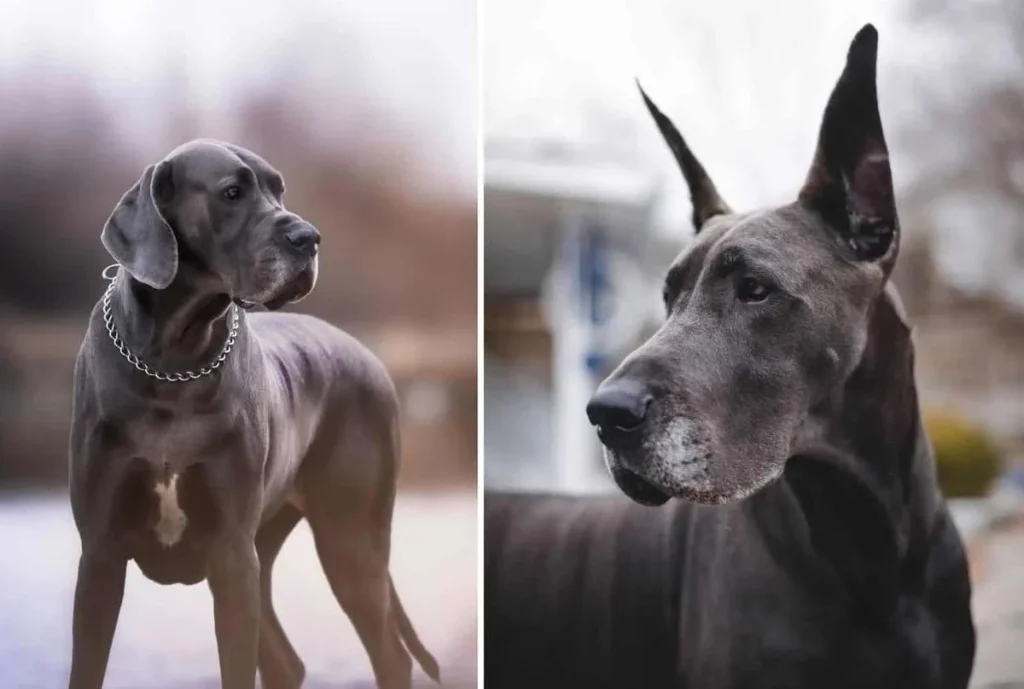
The two types exist because different groups have pulled the breed in slightly different directions.
Breeders
Breeders decide which dogs to pair, so they shape the look of the breed more than anyone. Responsible breeders select for health, temperament and soundness along with appearance.
Dog Owners
Buyers drive demand. When many people want a bigger, heavier or "more mastiff-looking" Dane, some breeders follow that market, whether or not it helps the dogs' health.
Breed Clubs
Breed clubs write and interpret the standards. In the United States, the Great Dane Club of America's standard is the one the AKC uses. In Europe, the FCI publishes the German standard for the breed.
Government
Animal welfare laws differ between countries. That's one reason cropped ears are common in American show Danes but not in Europe, where the FCI standard describes natural ears.
Dog Shows and Their Judges
Judges reward the dogs that best fit their standard. Over time, the dogs that win shape what breeders produce, which is how the two types drifted apart.
Want to know More About Danes Check out Our These Articles
- 5 Steps About Caring For A Great Dane Puppy
- What Causes & Treatment Of Knuckling In Great Dane Puppy
- The Ultimate Secrets To FEED A GREAT DANE PUPPY
- 8 Best Dog Food For Great Danes With Skin Allergies
- 6 Best Wet Dog Food For Great Danes
- 10 Best Dry Dog Food For Great Danes
European Great Dane vs American Great Dane Looks/Appearance
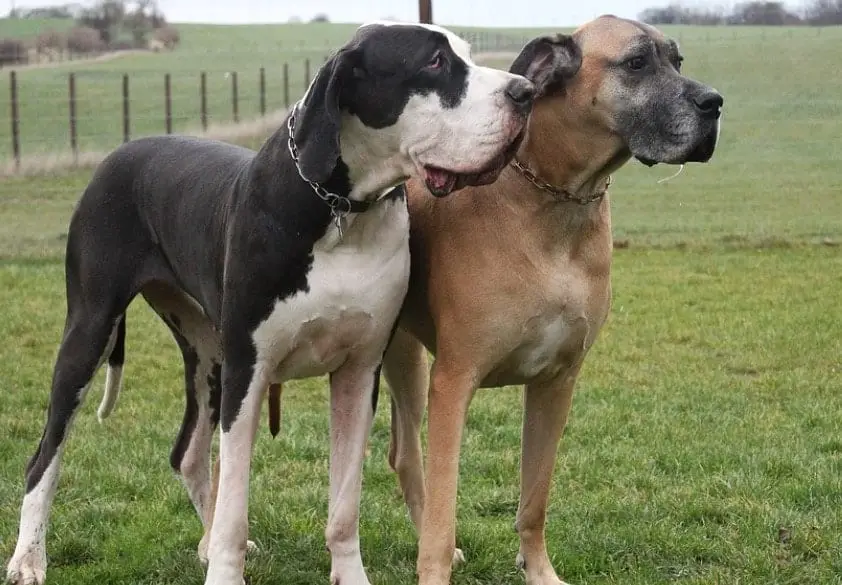
Both types look like Great Danes, but the details differ. European-type Danes tend to have heavier heads and looser lips, while American-type Danes tend to look leaner and more streamlined.
Size
Both are giant dogs. The AKC standard requires males to be at least 30 inches at the shoulder (32 or more preferred) and females at least 28 inches (30 or more preferred).
The FCI standard sets a minimum of 80 cm (about 31.5 inches) for males and 72 cm (about 28.3 inches) for females. Neither standard sets a weight, but the AKC lists 140-175 pounds for males and 110-140 pounds for females.
European-type Danes are often heavier at the same height because they are bred with more bone and muscle. There's no official weight difference between the types.
Appearance
The Great Dane comes from Germany, and the AKC recognized it in 1887. Today's Danes, of either type, are bred to be friendly and dependable companions.
European-type Danes lean toward a heavier, more mastiff-like look. American-type Danes lean toward a lighter, more athletic outline.
Eyes
The AKC standard asks for medium, deep-set, dark eyes with relatively tight lids. In harlequins and merles, blue eyes or two different colored eyes are permitted.
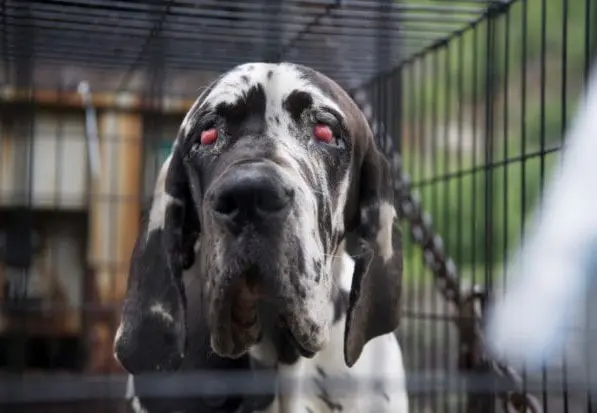
European-type Danes more often have looser skin around the eyes, which can make them look droopy. Loose lower lids can expose the eye and may need a vet's attention.
Body Shape
Both standards call for a square, well-balanced, muscular dog. The AKC standard says a Dane should never look clumsy.
European-type Danes are usually broader in the chest and heavier overall. American-type Danes are usually leaner, with a more refined outline.
Ears
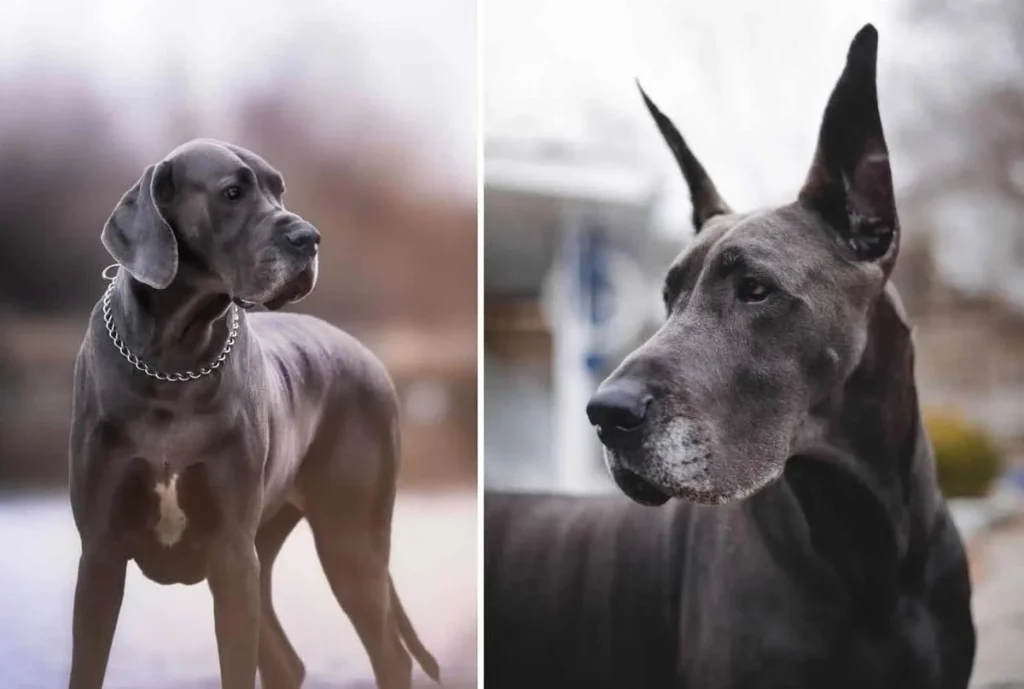
Great Danes are born with naturally folded, floppy ears. The FCI standard describes natural, pendant ears.
The AKC standard allows either cropped or natural ears, so cropping is not required to show a Dane in the United States. Ear cropping is a surgery; if you don't want it, choose a puppy with natural ears and tell your breeder early.
Muzzle and Lips
The AKC standard calls for a deep muzzle and says fluttering (loose) lips are undesirable. European-type Danes often have fuller lips and drool more.
American-type Danes usually have tighter lips. All Great Danes can drool, especially after drinking.
Coat
Both standards call for a short, thick, glossy coat. The difference is in the accepted colors.
The AKC standard accepts brindle, fawn, blue, black, harlequin, mantle and merle. The FCI standard groups colors into three varieties: fawn and brindle; harlequin, merle and black (including the white-with-large-black-patches "Plattenhunde"); and blue.
European Great Dane vs American Great Dane Characteristics
Personality and health come down to the individual dog and its family line more than to "type." Here's what to keep in mind.
Exercise Needs
All Great Danes need daily walks and play, but not intense running while they are growing. Heavier European-type dogs may be content with less activity than lighter, more athletic dogs.
The AKC advises avoiding vigorous exercise around mealtimes because of the breed's bloat risk, and waiting until about 2 years old before jogging or hiking with your Dane.
Guard Dog Capabilities
A Great Dane's size alone deters most intruders. Most Danes alert-bark at strangers but are friendly once they know a visitor is welcome.
Temperament
The AKC standard describes the Great Dane as spirited, courageous, friendly and dependable, and never timid. That applies to both types.
Training
The AKC recommends early socialization and puppy classes, and says obedience training is a must for a dog this large and powerful. Use reward-based training and start while your puppy is still small.
Health Issues
Both types share the breed's health risks. The American College of Veterinary Surgeons notes that deep-chested, large and giant breeds are at higher risk of gastric dilatation-volvulus (bloat), a life-threatening emergency.
The FDA names the Great Dane among the large breeds with a genetic tendency to dilated cardiomyopathy (DCM), a heart disease. The AKC also lists eye disease, hypothyroidism, autoimmune thyroiditis and hip dysplasia among the breed's health issues, and calls bloat the number-one killer of Danes.
Life Expectancy
The AKC gives the breed a life expectancy of 7 to 10 years. There's no reliable evidence that one type lives longer than the other.
Cost of Puppies
Prices vary widely by breeder, region and pedigree. Expect to pay more for puppies from health-tested parents, which is worth it in a breed with serious inherited problems.
So, what is the Right Great Dane For your Family?
Choose the breeder before the "type." Ask for health testing on both parents, meet the dogs if you can, and look for a calm, friendly temperament.
Why Should you Own a European Great Dane?
Choose a European-type Dane if you like a heavier, more mastiff-like look and don't mind more drool. Heavier dogs put more strain on joints, so keep them lean.
Why Should you Own an American Great Dane?
Choose an American-type Dane if you prefer a sleeker, tighter-lipped dog. They are still giant dogs that need space, training and a large food budget.
FREQUENTLY ASKED QUESTIONS
Do European and American Great Dane Bark a Lot?
Great Danes are not known as heavy barkers, though most will bark to alert you. Excess barking is usually about boredom, anxiety or lack of training rather than type.
Which is the Largest Great Dane Dog Breed?
There's only one Great Dane breed. European-type Danes are often heavier, but height depends on the individual dog and its lines, not on color or type.
What is the Rarest Color of a Great Dane?
There's no official "rarest" color. Mostly white Danes are not an accepted color under either standard, and the AKC disqualifies "merlequin," a white dog with only merle patches.
Are Great Dane High Maintenance?
Their short coat is easy to groom, but in other ways they are not low maintenance. They need room, careful growth management as puppies, a large food budget and quick action if bloat signs appear.
Do all Great Dane have Webbed Feet?
Many dogs have some skin between their toes, and Great Danes are no exception. It isn't a defining breed trait.
Wrapping up
European and American Great Danes are the same breed, bred toward two slightly different standards and tastes. The main differences are weight, head and lip type, ears and accepted colors.
Health and temperament depend far more on careful breeding than on type. Pick a responsible breeder, and talk to your vet about bloat and heart health in your Dane.
Sources
- Official Standard of the Great Dane, American Kennel Club
- Great Dane Dog Breed Information, American Kennel Club
- FCI Standard No. 235: Great Dane (Deutsche Dogge), Fédération Cynologique Internationale
- FDA Investigation into Potential Link between Certain Diets and Canine Dilated Cardiomyopathy, U.S. Food and Drug Administration