How much does Great Dane weigh | All you need to know
Contents
- An Overview of a Great Dane
- What is the Average Weight and Height of a Great Dane?
- Great Dane Female Puppy Growth and Weight Chart
- Great Dane Male Puppy Growth and Weight Chart
- When does Great Dane Stop Growing?
- Great Dane puppy Development and Growth
- 0-4 Weeks old Great Dane
- One-Month-old Great Dane
- Two Months old Great Dane
- Three Months old Great Dane
- Four Months old Great Dane
- Five Months old Great Dane
- Six Months old Great Dane
- One-Year-old Great Dane
- Factors that Affect the Weight and Growth of Great Dane
- Neutering
- Feeding
- Genetics
- Best ways to keep your Great Dane Healthy
- Appropriate Exercise
- Manage Stress
- Healthy Diet
- FREQUENTLY ASKED QUESTIONS
- Can Great Dane Grow too Fast?
- What is the Weight of a Healthy Great Dane?
- Should I be Concerned About my Great Dane's Small Size?
- What is the Size of a Full-Grown Great Dane?
- At what Age is a Great Dane Full-Grown?
- Wrapping up
- Sources
The Great Dane's breed standard calls it the "Apollo of dogs." These dogs are tall, gentle giants, and they grow very fast. Tracking your Dane's weight as he grows helps you and your vet know whether he is healthy.
This guide covers Great Dane weight and growth, including a puppy weight chart and what to expect month by month.
An Overview of a Great Dane
The Great Dane is a German breed, also known as the German Mastiff or Deutsche Dogge. AKC says the modern breed was developed in Germany in the 1800s as a boar-hunting dog.
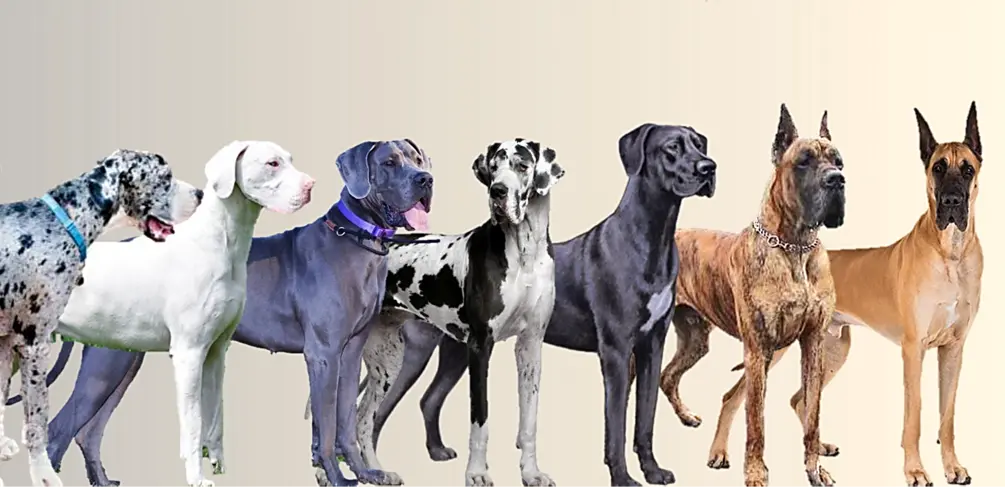
Today they are friendly, dependable family dogs. Some people describe "European" and "American" Great Danes, but these are informal labels for different breeding lines, not separate breeds. Lines bred for a heavier look tend to be bulkier.
What is the Average Weight and Height of a Great Dane?
AKC says males can stand up to about 32 inches at the shoulder and weigh up to about 175 pounds, while females reach up to about 30 inches and 140 pounds. AKC's breed weight chart lists the breed at 110 to 175 pounds.
The breed standard sets minimum heights of 30 inches for males and 28 inches for females. Females are smaller and lighter than males.
Great Dane Female Puppy Growth and Weight Chart
Female puppies usually track at or below the lower half of the ranges in the male chart below. Ask your vet to judge your puppy by body condition, not by a chart alone.
Great Dane Male Puppy Growth and Weight Chart
These are rough averages for male puppies, not a standard. Individual dogs vary a lot.
| Age | Average weight (lbs) | Average weight (kg) |
| Two Months | 20 to 30 LBS | 9 to 14 kg |
| Three Months | 35 to 45 LBS | 16 to 20 kg |
| Four Months | 55 to 65 LBS | 25 to 29 kg |
| Five Months | 70 to 85 LBS | 32 to 39 kg |
| Six Months | 80 to 100 LBS | 36 to 45 kg |
| Seven Months | 90 to 110 LBS | 41 to 50 kg |
| Eight Months | 100 to 120 LBS | 45 to 54 kg |
| Nine Months | 110 to 130 LBS | 50 to 59 kg |
| Ten Months | 115 to 140 LBS | 52 to 64 kg |
| Eleven Months | 120 to 165 LBS | 54 to 75 kg |
| One year | 125 to 175 LBS | 57 to 79 kg |
| Two years | 140 to 175+ LBS | 64 to 79+ kg |
When does Great Dane Stop Growing?
Most Great Danes reach close to full height around 18 months and finish filling out around 2 years. They can keep adding muscle after that.
Want Best Nutrition For your Danes? Check out These Articles:
- Ultimate 10 Best Dry Dog Food For Great Danes In 2022
- Ultimate 6 Best Wet Dog Food For Great Danes In 2022
- 8 Best Dog Food For Great Danes With Skin Allergies In 2022
Great Dane puppy Development and Growth
You want your Great Dane to grow steadily, eat the right amount and get the right kind of exercise. The guide below gives a rough idea of what to expect.
0-4 Weeks old Great Dane
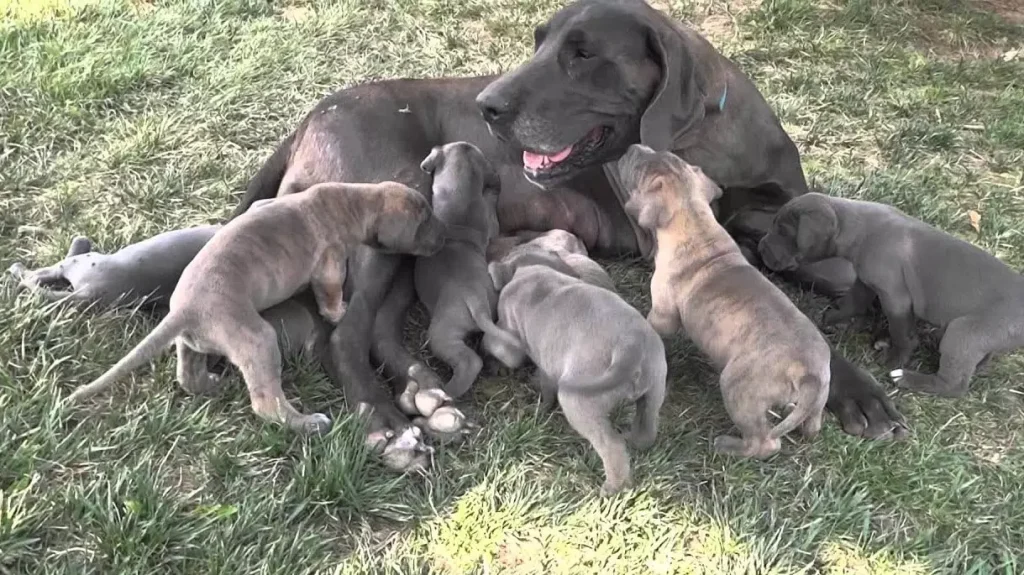
A newborn Great Dane weighs about 1 to 2 pounds. At this age, the puppy mostly sleeps and nurses, and stays close to his mother for food and warmth.
One-Month-old Great Dane
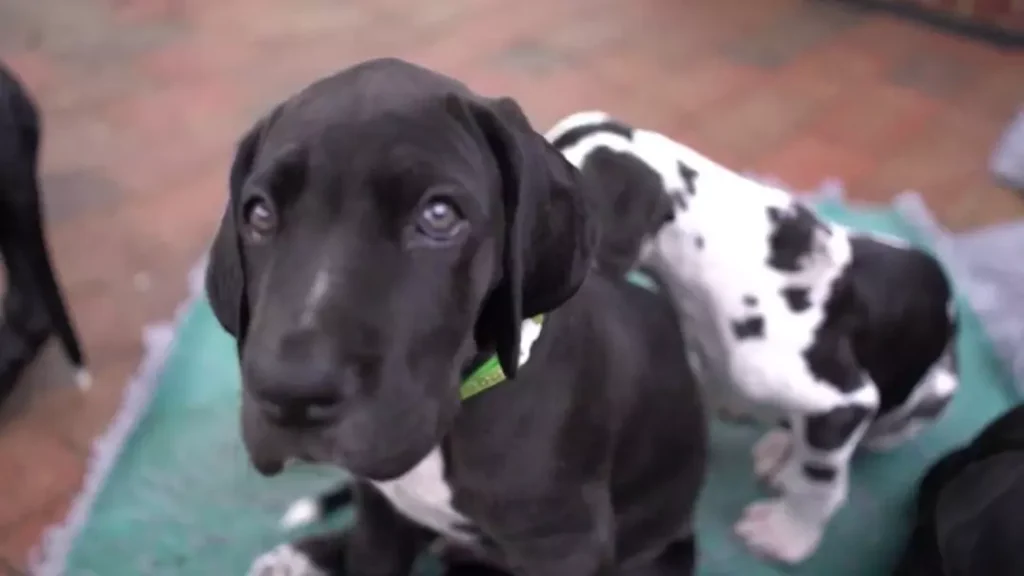
At four weeks, a Great Dane puppy often weighs around 5 to 8 pounds. His eyes and ears are open, and he is starting to explore, play with littermates and try soft food.
Two Months old Great Dane
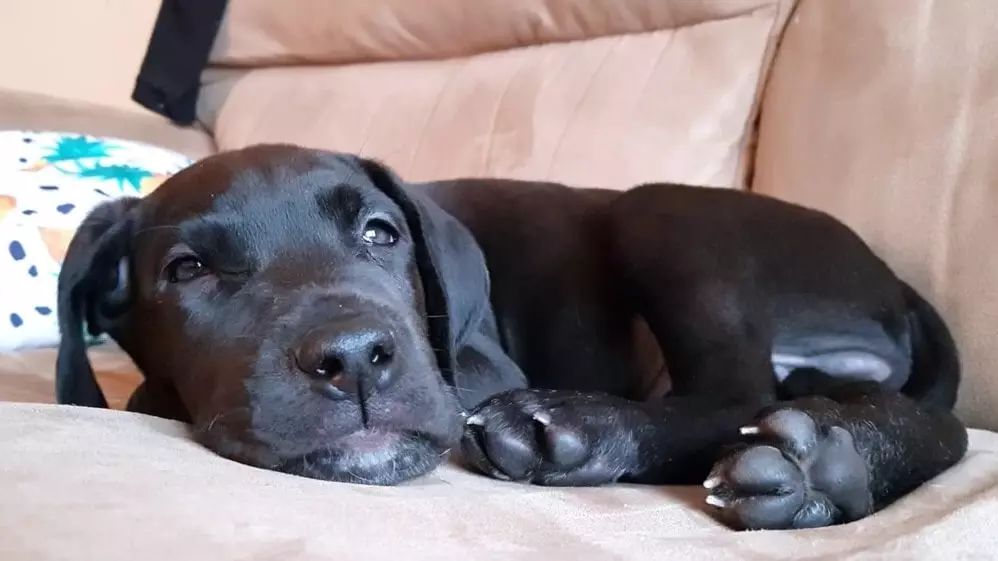
At eight weeks, many Great Dane puppies weigh 15 to 30 pounds. Males often start to look bigger than females.
Three Months old Great Dane
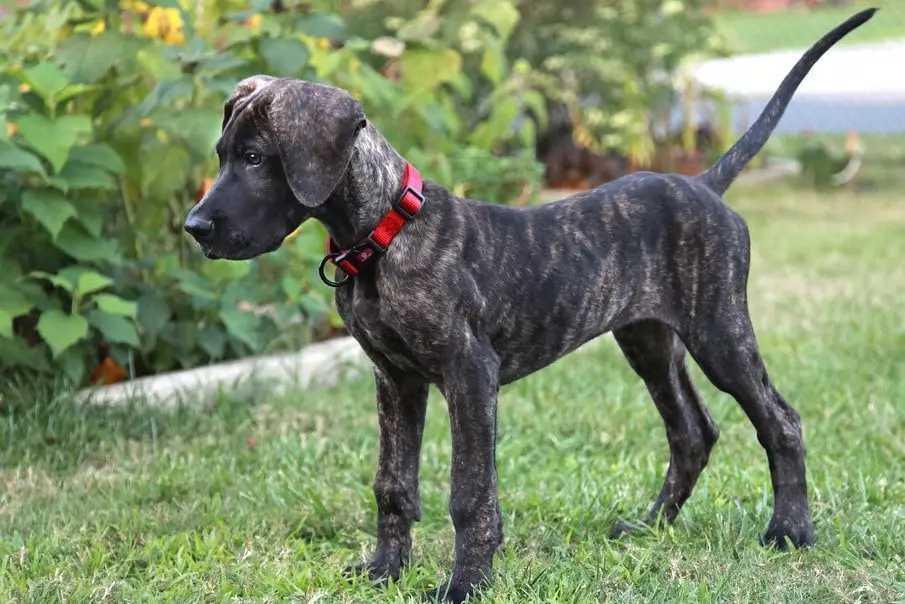
At 12 weeks, many Danes stand around 17 to 23 inches and weigh around 30 to 45 pounds.
Four Months old Great Dane
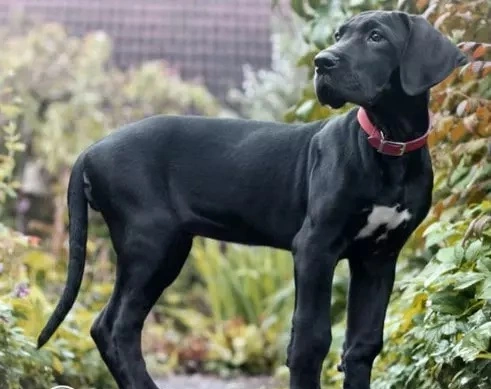
At 16 weeks, your Dane is still a puppy and in a fast-growth period. Many weigh around 45 to 65 pounds.
Puppies may sleep more and eat more during growth spurts. Limping, joint pain, fever, weakness or loss of appetite are not normal, so see your vet if you notice them.
Five Months old Great Dane
At 20 weeks, many Danes weigh around 60 to 85 pounds and stand roughly 23 to 30 inches tall. Females are usually at the lower end.
Six Months old Great Dane
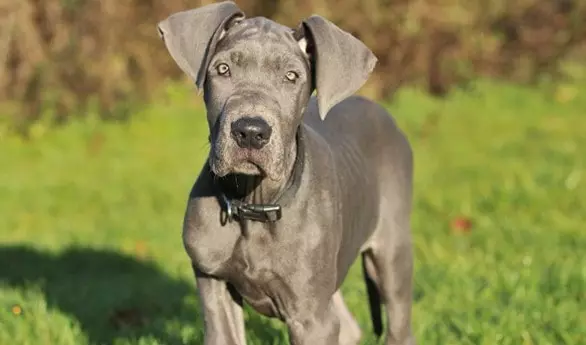
A six-month-old Great Dane often weighs around 65 to 100 pounds and stands 26 to 33 inches. Growth starts to slow, but he will keep growing until about 18 months to 2 years.
One-Year-old Great Dane
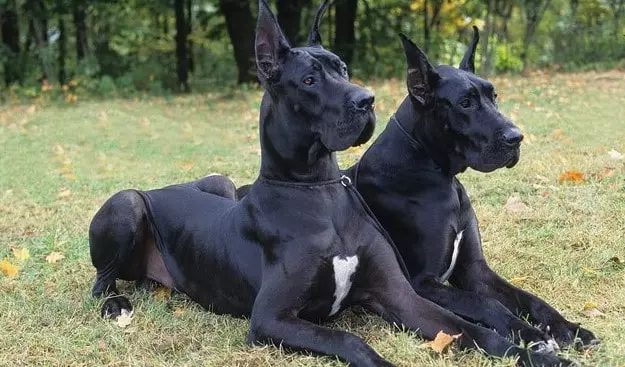
At one year, your Dane is close to his adult height but will keep filling out until about 2 years. He may look lanky for a while, which is normal.
Factors that Affect the Weight and Growth of Great Dane
Genetics set most of your Dane's size, while diet, exercise and health affect how well he grows.
Neutering
Sex hormones help close the growth plates. Neutering or spaying before growth is finished can let the long bones grow longer, and some studies link early surgery in large breeds to joint problems.
Many vets now suggest waiting until a giant-breed dog has finished growing. Ask your vet about the right timing.
Feeding
Overfeeding a growing Great Dane is dangerous. It speeds up growth and adds strain to developing bones and joints, and it can lead to obesity.
Feed a complete and balanced puppy food made for large or giant breeds while your Dane is growing, then switch to an adult food when your vet advises. Keep treats small, and ask your vet how much to feed.
Genetics
Your Great Dane's height is controlled mainly by genetics, so the parents' size is the best predictor. The breed is also prone to inherited bone and joint problems, so ask the breeder about health testing.
Best ways to keep your Great Dane Healthy
Good food, the right amount of exercise and regular vet visits all affect your Dane's health.
Appropriate Exercise
Puppies need daily activity, but AKC advises waiting until a Great Dane is at least 2 years old before running with him regularly, because strenuous exercise can damage developing bones. Avoid jumping off furniture and slippery floors.
Good exercise for a Dane puppy includes short walks and gentle play in the yard. Supervised swimming can be easy on the joints.
Manage Stress
Socialize your puppy gradually with different places, people and other dogs. Puppy classes help him learn good manners.
Healthy Diet
Feed a giant-breed puppy food to support steady, not rapid, growth. Feed at least two meals a day instead of one large meal.
Bloat (gastric dilatation-volvulus) is a deadly emergency, and Great Danes are a high-risk breed. Cornell lists eating fast, one large meal a day and exercise soon after eating as risk factors, so rest your Dane around meals and slow down fast eaters.
Check out Our These Articles:
- The Ultimate Secrets To FEED A GREAT DANE PUPPY In 2022
- What Causes & Treatment Of Knuckling In Great Dane Puppy
- 5 Steps About Caring For A Great Dane Puppy
- 11 SECRETS ABOUT DIFFERENCE BETWEEN EUROPEAN AND AMERICAN GREAT DANE
- What to Feed a Great Dane Puppies | Complete Guide In 2022
FREQUENTLY ASKED QUESTIONS
Can Great Dane Grow too Fast?
Yes. AKC notes that giant-breed puppies need special nutrition so they do not grow too quickly, since excessive growth can lead to musculoskeletal disease. Feed a large- or giant-breed puppy food and avoid overfeeding.
What is the Weight of a Healthy Great Dane?
AKC lists adult Great Danes at about 110 to 175 pounds, with females at the lower end. Most reach their adult weight around 2 years.
Should I be Concerned About my Great Dane's Small Size?
A Dane a little smaller than average is usually fine, because every dog is unique. See your vet if the difference is large or your puppy seems to have stopped growing, since illness can slow growth.
What is the Size of a Full-Grown Great Dane?
Under the AKC standard, males stand at least 30 inches (about 76 cm) at the shoulder and females at least 28 inches (about 71 cm). Many are taller.
At what Age is a Great Dane Full-Grown?
Most Great Danes reach close to full height around 18 months and finish filling out around 2 years.
Wrapping up
Great Danes are gentle giants that grow very fast. Knowing what to expect helps you spot problems early.
Weigh your puppy regularly and take him to the vet for checkups so you can track his growth together.
Sources
- Breed Weight Chart, American Kennel Club
- Facts About the Great Dane That You May Not Know, American Kennel Club
- Official Standard of the Great Dane, American Kennel Club
- Gastric dilatation volvulus (GDV) or "bloat", Cornell University College of Veterinary Medicine