Where Do Feral Cats Go to Die: See Their Final Hideaways
Contents
- Key Takeaways
- Feral Cats’ End-of-Life Behaviors
- Common Locations for Feral Cats’ Demise
- Factors Influencing Feral Cats’ Hiding Behavior
- Human Impact on Feral Cats’ Life and Death
- Frequently Asked Questions
- How do feral cats behave before passing away?
- What signs indicate that a feral cat may be near the end of its life?
- Do feral cats seek out secluded places when nearing death?
- What are the common causes of death in feral cats?
- Sources
Feral cats, unlike their domestic counterparts, face the end of their life in the wild, untethered to human care or homes. As they grow old or fall ill, they often exhibit behaviors rooted in their instincts for survival and desire for safety.
These instincts drive them to seek out places where they are less vulnerable, often leading them away from human dwellings and other animals.
Understanding where these animals go to die is not just a matter of curiosity but also of compassion, shedding light on the natural behaviors of these often misunderstood creatures.
Caretakers often report that sick or old feral cats disappear into secluded spots in their final days. The likely reason is simple: a weak cat hides because hiding keeps it safer from predators and disturbance.
Cats do not go somewhere specific to die. A sick cat seeks a hidden refuge, and if it dies there, its body is rarely found.
Key Takeaways
- Feral cats instinctively seek out secluded areas in their final days.
- Their end-of-life behavior is rooted in an instinct for security and peace.
- Observations suggest they prefer natural, hidden spots away from activity for their final rest.
Feral Cats’ End-of-Life Behaviors
Feral cats nearing the end of their lives usually show the same behaviors as any sick cat. As a feral cat becomes weaker, it often seeks solitude.
You might notice these cats become less visible, as they instinctively look for quiet, secluded places to rest. This behavior is driven by a cat’s desire to remain undisturbed and safe from predators when they are most vulnerable.
These locations vary, but they tend to have a few characteristics in common:
- Sheltered: Protection from the elements is crucial, so they often choose spots with cover.
- Hidden: Off the beaten path spots are sought out to stay out of sight.
- Quiet: Areas with low human or animal activity, to ensure peace.
In urban environments, feral cats might find such places in abandoned buildings or under porches, while in rural settings, dense foliage or underbrush can serve this purpose.
Despite these common behaviors, it’s not accurate to suggest that cats go somewhere specific to die; rather, they are following an instinct to find a protected and quiet space during a vulnerable time.
List of Common End-of-Life Behaviors:
- Withdrawal from others
- Decreased activity
- Lowered food and water consumption
- Seeking out solitary spaces
If you care for a feral colony, these signs mean a cat is sick, not just old. Many sick cats can be treated, so contact a local trap-neuter-return (TNR) group or a vet about trapping the cat humanely for care.
Common Locations for Feral Cats’ Demise

When feral cats near the end of their lives, they instinctively seek out locations that offer privacy and shelter. Their behavior is similar to that of domesticated cats, reflecting a natural tendency to find a solitary and secure place during their final moments.
Quiet and Secluded Areas: Usually, you’ll find that feral cats prefer quiet, secluded spots that are away from the hustle and bustle of human activity.
- Underbrush or thickets
- Abandoned buildings or empty sheds
- Dense foliage or under porches
Sheltered Places: Providing protection from the elements and potential threats, sheltered places are also sought after.
- Inside hollows of trees
- Underneath vehicles
- Hidden corners of alleyways
Urban Vs. Rural: The environment plays a significant role in where a feral cat may end up.
- Urban areas, dense with population, often lead feral cats into precarious situations where shelter is tougher to find.
- In rural settings, feral cats might locate more natural spaces to rest, away from human interference.
Safety Needs: Above all, the chosen location must meet the safety needs of the feral cat, shielding it from predators and human interaction.
It is the cat’s instinctive behavior to hide and avoid showing vulnerability. This often results in feral cats dying in locations that remain undiscovered by people.
Factors Influencing Feral Cats’ Hiding Behavior
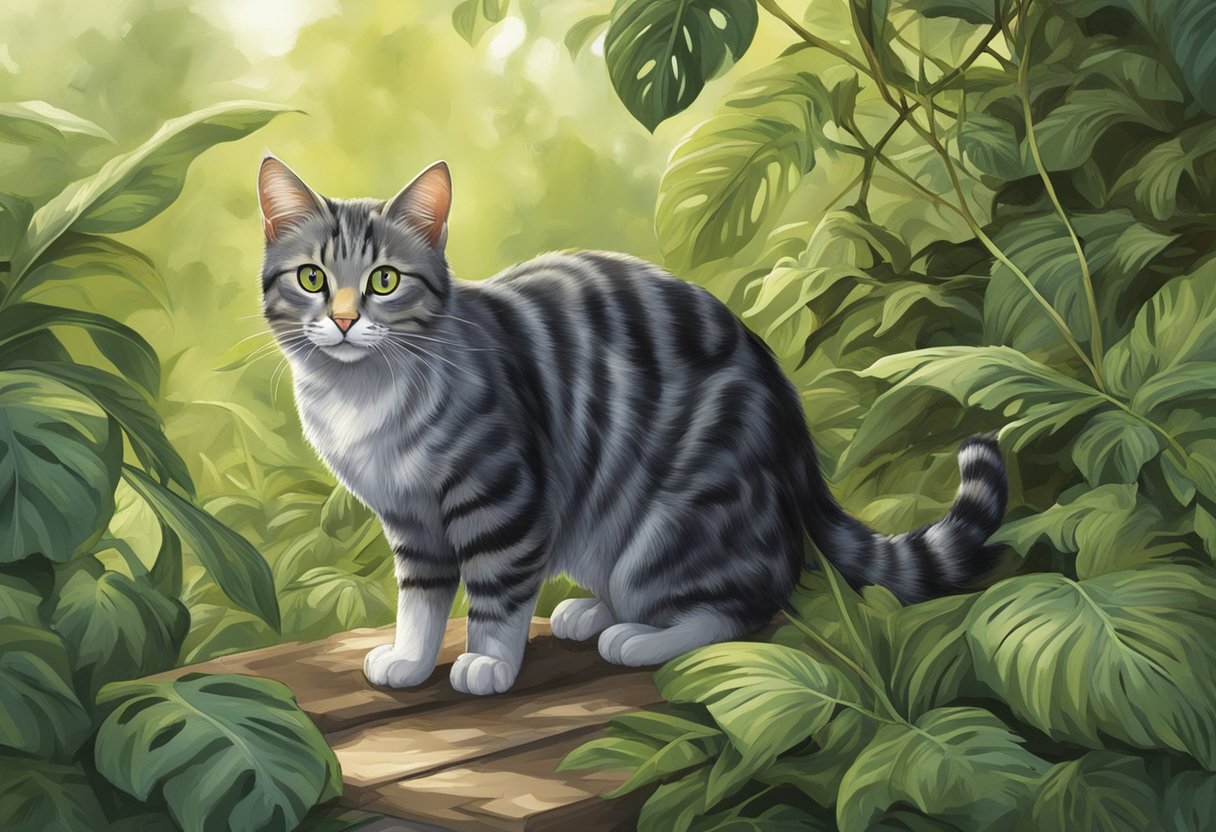
When you observe feral cats, it’s important to recognize the several factors that influence their behavior, particularly their tendency to hide in their final days.
Socialization and Survival Instincts: Feral cats often have little to no socialization with humans, thereby retaining their natural and wild instincts. These instincts lead them to hide when they feel most vulnerable, which often includes when they are sick or dying.
Health and Vulnerability: As a feral cat’s health diminishes, so does its ability to defend itself. To safeguard against risks while in a weakened state, a feral cat is likely to seek out remote locations.
Hiding is a survival strategy: it protects a weak cat from predators and from other animals and people.
-
Habitat: The cat’s habitat can offer a variety of hiding spots. Cats tend to choose quiet, undisturbed areas which could include:
- Dense foliage
- Abandoned structures
- Underground spaces
-
Predation Risk: In areas with a high presence of predators, feral cats are more inclined to seek seclusion in order to avoid confrontations.
-
Trapping Risks: Some feral cats may hide in spaces where they become trapped. This unintentional consequence may occur in urban environments, where small and confined spaces are more prevalent.
Understanding these factors can provide insights into the often solitary and secretive lives of feral cats, especially as they approach the end of their lives.
Human Impact on Feral Cats’ Life and Death
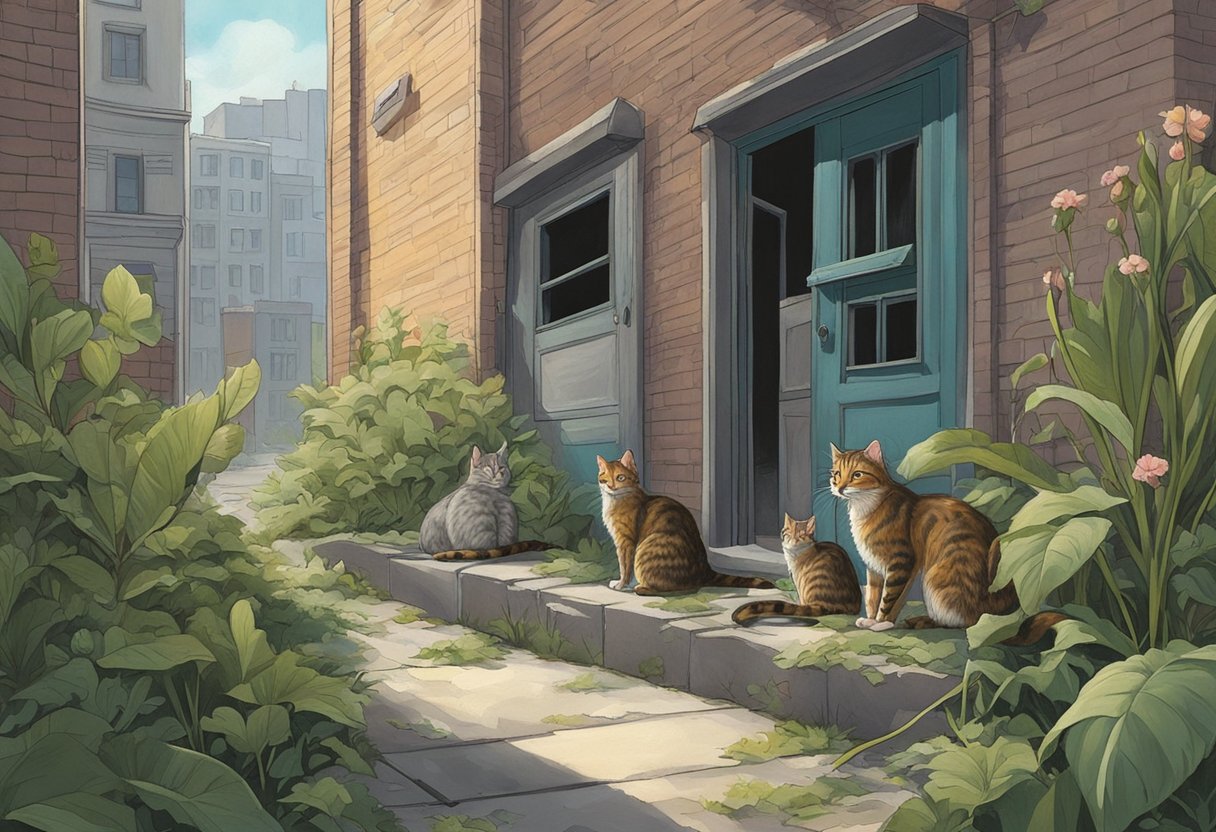
People have a large effect on the life expectancy of feral cats. Factors behind their high death rate include:
- Vehicle Traffic: Car strikes are a common cause of death, since feral cats often live near people and roads.
- Diseases: Infections spread between cats. Feline immunodeficiency virus (FIV) spreads mainly through bite wounds, so unneutered males that fight are at greatest risk. Feline leukemia virus (FeLV) spreads through bites, mutual grooming and shared food dishes, according to Cornell’s Feline Health Center. Upper respiratory infections are also common.
- Environmental Toxins: Antifreeze, pesticides, and rodent poisons can kill cats.
You might also impact the life span of feral cats indirectly through:
- Lost Shelter: Construction and cleanup remove the sheds, crawl spaces and brush that colonies use for cover.
- Predators: Roaming dogs and wildlife such as coyotes kill feral cats in many areas.
By understanding your impact on their lives, you can reduce these risks. Drive carefully where colonies live, keep your own cats indoors and vaccinated, store antifreeze and poisons safely, and support trap-neuter-return programs.
Frequently Asked Questions
These answers cover the signs that a feral cat may be seriously ill or near the end of its life.
How do feral cats behave before passing away?
Feral cats often become more reclusive when they are very sick. A cat that was once seen every day may stop showing up, because it is resting in a hidden spot.
What signs indicate that a feral cat may be near the end of its life?
Signs of a feral cat nearing the end of its life include decreased appetite, lack of energy, and less interest in interacting with its environment. The cat may also show signs of physical decline, such as unkempt fur or visible weight loss.
Do feral cats seek out secluded places when nearing death?
Yes. Like pet cats, feral cats tend to hide in quiet, sheltered spaces when they feel weak or sick. Hiding keeps them safer from threats.
What are the common causes of death in feral cats?
Common causes of death in feral cats include infectious diseases, injuries from fights, car strikes, predators, poisons, lack of food, and extreme weather. These risks give outdoor cats much shorter lives on average than indoor pets.
Sources
- Feline Immunodeficiency Virus (FIV), Cornell Feline Health Center
- Feline Leukemia Virus, Cornell Feline Health Center