How much to Feed a Great Dane Puppy (Daily & Weekly)
Contents
- What is the Recommended Daily Amount of Food For a Great Dane Puppy?
- Feeding Chart of a Great Dane Puppy
- Feeding your Great Dane Puppy According to Weeks
- 2 Weeks old
- 3 Weeks old
- 4 Weeks old
- 5 Weeks old
- 6 Weeks old
- 7 Weeks old
- 8 Weeks old
- 9 to 11 Weeks old
- 1 Year old
- Nutrients that a Great Dane puppy Need
- Carbohydrates
- Omega Fatty Acids
- Protein
- Fiber
- Vitamins and Minerals
- Fat
- Feeding your Great Dane Puppy Wet or Dry Food
- Dangerous Human Food for a Great Dane Puppy
- Human Food that a Great Dane Puppy Can Eat
- Can you Free Feed a Great Dane Puppy?
- FREQUENTLY ASKED QUESTIONS
- Why is My Great Dane Puppy Always Hungry?
- Why is My Great Dane Puppy not Eating?
- Should I Feed My Great Dane Puppy Supplements?
- When Do I Switch My Great Dane Puppy to Adult Food?
- How Do I know if I’m Feeding My Great Dane Puppy too Much?
- Wrapping up
- Sources
Great Dane puppies grow fast, and how you feed them affects their bones and joints for life. The goal is steady, slow growth, not the biggest puppy on the block.
This guide covers how often to feed your puppy at each age, what to look for in a puppy food and how to tell whether you're feeding the right amount.
What is the Recommended Daily Amount of Food For a Great Dane Puppy?
There's no single number. How much your puppy needs depends on its age, weight, activity level and the calorie content of the food you choose.
Start with the feeding guide on your puppy food's label, then adjust based on your puppy's body condition. Your vet can weigh your puppy at each visit and tell you whether to feed more or less.
Overfeeding is the bigger danger for a Great Dane puppy. The AKC notes that serious bone diseases in Danes are usually nutritional, and warns owners not to let their Dane get fat.
Feeding Chart of a Great Dane Puppy
The Merck Veterinary Manual gives this general meal schedule for puppies:
| Age | Meals per Day | Type of Food |
| 6 to 12 weeks | 4 | Puppy food |
| 3 to 6 months | 3 | Puppy food |
| 6 to 12 months | 2 | Puppy food |
| Older than 12 months | 1 or 2 | Adult food (later for giant breeds) |
For Great Danes, keep feeding at least two meals a day as adults. The AKC says multiple small meals and no vigorous exercise around mealtimes may help reduce the risk of bloat, the breed's number-one killer.
Feeding your Great Dane Puppy According to Weeks
Here's what to expect in the first weeks. Most of the early stages happen with the breeder, since Merck notes puppies leave their mother at about 7 to 8 weeks.
2 Weeks old
At two weeks, puppies are just opening their eyes and rely completely on their mother's milk. A puppy that isn't gaining weight like its littermates needs a vet check.
3 Weeks old
At three weeks, puppies start moving around but still nurse for all their nutrition.
4 Weeks old
Around four weeks, breeders usually start offering a soft gruel of puppy food softened with warm water or milk replacer. Puppies only nibble at first, since their stomachs are small.
5 Weeks old
At five weeks, puppies eat more gruel but still nurse. A puppy that is falling behind its littermates should see a vet.
6 Weeks old
By six weeks, most puppies eat softened puppy food well. Breeders gradually use less water so the food becomes thicker.
7 Weeks old
At seven weeks, many puppies are nearly weaned. Keep offering softened food to any puppy that struggles with dry kibble.
8 Weeks old
Around eight weeks, most puppies go to their new homes. Feed four meals a day, and pick up uneaten food after about 15 to 20 minutes so you can track how much your puppy eats.
9 to 11 Weeks old
Keep feeding four small meals a day on a regular schedule. Weigh your puppy regularly and follow the food label and your vet's advice on portions.
Avoid one or two huge meals. Smaller meals are easier on the stomach and help with bloat prevention.
1 Year old
At one year, your Dane is still growing. Feed two measured meals a day, and ask your vet when to switch to adult food, since giant breeds can take almost 2 years to mature.
Checkout Our These Guide:
- 5 Steps About Caring For A Great Dane Puppy
- 8 Best Dog Food For Great Danes With Skin Allergies
- The Ultimate Secrets To FEED A GREAT DANE PUPPY
- What Causes & Treatment Of Knuckling In Great Dane Puppy
Nutrients that a Great Dane puppy Need
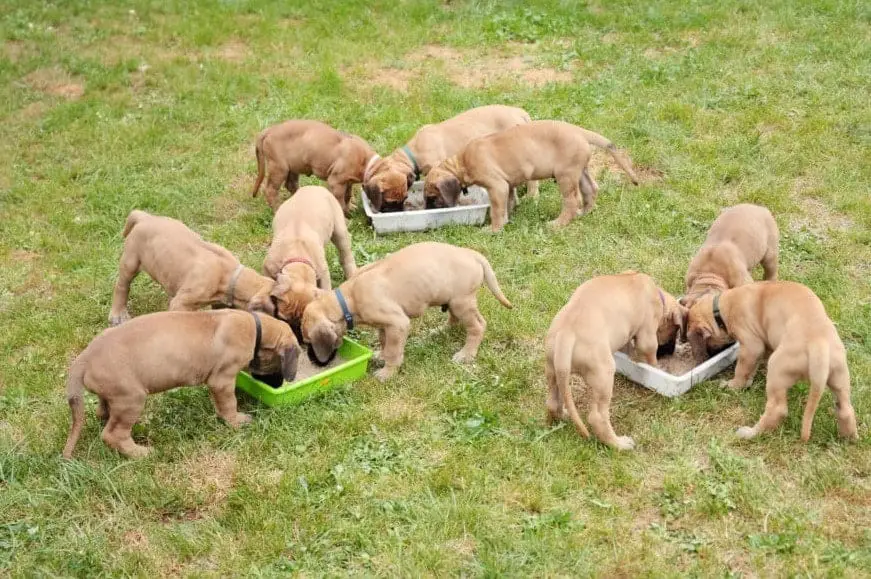
The easiest way to get the balance right is a complete and balanced puppy food made for large breeds. Here's what each nutrient does.
Carbohydrates
Carbohydrates supply energy and are part of most complete dog foods. Grains such as rice, oats and barley, and starches such as sweet potato, are common sources.
Omega Fatty Acids
Omega-3 fatty acids such as DHA support brain and eye development and healthy skin and coat. Fish oil is a common source in puppy foods.
Protein
Protein builds muscle and supports growth. Look for a food with a named animal protein, and don't add extra protein or supplements without asking your vet.
Fiber
Fiber supports healthy digestion and stool quality. Beet pulp, sweet potato and chicory root are common sources in dog food.
Vitamins and Minerals
Vitamins and minerals are essential, but too much can be as harmful as too little. Calcium is the big one for giant breeds.
Tufts University's Petfoodology explains that large and giant breed puppies are sensitive to too much or too little calcium while their bones grow. Choose a food whose AAFCO statement says it covers "growth of large-size dogs (70 lbs or more as an adult)," and never add calcium supplements.
Fat
Fat supplies energy and helps absorb fat-soluble vitamins. Because fat is calorie-dense, very high-fat foods make it easier to overfeed a growing Dane.
Feeding your Great Dane Puppy Wet or Dry Food
Both wet and dry foods can be complete and balanced. What matters most is that the label says the food meets AAFCO standards for growth of large-size dogs.
Dry food is convenient, stores well and is usually more affordable for a dog this size. Wet food can be mixed in for picky eaters, but adjust portions so you don't overfeed.
Want Best Wet & Dry Dog Food? Check out These Guide
- Ultimate 10 Best Dry Dog Food For Great Danes In 2022
- Ultimate 6 Best Wet Dog Food For Great Danes In 2022
Dangerous Human Food for a Great Dane Puppy
Some human foods can seriously harm your puppy. The ASPCA lists these among the foods to avoid:
- Chocolate, coffee and caffeine: These can cause vomiting, diarrhea, abnormal heart rhythm, tremors, seizures and even death. Dark and baking chocolate are the most dangerous.
- Grapes and raisins: These can cause kidney damage in dogs.
- Alcohol and raw yeast dough: Alcohol can be deadly, and raw dough can expand in the stomach and produce alcohol.
- Onions, garlic and chives: These can damage red blood cells and cause anemia.
- Xylitol: This sweetener in gum, candy, baked goods and toothpaste can cause dangerously low blood sugar and liver damage.
- Macadamia nuts: These can cause weakness, tremors and high body temperature.
If your puppy eats any of these, call your vet or the ASPCA Animal Poison Control Center at (888) 426-4435 right away.
Human Food that a Great Dane Puppy Can Eat
Small amounts of plain cooked lean meat, cooked eggs, and some plain fruits and vegetables such as carrots or green beans are safe treats for most dogs.
Keep treats to a small share of daily calories so they don't unbalance the diet. The AKC advises giving table scraps sparingly, if at all, and avoiding cooked bones and high-fat foods.
Can you Free Feed a Great Dane Puppy?
No. Free feeding makes it easy for a Great Dane puppy to overeat and grow too fast. Feed measured meals on a schedule instead, and take up any food left after the meal.
FREQUENTLY ASKED QUESTIONS
Why is My Great Dane Puppy Always Hungry?
Many puppies are food-driven and act hungry even when well fed. Don't feed more just because your puppy begs; extra calories can push growth too fast and strain bones and joints.
If your puppy gulps its food, a slow-feeder bowl or more frequent, smaller meals can help. If your puppy is losing weight or seems truly starving, see your vet.
Why is My Great Dane Puppy not Eating?
Stress, a new home or a food change can briefly reduce appetite. A puppy that skips more than a meal or two, or also has vomiting, diarrhea or lethargy, needs a vet visit.
Should I Feed My Great Dane Puppy Supplements?
A complete and balanced puppy food already contains everything your puppy needs. Don't add supplements, especially calcium, unless your vet recommends them.
When Do I Switch My Great Dane Puppy to Adult Food?
Giant breeds can take almost 2 years to mature. Ask your vet when to switch; many Danes stay on a large-breed puppy food well past their first birthday. Change foods gradually over about a week to avoid an upset stomach.
How Do I know if I’m Feeding My Great Dane Puppy too Much?
You should be able to feel your puppy's ribs easily under a thin layer of fat and see a waist from above. Rapid weight gain, a round belly or loose stools can mean you're overfeeding.
Wrapping up
A Great Dane puppy needs a lot of food, but too much can cause lifelong joint problems. Choose a food made for large-breed growth, feed measured meals and keep your puppy lean.
Your puppy's size and activity level determine how much it needs. Weigh your puppy regularly and ask your vet to check its body condition at every visit.
Want More! Also Read These Guide:
- What to Feed a Great Dane Puppies | Complete Guide In 2022
- How much does Great Dane weigh | Growth & Lifespan Chart In 2022
- 11 SECRETS ABOUT DIFFERENCE BETWEEN EUROPEAN AND AMERICAN GREAT DANE
Sources
- Puppy Care, Merck Veterinary Manual
- Confused About What to Feed Your Large Breed Puppy? New Rules May Help!, Tufts University Petfoodology
- People Foods to Avoid Feeding Your Pets, ASPCA
- Great Dane Dog Breed Information, American Kennel Club