How to Care For A Great Dane Puppy | 5 Steps
Contents
- Is it hard to Take Care for A Great Dane puppy?
- Step 1: Feeding The Proper Nutrition
- Feed your Great Dane Puppy a Large Breed Diet
- Get Exclusive and High-Quality Diet
- Feed your Great Dane Puppy Small Meals
- Do not Feed a Harmful Diet
- Feed your Great Dane Puppy Small Snacks
- Feed your Pup water
- Step 2: Grooming your Great Dane puppy
- Comb your Great Dane Puppy Coat
- Trim Great Dane Puppy Nails
- Brush your Great Dane Puppy Teeth
- Step 3: Enhance your Great Dane Puppy Life
- Socialization
- Exercise
- Comfortable Cushions and Living Arrangements
- Step 4: Veterinary Care
- Your Great Dane Puppy's First Checkup
- Great Dane Puppy Dewormed
- Vaccination
- Heartworm Treatment for Great Dane Puppy
- Neuter or Spy your Great Dane puppy
- Keep regular Checkups of your Great Dane Puppy
- Step 5: Great Dane puppy Health Issues
- Great Dane Puppy Gastric Torsion and Bloat
- Identify Wobbler Syndrome
- Great Dane puppy other Common Diseases
- What does a Great Dane Puppy Need?
- FREQUENTLY ASKED QUESTIONS
- How often Should I walk my Great Dane Puppy?
- When can I Start Training my Great Dane Puppy?
- How long does it take to Potty Train a Great Dane Puppy?
- Can Great Dane Puppies Eat Bones?
- Are Great Dane Puppies Clumsy?
- Conclusion
- Sources
A Great Dane needs specific care from puppyhood to adulthood. These giant dogs grow fast, so diet, exercise and vet care all matter.
The AKC breed standard calls for males to stand at least 30 inches at the shoulder and females at least 28 inches. A puppy that size needs good nutrition, the right amount of exercise, and plenty of socialization to live a long, healthy life.
In this article, we cover the main things to consider when caring for a Great Dane puppy. Your veterinarian is always the best guide for your own puppy's health.
Is it hard to Take Care for A Great Dane puppy?
A Great Dane puppy grows into a very large dog that takes up a lot of space. Young Danes can be rowdy and clumsy, and like most puppies they chew. Many drool, and some are gassy.
So caring for a Great Dane puppy is a bit more challenging than caring for a small breed. The steps below will help.
Step 1: Feeding The Proper Nutrition
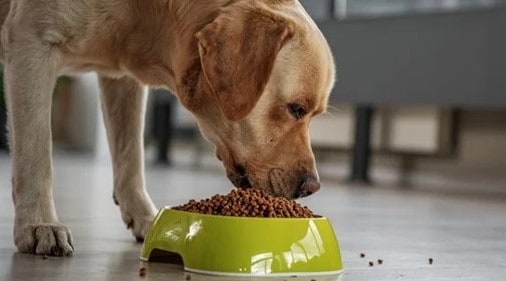
Nutrition is the most important part of raising a giant-breed puppy.
Feed your Great Dane Puppy a Large Breed Diet
Great Danes need a puppy food made for large and giant breeds. These foods control calories and calcium so the skeleton grows at a steady pace.
Check the label for an AAFCO statement saying the food is complete and balanced for growth, including growth of large size dogs (70 lbs or more as an adult). Tufts veterinary nutritionists explain that large breed puppies are more sensitive to too much or too little calcium.
If you aren't sure which food to choose, ask your veterinarian.
Get Exclusive and High-Quality Diet
Bloat (gastric dilatation-volvulus, or GDV) is a life-threatening emergency in Great Danes. Feeding habits can lower the risk; see Step 5.
Don't add calcium or other supplements to a complete puppy food unless your vet tells you to. Extra calcium can harm a giant-breed puppy's growing bones.
Feed your Great Dane Puppy Small Meals
Feed several smaller meals rather than one large meal. Young puppies usually eat three to four meals a day, and most adult Danes do well on two or three.
Follow the feeding guide on the food package as a starting point. Then adjust with your vet so your puppy stays lean.
Don't switch foods often. If you need to change, mix the new food in gradually over about a week to avoid stomach upset.
Do not Feed a Harmful Diet
Some foods are dangerous for dogs and should never be fed. These include chocolate, grapes, raisins, onions, chives, garlic, raw yeast dough, alcohol, macadamia nuts and xylitol (found in many sugar-free foods).
Fatty meat scraps can trigger pancreatitis, and cooked bones can splinter. Keep both away from your puppy.
Feed your Great Dane Puppy Small Snacks
Small amounts of plain dog-safe foods make good treats. Options include cooked sweet potato, carrots, blueberries and peas.
Keep treats to a small share of daily calories so they don't unbalance the diet.
Feed your Pup water
Great Danes need constant access to fresh, clean water. Check and refill the bowl several times a day.
Step 2: Grooming your Great Dane puppy
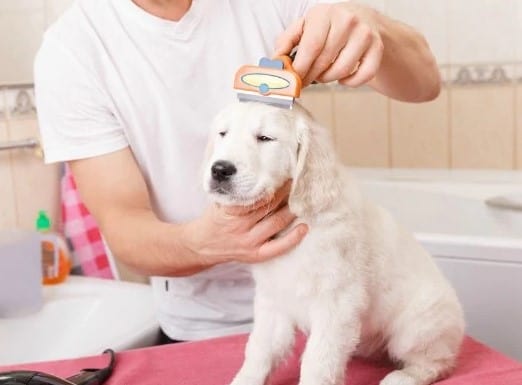
Great Danes have short coats, but they still need regular grooming.
Comb your Great Dane Puppy Coat
Brush your puppy about once a week with a soft brush or rubber grooming mitt. Brushing removes loose hair and keeps the coat healthy.
Check for fleas and ticks while you brush. Ask your vet about a safe preventive for puppies.
See your veterinarian if you notice skin irritation, bumps, scabs or lumps.
Trim Great Dane Puppy Nails
Check your puppy's nails after brushing. Active dogs wear their nails down, but most still need regular trims.
Use dog nail clippers or a grinder and take off small amounts at a time. Each nail has a "quick," a blood vessel and nerve inside the nail. Cutting into it hurts and bleeds.
If you aren't sure how to trim nails, ask your vet or a groomer to show you.
Brush your Great Dane Puppy Teeth
Daily tooth brushing is ideal. Start slowly so your puppy gets used to it.
First, let your puppy lick dog toothpaste from your finger. Then rub a little along the gums with your finger. Once your puppy accepts that, switch to a soft dog toothbrush.
Never use human toothpaste. It isn't meant to be swallowed, and some brands contain xylitol, which is toxic to dogs.
Step 3: Enhance your Great Dane Puppy Life
A well-socialized, properly exercised puppy grows into a calm, confident adult.
Socialization
Introduce your puppy to many people, places, sounds and friendly, vaccinated dogs. Puppy classes, car rides and calm public places all help.
Ask your vet when it is safe to visit places like dog parks, since puppies aren't fully protected until their vaccine series is complete.
Exercise
Great Dane puppies need daily exercise, but not too much. Their bones and joints are still developing.
Avoid forced running, jogging with you, long hikes and repeated jumping until your vet says growth is complete. In giant breeds, that can take 18 months to 2 years.
Short walks and free play on soft ground are best. Avoid vigorous exercise for an hour or two before and after meals.
Comfortable Cushions and Living Arrangements
A Great Dane needs a large, thick, supportive bed to protect its joints. Danes are people-oriented dogs and do best living indoors with their family.
Step 4: Veterinary Care
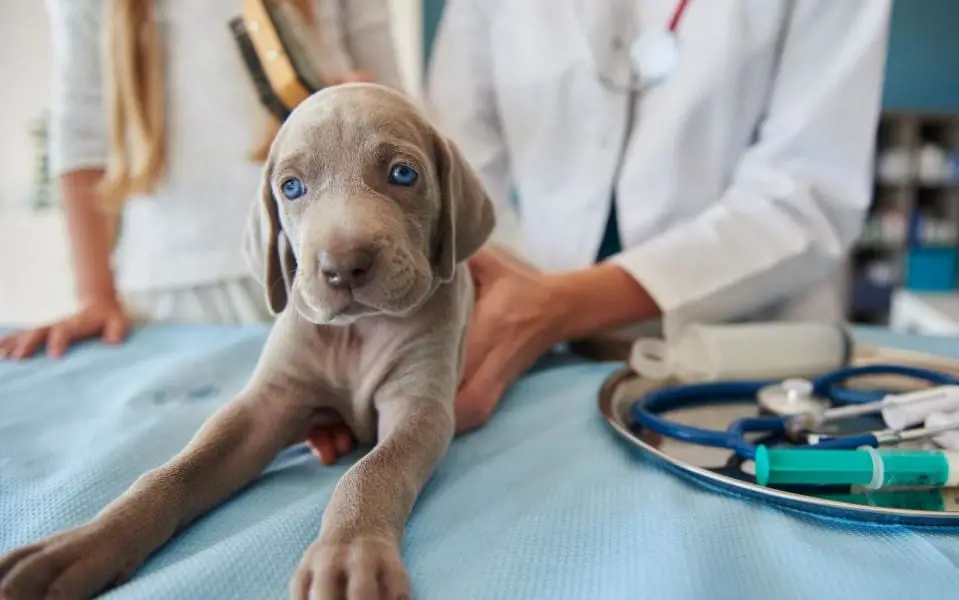
Your veterinarian will set your puppy's exact schedule. Here is what to expect.
Your Great Dane Puppy's First Checkup
Take your new puppy to the vet within a few days of bringing it home, even if the breeder already did a checkup.
The vet will examine the eyes, ears, mouth, heart, lungs, belly (including checking for hernias), and skin and coat. They will also review the vaccine and deworming records.
Great Dane Puppy Dewormed
Many puppies get intestinal worms from their mother. According to the Merck Veterinary Manual, puppies are usually dewormed as a precaution starting a few weeks after birth, and the vet checks stool samples until results come back clean.
Vaccination
Puppies get a series of core vaccines, including distemper and parvovirus. The Merck Veterinary Manual says puppies need vaccines about every 2 to 3 weeks until they are around 4 months old.
The series usually starts at 6 to 8 weeks. Rabies is given according to local law, usually at 12 to 16 weeks.
Other vaccines, such as Lyme disease, are optional and depend on where you live and your dog's lifestyle. Ask your vet which ones your puppy needs.
Heartworm Treatment for Great Dane Puppy
Heartworm disease is spread by mosquitoes and can be deadly. There is no heartworm vaccine.
Instead, the American Heartworm Society recommends starting puppies on a heartworm preventive no later than 8 weeks of age. Most preventives are given monthly as a chew or topical, or as an injection every 6 or 12 months.
Neuter or Spy your Great Dane puppy
Spaying (females) or neutering (males) prevents unwanted litters and some reproductive diseases.
The best timing for giant breeds is debated, and many vets now suggest waiting until growth is further along. Talk to your vet about timing.
You can also ask about a preventive gastropexy (stomach tack) at the same surgery, which helps protect against bloat.
Keep regular Checkups of your Great Dane Puppy
After the puppy series, plan on at least one checkup a year. Giant breeds age faster than small dogs, so your vet may recommend twice-yearly visits once your Dane reaches middle age.
Step 5: Great Dane puppy Health Issues
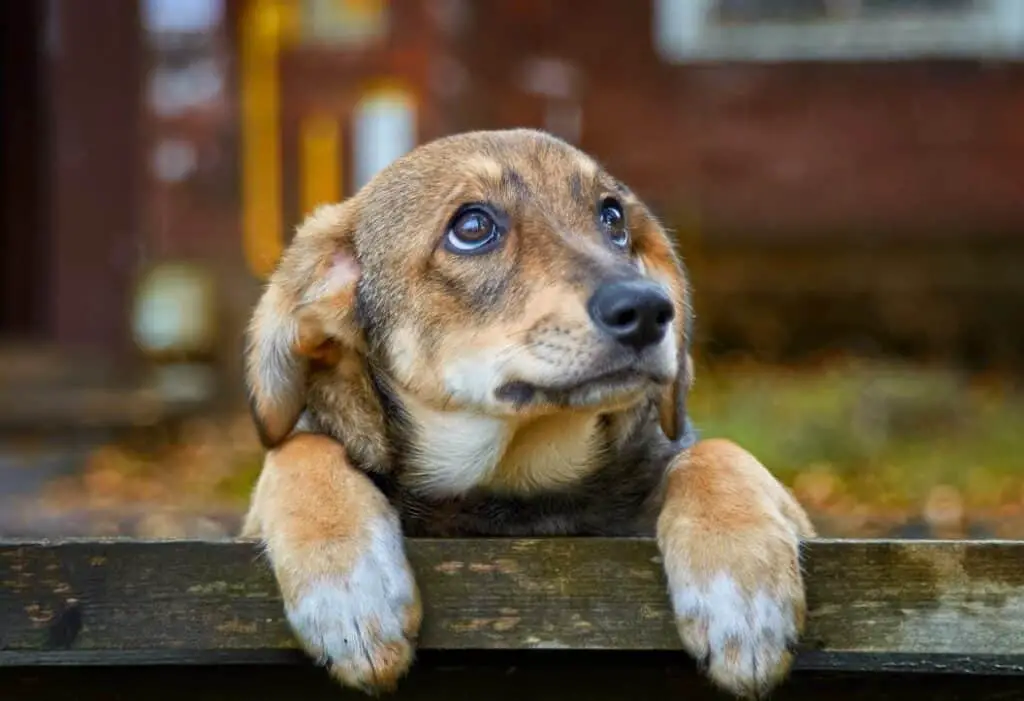
Knowing the breed's common problems helps you catch them early.
Great Dane Puppy Gastric Torsion and Bloat
Bloat, or gastric dilatation-volvulus (GDV), happens when the stomach fills with gas and can twist. Great Danes are one of the breeds most often affected.
The American College of Veterinary Surgeons notes that GDV is linked to eating large meals quickly. It recommends feeding two to three smaller meals a day.
Its risk factors also include elevated feeding, so feeding from a bowl on the floor may be safer than a raised bowl. A slow-feeder bowl helps a fast eater, and limiting rowdy play around mealtimes is also wise.
Signs include restlessness, drooling, a swollen belly and trying to vomit without bringing anything up. GDV is an emergency. Go to a veterinarian immediately.
Identify Wobbler Syndrome
Wobbler syndrome (cervical spondylomyelopathy) is a problem in the neck vertebrae that squeezes the spinal cord.
It causes a wobbly, unsteady walk, especially in the back legs, and can lead to weakness or paralysis. In Great Danes it often shows up in young adults. See your vet if your dog's gait changes.
Great Dane puppy other Common Diseases
Great Danes are also prone to heart disease (dilated cardiomyopathy), bone cancer, hip dysplasia and hypothyroidism.
Like most giant breeds, Great Danes have a shorter lifespan than smaller dogs, which makes early care and regular checkups even more important.
What does a Great Dane Puppy Need?
A Great Dane puppy needs a large- or giant-breed puppy food, sturdy chew toys, a large supportive bed, a leash and collar, a crate, treats, and grooming supplies. Buy gear that will fit as your puppy grows, or plan to size up.
FREQUENTLY ASKED QUESTIONS
How often Should I walk my Great Dane Puppy?
Two or three short, easy walks a day are plenty for most young Danes. Avoid long or forced exercise while the bones and joints are still growing.
When can I Start Training my Great Dane Puppy?
Start gentle, reward-based training the day your puppy comes home. Teach the basics, like sit, come and loose-leash walking, early, before your puppy gets big and strong.
How long does it take to Potty Train a Great Dane Puppy?
It varies. Many puppies take several weeks to a few months to become reliably house-trained. A consistent schedule and rewards speed it up.
Can Great Dane Puppies Eat Bones?
Never give cooked bones, which can splinter. Raw bones can also break teeth or cause blockages, so ask your vet about safer chew options.
Are Great Dane Puppies Clumsy?
Yes, Great Dane puppies are often clumsy because they grow so quickly.
Conclusion
A Great Dane can become a loving member of the family. Raising a healthy, well-behaved Dane starts with good puppy care.
Plan ahead for the right food, safe exercise, training and regular vet care. Ask your veterinarian about anything specific to your puppy's health.
Checkout our these Guides:
- What Causes & Fixation Of Knuckling In Great Dane Puppy
- The Ultimate Secrets To FEED A GREAT DANE PUPPY
- 8 Best Dog Food For Great Danes With Skin Allergies
- 6 Best Wet Dog Food For Great Danes
- 10 Best Dry Dog Food For Great Danes
Sources
- Confused About What to Feed Your Large Breed Puppy? New Rules May Help!, Petfoodology, Cummings School of Veterinary Medicine at Tufts University
- Gastric Dilatation-Volvulus, American College of Veterinary Surgeons
- Puppy Care, Merck Veterinary Manual
- Heartworm Basics, American Heartworm Society