The Ultimate Secrets To Feed A Great Dane Puppy
Contents
- What to Feed your Great Dane Puppy?
- Feeding your Great Dane puppy kibble
- Feeding a Great Dane puppy Wet Food
- Feeding a Great Dane puppy Raw Food (BARF)
- Feeding a Great Dane Puppy a Homemade Diet
- The Best Food for Great Dane Puppies
- How much Food do Great Dane Puppies Need?
- Feeding your Great Dane Puppy By Age
- How long is a Great Dane considered a Puppy?
- What are the Healthy Snacks for a Great Dane puppy?
- Great Dane Puppy Exercise
- Great Danes and Food Allergies
- Tips for Great Dane Puppy Diet
- FREQUENTLY ASKED QUESTIONS
- Why does my Great Dane Puppy Eat Socks?
- What are the Best Times to Feed a Great Dane Puppy?
- Should I only Give My Great Dane puppy Water with Food?
- Can Great Dane puppies Eat Homemade Food?
- Should I Feed My Great Dane Puppy a Raw Diet?
- Final Thoughts
- Sources
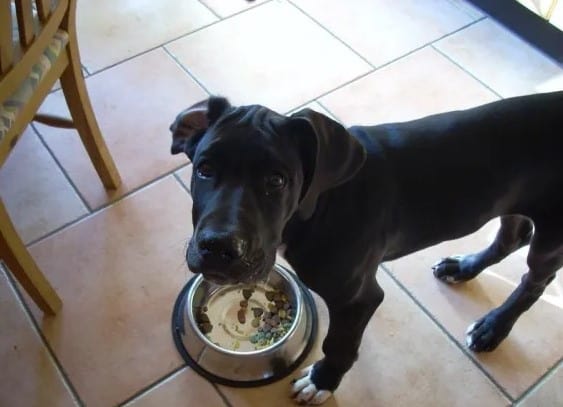
Feeding a Great Dane puppy is about controlling growth. These puppies grow very fast, and too many calories or the wrong calcium level can cause lifelong bone and joint problems.
Puppies start trying solid food at around 3 to 4 weeks and usually go home at about 8 weeks. You can choose kibble, canned, raw or homemade food, but each choice has trade-offs.
This guide covers food types, nutrient needs, feeding by age, healthy snacks and exercise, so you can raise a healthy Dane.
What to Feed your Great Dane Puppy?
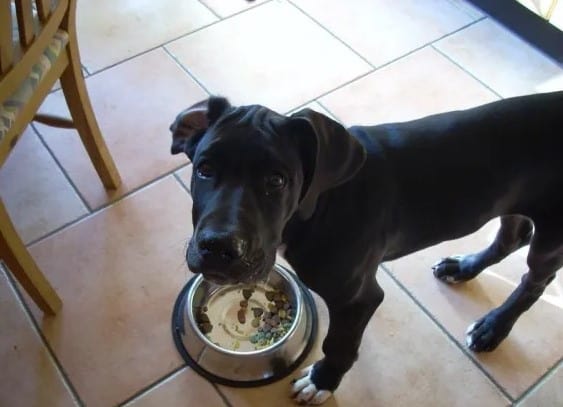
The main options are dry kibble, wet (canned) food, homemade food and raw food. Whatever you choose, it must be complete and balanced for the growth of a giant-breed puppy.
Feeding your Great Dane puppy kibble
Kibble is the most convenient and affordable way to feed a dog this size. Choose a puppy food whose label says it meets AAFCO standards for "growth of large-size dogs (70 lbs or more as an adult)."
Skip "grain-free" unless your vet recommends it. The FDA is investigating reports of dilated cardiomyopathy (DCM) in dogs eating diets, many labeled grain-free, that are high in peas, lentils or potatoes. The Great Dane is already a breed with a genetic risk of DCM.
Great Danes are prone to bloat, a life-threatening emergency in deep-chested breeds. There's no proven "safe" kibble size; instead, feed several smaller meals a day and avoid vigorous exercise around mealtimes, as the AKC advises.
Feeding a Great Dane puppy Wet Food
Wet food comes in cans, trays and pouches, in textures such as chunks or pate. Complete and balanced wet foods meet a puppy's needs, but feeding only wet food is expensive for a giant breed.
Many owners use it as a topper on kibble for fussy eaters. Reduce the kibble to make room for the extra calories.
Feeding a Great Dane puppy Raw Food (BARF)
Raw diets, sometimes called BARF (biologically appropriate raw food), are sold fresh or frozen. They are popular, but the FDA warns that raw pet food can carry germs like Salmonella and Listeria that can sicken pets and people.
Homemade raw diets are also easy to get wrong on calcium and phosphorus, which matters a lot for a growing Dane. If you're considering raw, talk to your vet first.
Feeding a Great Dane Puppy a Homemade Diet
Homemade diets take time and are very hard to balance for a growing giant breed. A recipe from the internet is unlikely to supply the right calcium, phosphorus and vitamins.
If you want to cook for your puppy, work with a board-certified veterinary nutritionist. If you suspect a food allergy, ask your vet about a proper elimination diet rather than removing ingredients on your own.
The Best Food for Great Dane Puppies
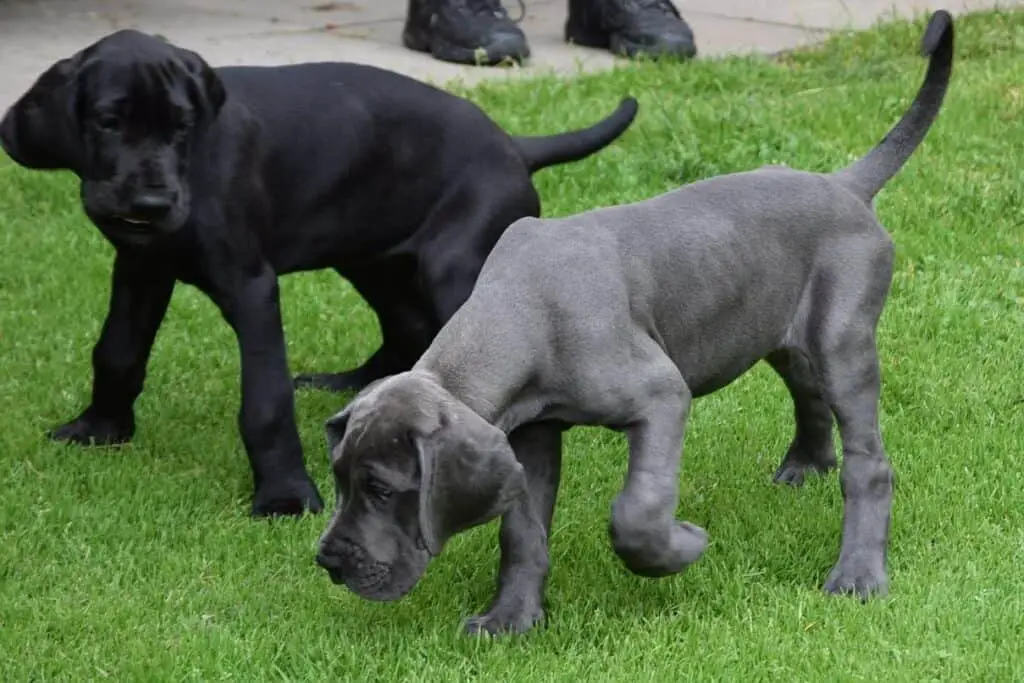
Great Dane puppies need balanced nutrition to avoid bone and joint problems as they grow. The most important number on the bag is the AAFCO statement for large-size growth.
Tufts University's Petfoodology explains that large and giant breed puppies are sensitive to too much or too little calcium while their bones grow. That's why AAFCO now sets a narrower calcium range for foods labeled for large-breed growth.
Calorie needs change constantly as a puppy grows. Rather than aim for a fixed number, follow the label as a starting point and adjust to keep your puppy lean.
How much Food do Great Dane Puppies Need?
Amounts depend on the food's calories and your puppy's age, size and activity. Here are a few tips:
- Stress, weather, activity and growth spurts can affect your Great Dane puppy's appetite.
- Female Great Dane puppies usually eat less than males.
- Overfeeding a Great Dane puppy can cause obesity, digestive upset and joint problems.
- Feed several measured meals a day rather than one or two large ones.
Feeding your Great Dane Puppy By Age
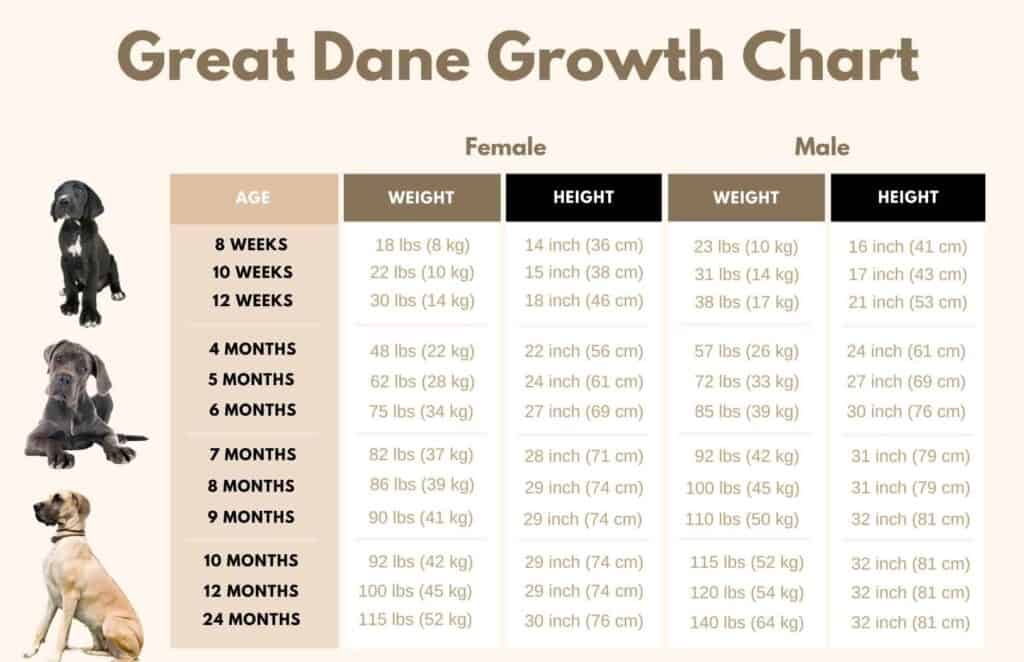
The Merck Veterinary Manual gives a general schedule for puppies:
Newborn to 3 months old: Puppies nurse at first and start on softened puppy food at around 3 to 4 weeks. Most go to new homes at 7 to 8 weeks. From 6 to 12 weeks, feed four meals a day.
3 to 6 months old: Great Dane puppies grow very fast at this age. Feed three meals a day, measured according to the label and your vet's advice.
6 to 12 months old: Feed two meals a day. Keep weighing your puppy and adjust portions to keep it lean.
If your puppy guards its food bowl, don't take the bowl away as punishment. That can make resource guarding worse; ask your vet or a certified trainer for help.
Want Best Nutrition for your Great Danes Check out These Articles.
- 8 Best Dog Food For Great Danes With Skin Allergies
- Ultimate 6 Best Wet Dog Food For Great Danes In 2022
- Ultimate 10 Best Dry Dog Food For Great Danes In 2022
How long is a Great Dane considered a Puppy?
Great Danes grow for longer than smaller breeds. Merck notes that large and giant breed dogs can take almost 2 years to become adults.
Ask your vet when to switch to adult food. When you do, choose a large- or giant-breed adult food and switch gradually.
What are the Healthy Snacks for a Great Dane puppy?
Plain fruits and vegetables make good low-calorie treats. Safe choices include carrots, apples (no seeds or core), cooked sweet potato, plain pumpkin, zucchini, green beans, blueberries, banana, cantaloupe and pineapple.
Keep treats to a small part of the daily diet. Never feed cooked bones, which the AKC warns against.
Great Dane Puppy Exercise
A growing Great Dane puppy is clumsy, and its bones and joints are vulnerable. Play on soft grass or dirt, and keep play gentle.
The AKC says to wait until your Dane is about 2 years old before jogging or hiking together, and to avoid vigorous exercise around mealtimes. Socialize your puppy with people and other dogs early, while it's still small and easy to handle.
Great Danes and Food Allergies
Food allergies in dogs are less common than pet food ads suggest. When they happen, they can cause itchy skin, ear infections, vomiting or diarrhea.
Tufts Petfoodology reports that the most common food allergens in dogs are chicken, beef, dairy and egg. Grains are much less often the cause.
If you suspect a food allergy, see your vet. The only reliable test is a strict elimination diet trial under veterinary guidance.
Tips for Great Dane Puppy Diet
The tips for a Great Dane puppy are as follows:
- Choose a complete and balanced puppy food labeled for growth of large-size dogs.
- Look for a named animal protein among the first ingredients.
- Never add calcium or other supplements unless your vet recommends them.
- Keep your puppy lean. You should be able to feel the ribs easily.
- Feed measured meals; don't free-feed.
- Change foods gradually over about a week.
FREQUENTLY ASKED QUESTIONS
Why does my Great Dane Puppy Eat Socks?
Puppies explore with their mouths, and chewing and swallowing objects is common, not a sign of hunger. A swallowed sock can block the intestines, so keep socks and similar items out of reach.
If your puppy vomits, stops eating or seems to have belly pain, see your vet right away.
What are the Best Times to Feed a Great Dane Puppy?
Pick a schedule that fits your day and stick to it. For example, a 3- to 6-month-old puppy could eat at 7 a.m., noon and 5 p.m., which leaves time for a last potty break before bed.
Should I only Give My Great Dane puppy Water with Food?
No. Your puppy should have fresh, clean water available at all times, not only at mealtimes.
Can Great Dane puppies Eat Homemade Food?
Yes, but only if the recipe is formulated to be complete and balanced for giant-breed growth. Ask a board-certified veterinary nutritionist for a recipe.
Should I Feed My Great Dane Puppy a Raw Diet?
It's your choice, but there are real risks. The FDA warns raw pet foods can carry Salmonella and Listeria, which can make your puppy and your family sick. Discuss it with your vet first.
Final Thoughts
Feeding a Great Dane puppy well means a large-breed puppy food, measured meals and a lean body. Skip the supplements and ask your vet to check your puppy's growth at every visit.
If you have feeding tips for the Great Dane breed, share them in the comments.
Checkout our these Guides:
- What Causes & Treatment Of Knuckling In Great Dane Puppy
- 5 Steps About Caring For A Great Dane Puppy
- What To Feed A Great Dane Puppies | Complete Guide
- How Much Does Great Dane Weigh
- 11 SECRETS ABOUT DIFFERENCE BETWEEN EUROPEAN AND AMERICAN GREAT DANE
Sources
- Confused About What to Feed Your Large Breed Puppy? New Rules May Help!, Tufts University Petfoodology
- FDA Investigation into Potential Link between Certain Diets and Canine Dilated Cardiomyopathy, U.S. Food and Drug Administration
- Puppy Care, Merck Veterinary Manual
- Great Dane Dog Breed Information, American Kennel Club