Do Big Cats Recognize Domestic Cats? (Similarities Of Wild And Domestic Cats)
Contents
- Do Big Cats Attack Domesticated Cats?
- Can A Big Cat Eat A Domestic Cat?
- Similarities Of Wild And Domestic Cats
- Sleeping Time
- Sense Of Smell
- Grooming Behavior
- Both Of Them Are Stalker
- They Love Playing And Catnip
- Method Of Marking Their Territory
- Vocalizing
- Hiding Foods
- Kneading
- Differences Between Wild And Domestic Cats
- Size Of The Brain
- Shape Of Pupil
- Purr And Roar
- Aggression
- Final Words
- Sources
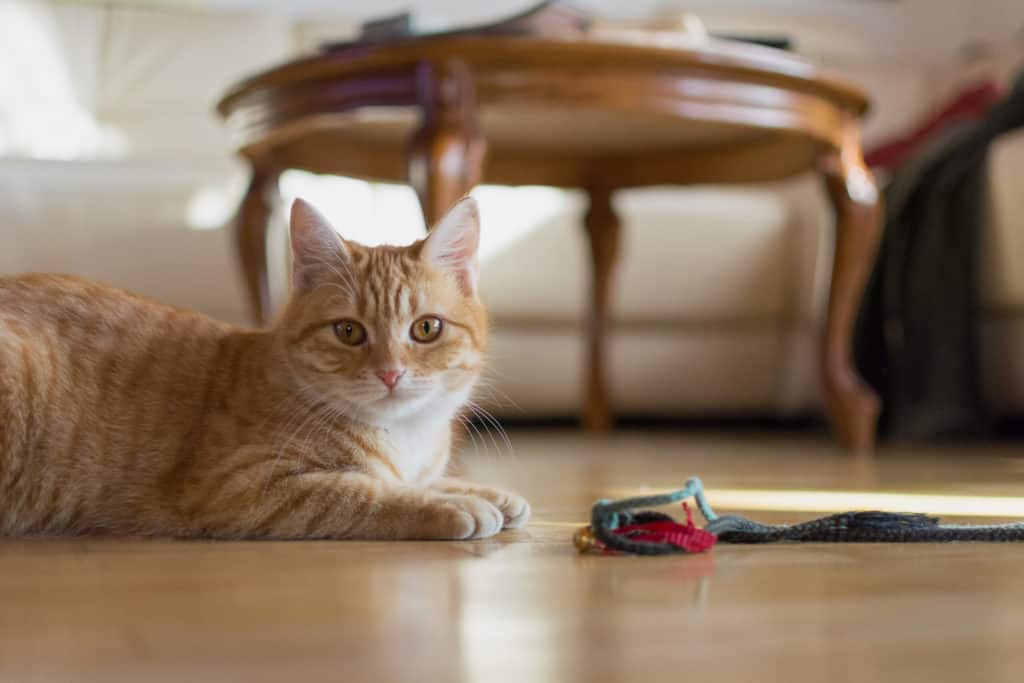
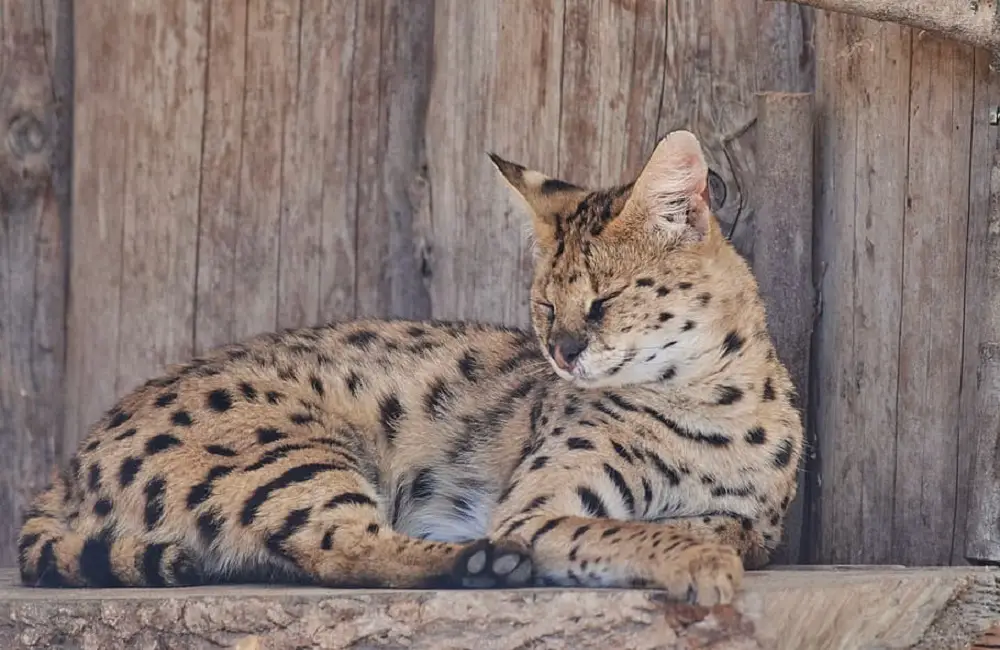
Wild cats and domestic cats share many physical features and behaviors. Both have retractable claws, sharp teeth, similar faces and strong hunting instincts. But if a big cat spots a house cat, does it see a relative?
Do big cats recognize domestic cats? There is no evidence that big cats see house cats as relatives. Animals don't think in terms of how scientists classify them. To a large wild cat, a house cat is most likely a competitor or potential prey, and predators like leopards and mountain lions do sometimes kill pet cats.
Below, we cover whether big cats attack domestic cats, plus the main similarities and differences between wild and domestic cats.
Do Big Cats Attack Domesticated Cats?
Yes, they can. Large cats are predators, and a house cat is small enough to be prey. A domestic cat's best escape is often climbing high into a tree.
In most places this is uncommon, because big cats and pet cats rarely share the same space. Lions live mainly in sub-Saharan Africa, tigers in parts of Asia, and both usually hunt much larger prey such as antelope, deer, wild pigs and buffalo.
Where big cats live close to people, though, pets are at risk. The California Department of Fish and Wildlife notes that mountain lions may opportunistically hunt poultry, small livestock or pets.

Can A Big Cat Eat A Domestic Cat?
Yes. A big cat can kill and eat a domestic cat. It doesn't happen often in most areas, because most big cats live far from towns.
Big cats also tend to focus on prey that gives them more food for the energy spent hunting. Even so, small prey is taken when the chance comes along, especially by cats like leopards and mountain lions that live near people.
If you live in mountain lion country, keep your cats indoors, especially from dusk to dawn.
Similarities Of Wild And Domestic Cats
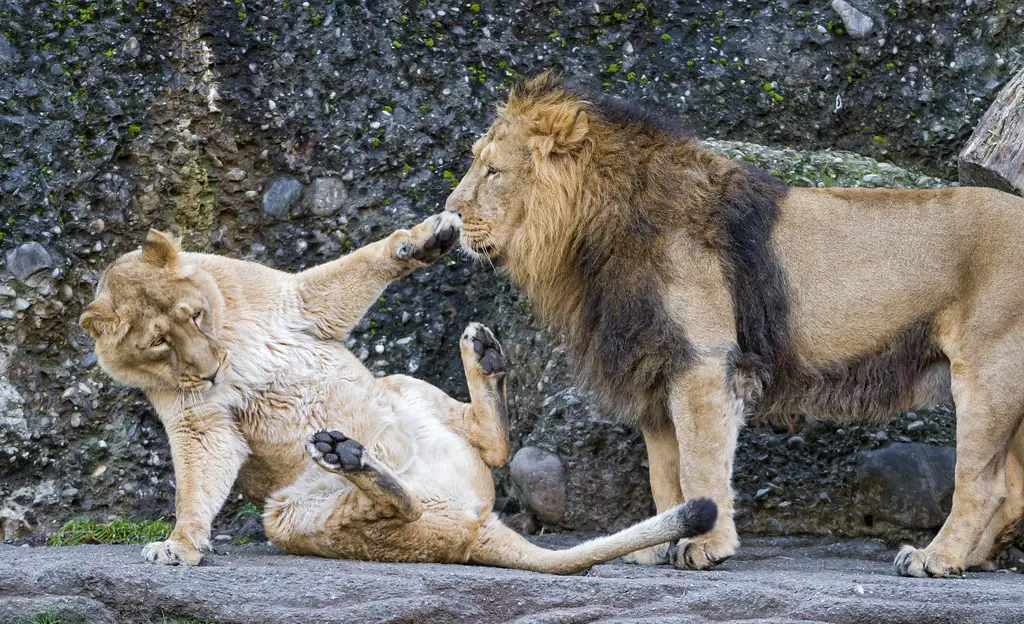
Now let's look at what wild and domestic cats have in common. Below are nine similarities.
Sleeping Time
Both big cats and house cats spend much of the day resting or sleeping. Lions, for example, are known for resting for most of the day.
Sleeping a lot saves energy for hunting. Kittens and cubs sleep even more, and sick, injured or older cats may sleep more than usual.
Sense Of Smell
Wild and domestic cats both have an excellent sense of smell, far better than ours. They use it to find food, recognize family members and read scent marks.
Both also have a special scent organ in the roof of the mouth called the vomeronasal organ, or Jacobson's organ. When a cat draws air over it with its mouth slightly open, the expression is called the flehmen response.
Grooming Behavior
Both wild and domestic cats spend a lot of their waking time grooming. Wild and domestic cats do this to keep their bodies clean and for other health reasons, such as removing loose hair and parasites.
Overgrooming can be a sign of stress, allergies, parasites or skin disease. If your cat grooms excessively or loses hair, take it to the vet.
Cats also groom each other. Lions in a pride lick and rub against each other, which helps strengthen social bonds.
Both Of Them Are Stalker
All cats, wild or domestic, stalk their prey before they attack. They crouch low, focus intently, wiggle their rear end and then pounce.
Your cat may do this to a toy or to something you can't even see. Hunting instinct runs through the whole cat family, which is why domestic cats have long been valued for controlling rodents.

They Love Playing And Catnip
Both domestic and wild cats play, especially when young. Many big cats in zoos enjoy cardboard boxes, balls and other enrichment items, much like house cats.
Many domestic cats react to catnip by rolling, rubbing and acting playful, but not all do. Some big cats, such as lions, can react to catnip too.
Method Of Marking Their Territory
Both domestic and wild cats mark territory in similar ways. They spray urine, rub their faces on objects to leave scent from glands on their cheeks, and scratch. A lion may scratch a tree trunk, while a house cat may choose your couch.
Cats can be very territorial. Territorial problems in house cats often show up when a new cat joins the household, when a kitten matures, or when a cat sees another cat outside.
Vocalizing
Cats communicate with sound. House cats will meow mostly to people, while big cats use roars, growls, grunts, chuffs and other calls to talk to one another.
Hiding Foods
Some cats save food for later. Leopards often drag prey up into trees, and some big cats cover a kill with soil or leaves to come back to it. House cats may carry prey to a safe spot or "bury" food by scratching around the bowl.
Kneading
Kittens and cubs knead while nursing, which helps stimulate milk flow. Many adult house cats keep kneading soft surfaces, usually when they are relaxed and content. Why adults do it is not fully understood.
Differences Between Wild And Domestic Cats
Now let's look at how wild and domestic cats differ.
Size Of The Brain
Big cats have much larger brains than house cats, simply because they have much larger bodies. Domestic cats also tend to have somewhat smaller brains for their size than their wild ancestors.
Shape Of Pupil
Most small cats, including house cats, have vertical slit pupils. Lions and tigers have round pupils. Scientists link these differences to body size and hunting style.
Purr And Roar
Domestic cats purr but can't roar. Lions, tigers, leopards and jaguars can roar. Some wild cats purr too. The Smithsonian's National Zoo notes that cheetahs do not roar but do purr, much like a house cat. These differences come from the anatomy of the throat.
Aggression
Wild cats depend on hunting to survive, and they defend themselves and their young from threats. Domestic cats have been bred to live with people, so most are much easier to handle, although they still keep their hunting instincts.
Final Words
There is no evidence that big cats recognize house cats as relatives. A big cat that meets a house cat may treat it as prey or a competitor. This is rare in most places because they live apart, but where mountain lions or leopards live near people, pets can be at risk.
Source: lonetreevet.com, lithub.com
Sources
- Mountain Lions in California, California Department of Fish and Wildlife
- Cheetah, Smithsonian's National Zoo and Conservation Biology Institute