
5 Reasons Why Animals Have Short Lifespans (With Other Amazing Facts)
Contents
- 5 Reasons Why Animals Have Short Lifespan
- 1. Eating Habits Of Animals
- 2. Size Of Animals
- 3. Food Chain Position
- 4. Environmental Factors
- 5. Species’ Basal Metabolic Rate Or BMR
- 10 Animals With Short Lifespans
- 1. Hamster: 18 Months to 3 Years
- 2. Worker Bee: About 5 to 6 Weeks in Summer
- 3. Robin: Often 1-2 years
- 4. Drone Ant: Days to Weeks
- 5. Mayfly: Hours to a Day as Adults
- 6. Labord’s Chameleon: 1 year
- 7. Gastrotrich: About 3 Days
- 8. Hedgehogs: 2-5 Years
- 9. Moles: About 3 Years
- 10. Dogs: 10-13 years
- 10 Animals With Long Lifespans
- 1. Red Sea Urchins: 100 to 200 Years
- 2. Koi Fishes: 25-30 Years
- 3. Longfin Eels: 60 Years
- 4. Macaws: 40-60 Years
- 5. Elephants: 40-80 Years
- 6. Whales: 40-200 Years
- 7. Sharks: 20 to 270+ Years
- 8. Giraffes: Up to About 25 Years
- 9. Giant Tortoise: 80-150 Years
- 10. Kakapo: 60+ Years
- Is There Any Animal That Does Not Die?
- Do Animals Know They Will Die?
- Final Words
- Sources
Every animal has a role in its ecosystem, from spreading seeds to recycling nutrients as decomposers.
Many animals live much shorter lives than people. Many of them also reproduce quickly, so a population can grow fast even if each animal lives only a short time.
So why do animals live shorter lives than humans? Why do some animals have short lifespans?
Lifespan is linked most strongly to body size. As a rule, larger animals live longer than smaller ones, partly because small animals tend to have faster metabolisms. There are many exceptions, though: some parrots and bats are small but live for decades.
Several other factors shape lifespan too. Here are five of them.
5 Reasons Why Animals Have Short Lifespan
Scientists point to several factors that help explain why some animals live short lives:
- Eating habits of animals
- Size of animals
- Food chain position
- Habitat
- Species’ BMR
1. Eating Habits Of Animals
Food supply affects how long animals live. An animal that cannot find enough food will weaken and die early, and young animals are especially at risk.
Eating less is not always harmful, though. In many lab studies, animals fed fewer calories but a complete diet lived longer than animals that ate as much as they wanted.
Diet type does not decide lifespan on its own. Some long-lived animals are herbivores, such as elephants and tortoises, but many plant-eaters, such as mice and rabbits, live short lives, and some predators, such as Greenland sharks, live for centuries.
2. Size Of Animals
Size plays a big role in lifespan. Across species, bigger animals usually live longer than smaller ones.
One reason, according to The Conversation’s Curious Kids explainer, is that smaller animals usually have higher metabolic rates, which are linked to shorter lives.
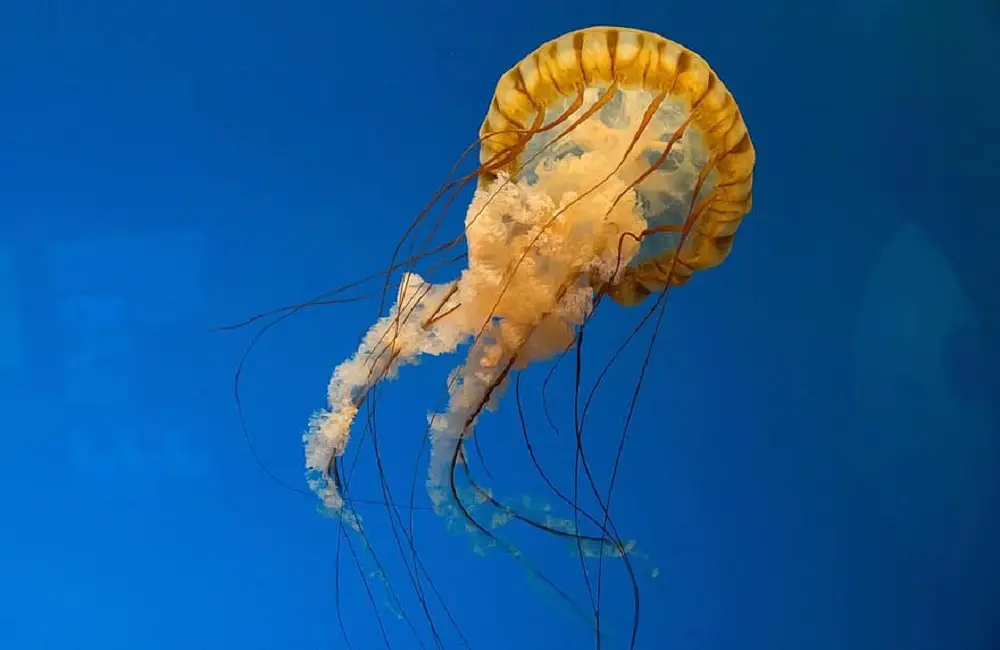
This rule does not work for all animals. Some parrots have high metabolic rates but can live for more than 80 years. And one jellyfish, Turritopsis dohrnii, can in theory avoid aging altogether.
3. Food Chain Position
Animals near the bottom of the food chain often die young because so many predators hunt them.
Prey species often make up for this by breeding early and having many young. Prey animals with strong defenses, such as hard shells or quills, tend to live longer.
4. Environmental Factors
Environment affects how long animals live. Important factors include temperature, food supply, pollution, crowding, and parasites.
Cold-blooded animals in cold environments often grow and age slowly. Many of the longest-lived animals, such as Greenland sharks and bowhead whales, live in cold Arctic waters.
Food supply matters too. Many animals migrate to follow food, while others, such as many hibernating species, survive lean seasons by slowing down.
Some animals cannot easily move when conditions change. Polar bears depend on sea ice to hunt seals, so shrinking ice threatens their survival.
Pollution of the air, water and land harms many animals and can shorten their lives.
Habitat loss, including deforestation, is one of the biggest threats to wildlife. It has pushed some species toward extinction.
As the human population grows, more land is cleared for homes and farms. That leaves less habitat for wild animals.
Parasites and diseases also shorten lives. Heavy parasite loads weaken animals and make them easier prey.
5. Species’ Basal Metabolic Rate Or BMR
Basal metabolic rate is the amount of energy an animal uses at rest just to keep its body working. Animals with high metabolic rates tend to have shorter lives.
A common way to explain this is a car’s fuel: a car that burns fuel fast runs out sooner. The comparison is simplified, and scientists now know metabolism is only part of the story.
Small mammals such as mice and rats have high metabolic rates and short lives. But this does not apply to every animal. Parrots and bats have high metabolic rates yet can live for decades.
10 Animals With Short Lifespans
The ten animals with short lifespans are:
- Hamsters
- Working Bees
- Robin Birds
- Drone Ants
- Mayflies
- Labord’s chameleons
- Gastrotrich
- Hedgehogs
- Moles
- Dogs
1. Hamster: 18 Months to 3 Years
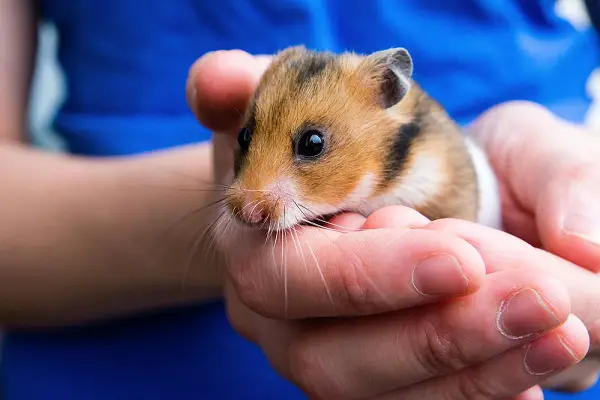
Hamsters are popular small pets. According to the Merck Veterinary Manual, pet hamsters usually live from 18 months to 3 years.
Hamsters need more than food and water. Give them a large cage with deep bedding for burrowing, a solid exercise wheel, and things to chew. Never keep a hamster in a jar or small glass container.
Do not keep Syrian hamsters together. The RSPCA notes hamsters are generally solitary and can be aggressive toward each other, and Syrian and Chinese hamsters should be housed alone.
Hamsters mature quickly and have a very short pregnancy, so they can have several litters a year.
2. Worker Bee: About 5 to 6 Weeks in Summer
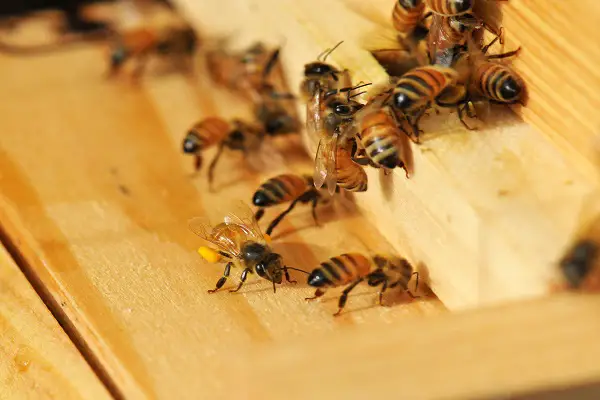
Worker honey bees born in spring and summer usually live only about five to six weeks. Bees born in the fall live much longer, often through the winter, because they work less.
Worker bees are all female. Young workers clean the hive, care for larvae and guard the entrance, and older workers fly out to collect nectar and pollen.
3. Robin: Often 1-2 years
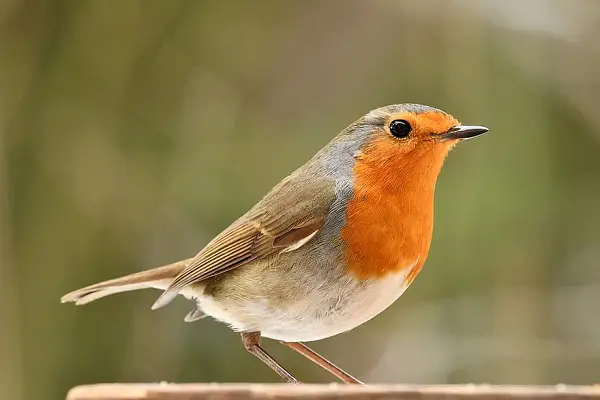
American robins are among the most common North American birds. In many areas they stay year-round, even though people often think of them as a sign of spring.
Most robins live only a year or two because so many die young, though a few live much longer.
Young robins leave the nest about two weeks after hatching. Robins can breed when they are about one year old, and females usually lay three to five eggs per clutch.
4. Drone Ant: Days to Weeks
Male ants, sometimes called drones, have one job: to mate with a young queen during a mating flight.
Males do not work in the colony. Most die within days to weeks, soon after the mating flight.
5. Mayfly: Hours to a Day as Adults
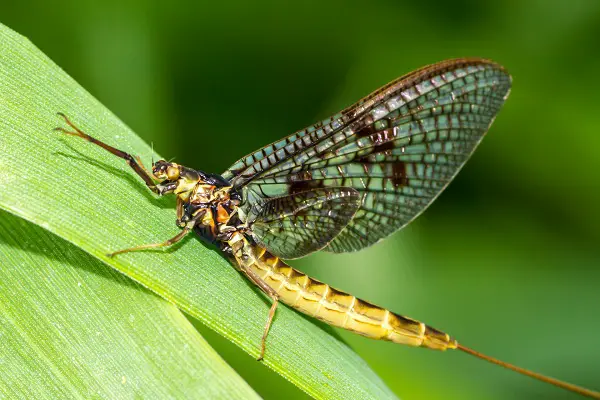
Adult mayflies are famous for their short lives. Depending on the species, adults live from a few minutes to about a day.
Mayflies spend most of their lives, often a year or more, as nymphs in water. The winged adults do not eat; they exist only to mate and lay eggs.
6. Labord’s Chameleon: 1 year
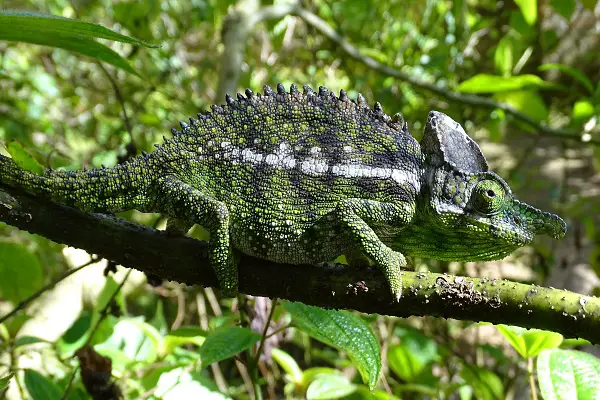
Labord’s chameleon lives only in southwestern Madagascar, an island off the coast of Africa. Its whole life cycle takes about one year.
Most of that year is spent inside the egg. The young hatch around November, grow and mature within about two months, and mate.
The females lay their eggs, and the adults die within a few months. For part of each year, the whole population exists only as eggs.
7. Gastrotrich: About 3 Days
A gastrotrich is a microscopic animal found in fresh water and the sea. Some species live only about three days.
Gastrotrichs are usually less than 4 millimeters long. They glide along surfaces using tiny hairs called cilia, feeding on bacteria and algae, and they are eaten by small fish and other animals.
8. Hedgehogs: 2-5 Years
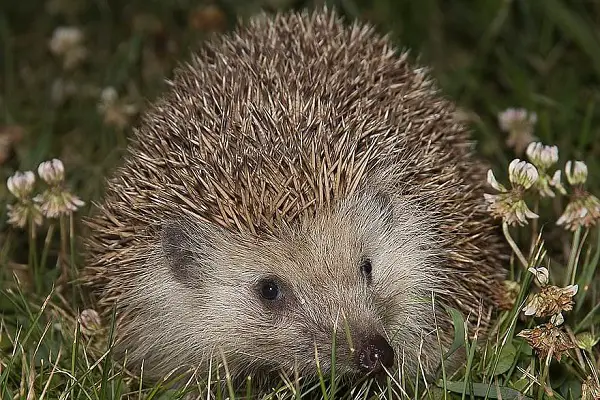
Hedgehogs are native to parts of Europe, Asia and Africa, and were introduced to New Zealand. Depending on the species, they live in woodlands, fields, savannas and even deserts.
Most hedgehogs are about 5 to 12 inches long. They are mostly nocturnal and come out at night to hunt insects and other small animals.
Hedgehogs are mostly solitary and meet up to mate. The pregnancy lasts about 35 days, and litters usually have four to six young, which leave their mother after several weeks.
If you keep an African pygmy hedgehog as a pet, check whether it is legal where you live and find a vet who treats exotic pets.
9. Moles: About 3 Years
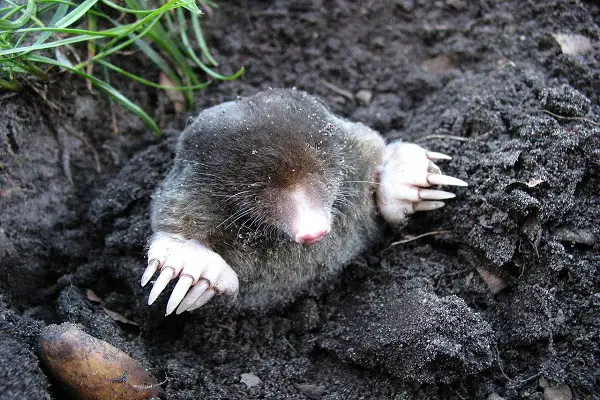
Moles live in North America, Europe and parts of Asia. They are small mammals that spend most of their lives underground, and many people consider them pests in lawns and gardens.
Moles also do good work. They eat grubs and other insects and loosen and aerate the soil.
Many moles live about three years.
10. Dogs: 10-13 years

Dogs are the most common pets in many countries. Sadly, most live only 10 to 13 years.
Lifespan depends on breed and size. Unlike most animals, small dogs usually live longer than large dogs, according to the American Kennel Club. In one study the AKC describes, Great Danes had a median lifespan of under 10 years, while small dogs had a median of nearly 15 years.
Keeping your dog at a healthy weight, up to date on vaccines and parasite prevention, and seeing your vet regularly all help it live as long as possible.
10 Animals With Long Lifespans
Now for the other end of the scale: animals that live for many decades or even centuries.
The ten animals with long lifespans are:
- Red Sea Urchins
- Koi Fishes
- Longfin Eels
- Macaws
- Elephants
- Whales
- Sharks
- Giraffes
- Giant Tortoise
- Kakapo
1. Red Sea Urchins: 100 to 200 Years
Red sea urchins live along the Pacific coast of North America, from Alaska to Baja California. Studies suggest some live more than 100 years, possibly up to 200.
Red sea urchins can regrow lost spines. They graze on kelp and algae. They reproduce by releasing eggs and sperm into the water.
2. Koi Fishes: 25-30 Years
Koi usually live about 25 to 30 years with good care, and some live longer.
A famous Japanese koi named Hanako was reported to be 226 years old when she died in 1977, based on counting the growth rings on her scales. That claim has never been independently confirmed.
3. Longfin Eels: 60 Years
Longfin eels are found in New Zealand. Many live for decades, and one record eel was about 106 years old. Like many long-lived animals, they grow very slowly.
4. Macaws: 40-60 Years
Large macaws often live 40 to 60 years or more in captivity, so a pet macaw can outlive its owner.
Macaws live in forests, especially rainforests, from Mexico through Central and South America. Several species are endangered because of habitat loss and the pet trade, and some have already gone extinct.
5. Elephants: 40-80 Years
Elephants live longer than most land mammals. San Diego Zoo Wildlife Alliance lists a median life expectancy of 38 to 47 years, and some elephants live past 60.
One of the oldest recorded elephants was Lin Wang, an Asian elephant in Taiwan that died in 2003 at about 86 years old.
6. Whales: 40-200 Years
Whale lifespans vary widely by species. Blue whales are estimated to live around 80 to 90 years.
The longest-lived whale is the bowhead whale of the Arctic. According to NOAA Fisheries, studies suggest bowheads may live to be over 200 years old.
7. Sharks: 20 to 270+ Years
Shark lifespans range from about 20 years in some species to centuries in others. Attacks on people are rare, and most sharks pose no threat to humans.
The longest-lived shark is the Greenland shark of the cold North Atlantic and Arctic. A 2016 study in Science used radiocarbon dating of eye lenses and found a lifespan of at least 272 years, making it the longest-lived vertebrate known.
Greenland sharks grow extremely slowly. The same study estimated they reach maturity at no earlier than about 156 years old, and that the largest shark studied was about 392 years old, give or take 120 years.
8. Giraffes: Up to About 25 Years
Giraffes live in the savannas and woodlands of Africa. They are the tallest mammals, and males can reach up to 18 feet tall.
According to San Diego Zoo Wildlife Alliance, giraffes typically live 15 to 20 years, and some in zoos live past 25.
9. Giant Tortoise: 80-150 Years
Giant tortoises, such as those of the Galápagos and Aldabra islands, can live well over 100 years.
The oldest known living land animal is Jonathan, a Seychelles giant tortoise on the island of St. Helena in the South Atlantic. He is estimated to have hatched around 1832.
10. Kakapo: 60+ Years
The kākāpō is a large, flightless, nocturnal parrot found only in New Zealand. It is critically endangered and lives on predator-free islands.
Kākāpō are thought to live 60 years or more, and some scientists think they may reach 90, though no one has confirmed an age that old.
Is There Any Animal That Does Not Die?
Some animals do not seem to age, though they can still die from predators, disease or injury. The two best-known examples are the jellyfish Turritopsis dohrnii and the freshwater animal Hydra.
According to Australia’s Curious science site, Turritopsis dohrnii is the only species that has been called "biologically immortal." When it faces stress, such as starvation or injury, it can turn back from an adult into a polyp, an earlier life stage, and start its life cycle again.
The second animal is the Hydra. Hydra look a bit like the polyp stage of a jellyfish, which makes sense because both belong to the phylum Cnidaria. They live in freshwater ponds and rivers and catch tiny prey with stinging tentacles.
Hydra do not seem to age. Their stem cells can keep renewing themselves, which scientists link to a gene called FoxO. FoxO genes are also found in other animals, including humans, where they help regulate cell survival and aging.
In theory, a Hydra could live indefinitely if nothing kills it.
Do Animals Know They Will Die?
No one knows for sure. Animals clearly avoid danger and fear predators, but that is not the same as understanding that all life ends in death.
Some animals react strongly when a companion dies. Elephants, chimpanzees and some birds and dolphins have been seen staying with or touching the bodies of dead group members. Scientists still debate what these animals understand about death.
Final Words
Every living thing eventually dies, even animals that do not age, because predators, disease and accidents still catch up with them.
Lifespan depends on species, size, metabolism and environment. For pets, good food, exercise, preventive vet care and a safe home help them live as long as their species allows.
Source:
Sources
- Eye lens radiocarbon reveals centuries of longevity in the Greenland shark, Science (author manuscript, Oxford University Research Archive)
- Bowhead Whale, NOAA Fisheries
- Description and Physical Characteristics of Hamsters, Merck Veterinary Manual
- Why Do Small Dogs Live Longer Than Large Dogs?, American Kennel Club


