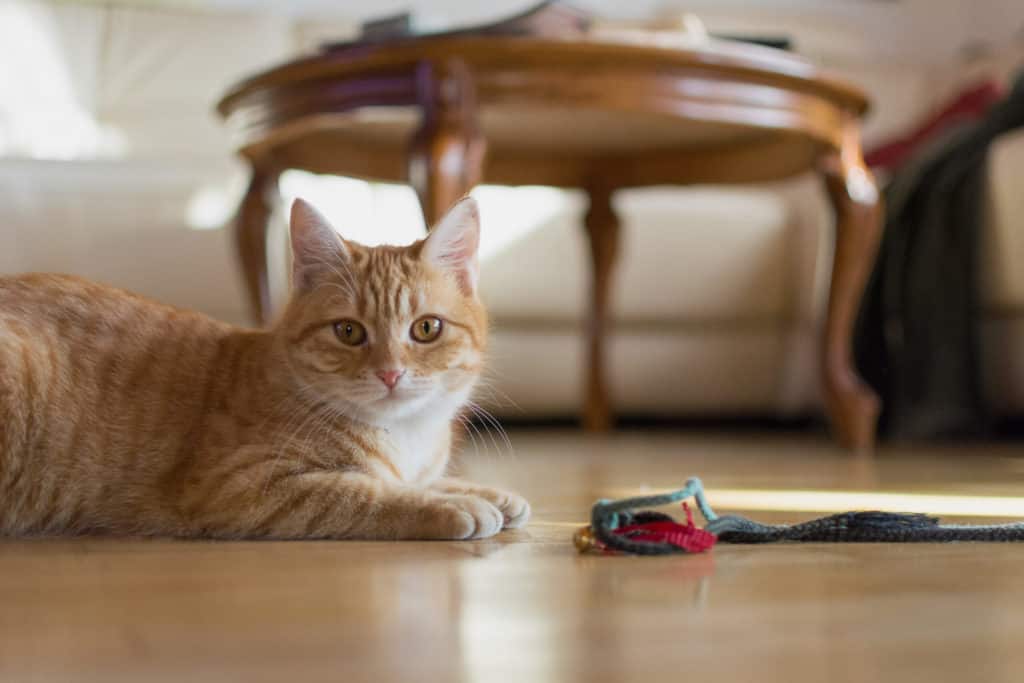
Why Does My Cat Lay on My Clothes Most Of The Time
Contents
- Key Takeaways
- Understanding Feline Behavior
- Scent Marking and Territory
- Seeking Comfort and Security
- Instinctual Habits
- The Role of Texture and Warmth
- Texture Preferences
- Warmth and Coziness
- Cat-Human Bonding
- Trust and Familiarity
- Attention-Seeking Behavior
- Health and Well-being
- Anxiety and Stress in Cats
- Veterinarian Insights
- Environmental Factors
- Laundry and Sleeping Spots
- Toys and Play Areas
- Seeking Solitude
- Practical Considerations for Pet Owners
- Managing Cat Hair and Dander
- Providing Alternatives to Clothes
- Reinforcing Positive Behavior
- Frequently Asked Questions
- What does it mean when my cat chooses to sleep on my clothing?
- Can a cat's sleeping habits on personal items indicate affection?
- Is there a reason my cat prefers to snooze on worn garments?
- How does a cat's attraction to their owner's scent affect their resting places?
- Sources
Many cats choose a pile of laundry or a discarded sweatshirt over their own bed. If you have ever wondered, "Why does my cat lay on my clothes?", the short answer is warmth, softness, and your scent.
Let's look at what drives this habit and what to do if you would rather keep your clothes fur-free.
Key Takeaways
- Cats lie on your clothes for warmth and comfort, and to be close to your scent.
- Your familiar smell helps many cats feel safe and relaxed.
- The habit is normal, but a sudden change in where or how much your cat sleeps is worth mentioning to your vet.
Understanding Feline Behavior
Cats pick resting spots that feel safe, warm, and familiar. Your clothes check all three boxes.
Clothing you have worn carries your scent, which most cats find reassuring. Lying on it can also mix their scent with yours.
Scent Marking and Territory
Cats use scent to mark the places they consider theirs. According to the Merck Veterinary Manual, cats mark with special scent glands under the chin and on the paws, as well as with urine and feces. Rubbing and kneading leave that scent on objects.
A home that smells familiar helps a cat feel secure. Lying on your clothes adds the cat's scent to items that already smell like you.
- Territory: Marks a spot as part of the cat's familiar space.
- Marking: Leaves the cat's own scent behind.
- Pheromones: Chemical signals cats use to communicate.
Seeking Comfort and Security
Your scent on worn clothing can calm a cat, especially when you are not home. A cat that naps on your clothes is usually a cat that feels safe and content.
- Comfort: Soft fabric makes a cozy bed.
- Security: Your scent is familiar and reassuring.
- Calm: A familiar smell can help an anxious cat settle.
Instinctual Habits
Many cats knead soft fabric before settling down. Kneading starts in kittenhood, when kittens press on their mother to stimulate milk flow, and many adults keep doing it when relaxed.
Soft clothes invite kneading and napping, which makes them a natural target.
- Instinct: Behaviors cats are born with.
- Kneading: A comforting behavior carried over from kittenhood.
- Napping: Cats sleep many hours a day and prefer warm, secure spots.
The Role of Texture and Warmth
Texture and warmth are a big part of the appeal.
Texture Preferences
Cats tend to like soft, plush materials. Here is why your clothes are tempting:
- Softness: Sweaters, fleece, and cotton make a comfortable nap spot.
- Fabric Types: Knit and fleece fabrics are easy to knead and sink into.
Warmth and Coziness
Cats love warm places. Freshly worn clothes and clothes fresh from the dryer hold heat for a while.
- Heat Retention: Just-worn clothes or warm laundry make a ready-made heated bed.
- Scent Association: Your scent adds to the sense of safety.
- Secure Resting Place: Warmth plus your scent creates a spot where your cat can fully relax.
Cat-Human Bonding
Lying on your clothes can be a sign that your cat is attached to you.
Trust and Familiarity
Your scent tells your cat that a spot is safe. A cat relaxed enough to sleep on your things is showing that it trusts its home and the people in it.
- Consistency: Regular, positive time together, such as playtime, builds trust.
- Association: Your clothes become linked with the comfort of your presence.
Attention-Seeking Behavior
Some cats lie on clothes you are about to wear, or on the laundry you are folding, because it puts them right where you are. It can be a bid for attention.
- Direct Approach: Getting in your way is an easy way to get noticed.
- Engagement: A few minutes of play or petting often satisfies the request.
Health and Well-being
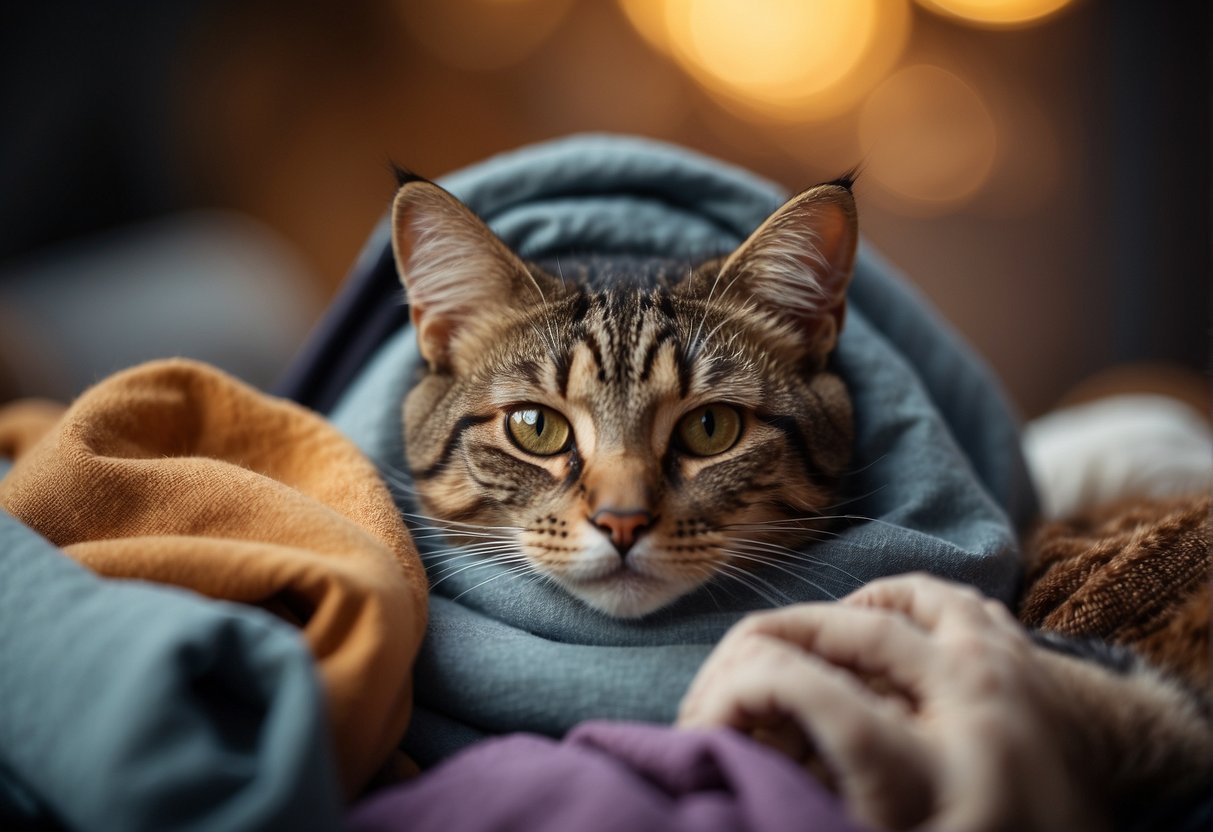
Most of the time, this habit is simply about comfort. It can also be a clue to how secure your cat feels.
Anxiety and Stress in Cats
Stressed cats often seek out familiar smells. If your cat clings to your clothes when you are away, or after a move or a new pet, it may be using your scent to cope.
Signs of purring and kneading usually mean a cat feels secure, though cats sometimes purr when stressed or in pain, too.
Signs of Anxiety in Cats:
- Hiding
- Aggression
- Excessive grooming
- Peeing or pooping outside the litter box
Calming Strategies:
- Provide a safe space (e.g., cat tree, bed)
- Maintain a routine
- Use feline pheromone diffusers
Veterinarian Insights
Lying on clothes is not a health problem in itself. A sudden change in behavior, though, is worth a vet visit to rule out illness or pain.
Ask your vet for help if you see:
- When to Consult a Vet:
- Change in appetite
- Sudden change in behavior or sleeping spots
- Hiding, overgrooming, or other signs of distress
Your vet can also refer you to a veterinary behaviorist if stress is the main issue.
Environmental Factors
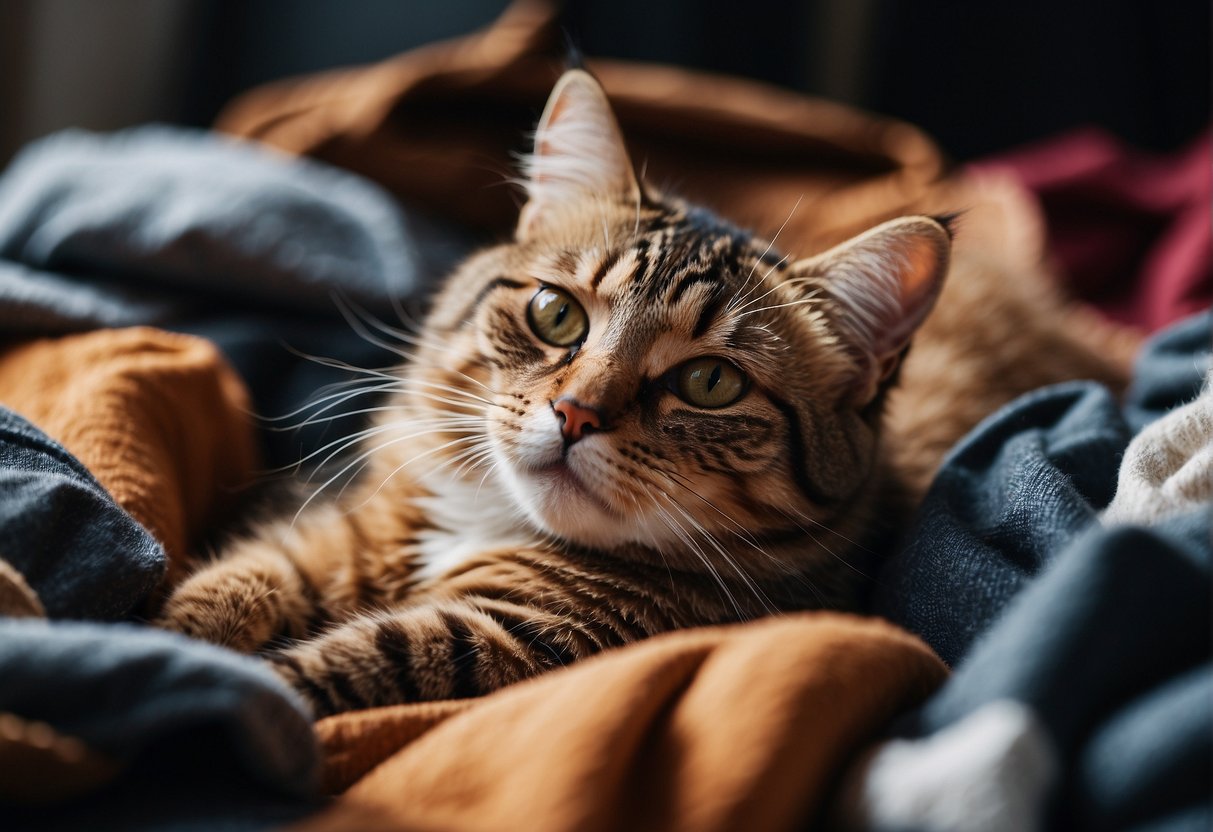
Where your clothes end up affects how often your cat finds them.
Laundry and Sleeping Spots
Laundry baskets and piles of clothes are prime napping spots. Worn clothes smell strongly of you, and soft items like sweaters make a ready-made bed.
Keep in mind that a cat can get shut inside a washer or dryer. Always check before you start a load.
Toys and Play Areas
Cats like spaces they can both play in and rest in. Cat trees and boxes offer both.
- Cat Tree: Suitable for climbing, scratching, and napping.
- Boxes: Offer hiding spots and playful ambush points.
- Laundry: Socks and soft garments may become impromptu playthings. Watch for chewing, since swallowed socks or strings can cause a dangerous blockage.
Seeking Solitude
Some cats retreat to a closet or other small space for some quiet. These spots offer a quiet environment away from household activity.
Hiding places such as under the bed, a closet shelf, or an open drawer appeal to a cat's instinct to rest somewhere secure.
Practical Considerations for Pet Owners
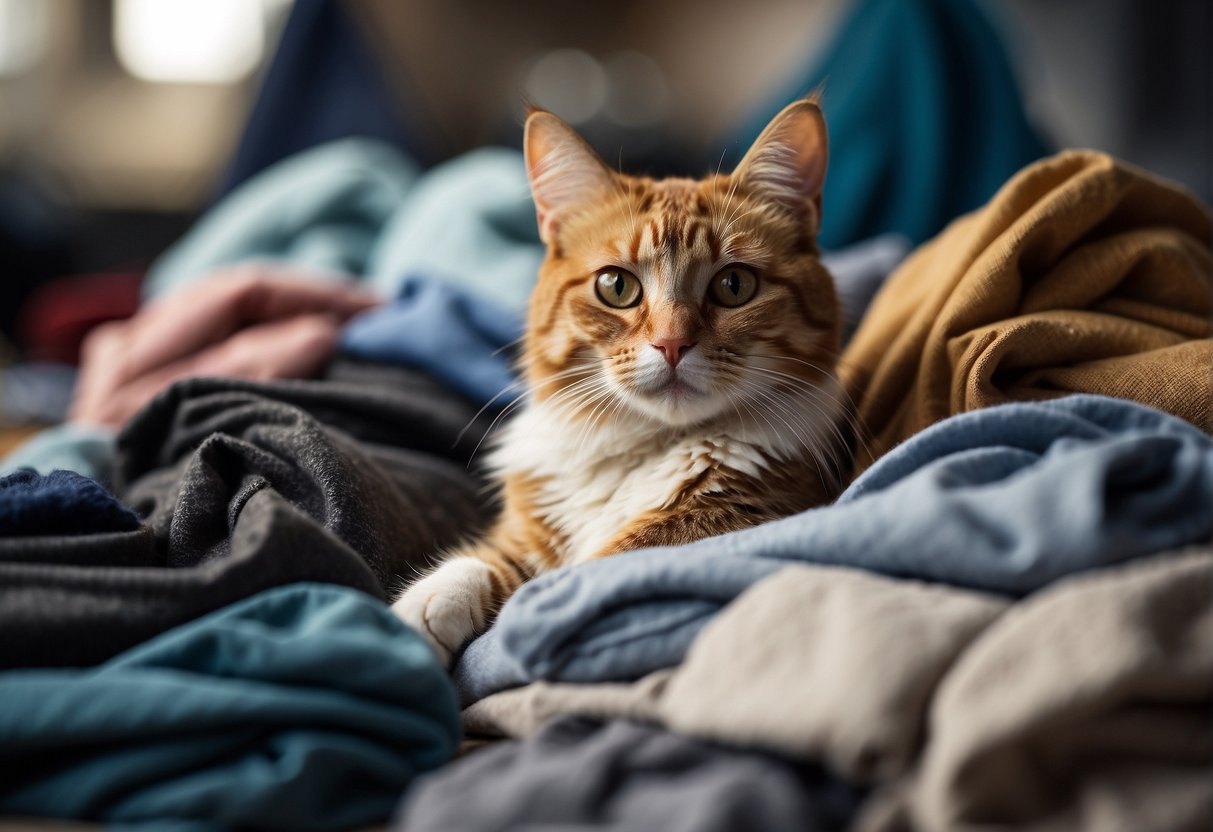
If you would rather keep your clothes clean, a few simple changes help.
Managing Cat Hair and Dander
Brushing your cat regularly cuts down on loose hair. Lint rollers and regular vacuuming take care of the rest.
If someone in your home has allergies, ask your doctor and your vet about ways to reduce exposure.
Providing Alternatives to Clothes
Offer a cat bed or a soft blanket in the spots where your cat likes to lie on clothes. An old T-shirt you have worn, placed in the bed, can make it more appealing.
Toys, cat trees, and household items like boxes give your cat more lounging options. A little catnip or a pheromone spray on the new bed can help, too.
Reinforcing Positive Behavior
Reward your cat with treats, praise, or play when it uses its own bed.
Never punish your cat for lying on clothes. Simply put laundry away, close closet doors, and make the alternative more inviting.
Frequently Asked Questions
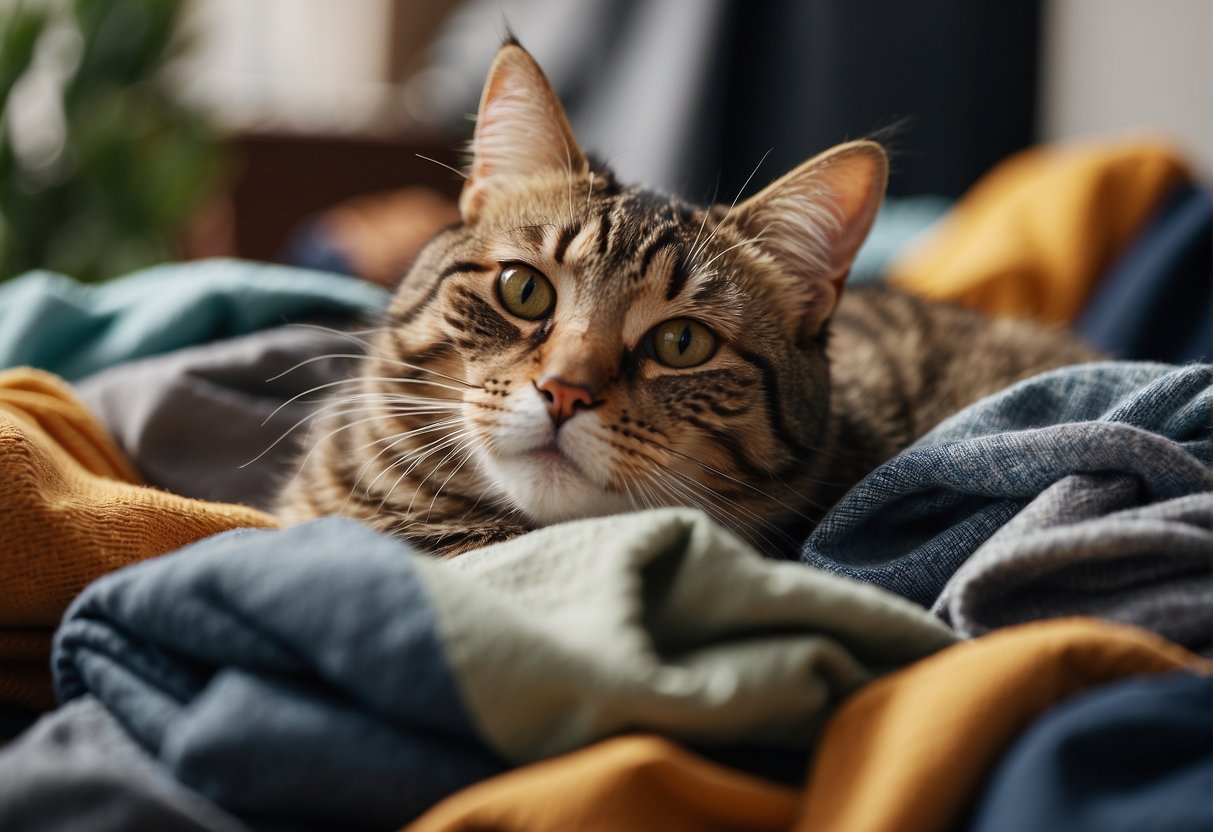
What does it mean when my cat chooses to sleep on my clothing?
It usually means your cat feels comfortable and safe. Your clothes are soft, often warm, and smell like you.
Can a cat's sleeping habits on personal items indicate affection?
Often, yes. A cat that seeks out your things and rubs its scent on them is treating you as part of its familiar, trusted space.
Is there a reason my cat prefers to snooze on worn garments?
Worn clothes carry more of your scent than clean ones. That familiar smell is what most cats are after.
How does a cat's attraction to their owner's scent affect their resting places?
Many cats pick resting spots that smell like their people, such as your pillow, your side of the bed, or a pile of laundry.
Sources
- Normal Social Behavior in Cats, Merck Veterinary Manual
- Aggression in Cats, ASPCA