Why Are Great Danes' Eyes Red? | Causes and Treatment
Contents
- Is it Normal for Great Dane’s Eyes Red?
- What is Ectropion, and How does it Occur?
- What are the Symptoms of Ectropion?
- Treatment of Ectropion
- What is Entropion, and How does it Occur?
- Inherited Entropion
- Acquired Entropion
- Spastic Entropion
- What are the Symptoms of Entropion?
- Treatment of Entropion
- What is Glaucoma and How does it Occur?
- Primary Glaucoma
- Secondary Glaucoma
- Symptoms of Glaucoma
- Treatment of Glaucoma
- What are Cataracts, and How does it Occur?
- Symptoms of Cataracts
- Treatment of Cataracts
- Other Reasons for Red Eyes in Great Danes
- Corneal Ulceration
- Environmental Irritant
- Conjunctivitis
- Dry Eyes
- Allergies
- Uveitis
- Cherry Eye
- Eye Injuries
- How do you tell if your Great Danes has Eye Infection or Allergies?
- FREQUENTLY ASKED QUESTIONS
- Why is the White of my Great Danes Red?
- Is it Bad if my Great Dane’s Eyes are Red?
- Do red Eyes mean Great Danes are Tired?
- How can I Soothe my Great Dane’s Red Eyes?
- What can I do for my Great Dane’s Red Eyes?
- Wrapping up
- Sources
Red eyes are common in dogs, including Great Danes. Some causes are minor, but others can threaten your dog's sight, so red eyes always deserve attention.
Healthy eyelids sit close to the eye and help protect it from dirt and debris. Breeds with loose facial skin, like many Great Danes, are more prone to droopy eyelids that let irritants in. The AKC breed standard asks for relatively tight, almond-shaped eyelids and treats visible haws as a serious fault.
You may see some mucus in the corners of your Dane's eyes after a long day. Gently wipe it away with a clean, damp cloth, using a fresh section for each eye.
Red eyes can come from irritation, allergies or infection, or from eye diseases such as entropion, glaucoma, ectropion, and cataracts. Keep reading to learn more.
Is it Normal for Great Dane’s Eyes Red?
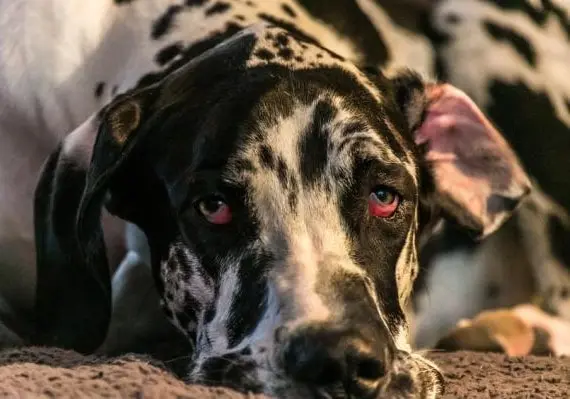
Your Great Dane can get red eyes from a foreign object, dry eye, injury, allergies, infection, conjunctivitis or glaucoma. Several of these can damage the eye quickly.
Don't treat red eyes at home without a diagnosis, and never use human eye drops unless your vet tells you to. See your vet promptly, and treat a painful, cloudy or squinting eye as an emergency.
What is Ectropion, and How does it Occur?
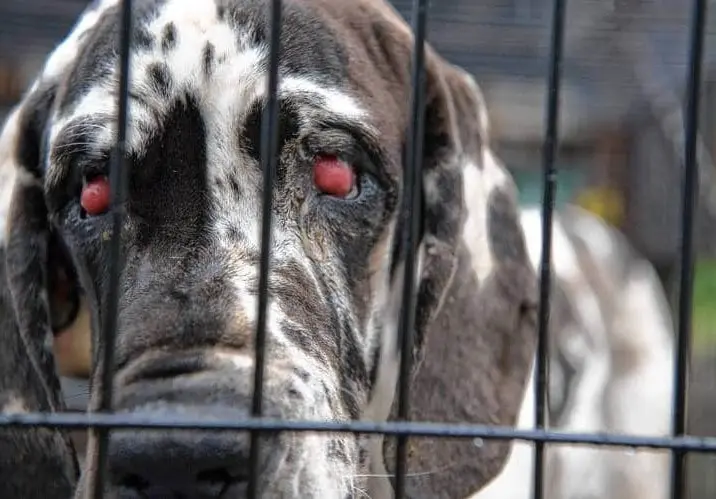
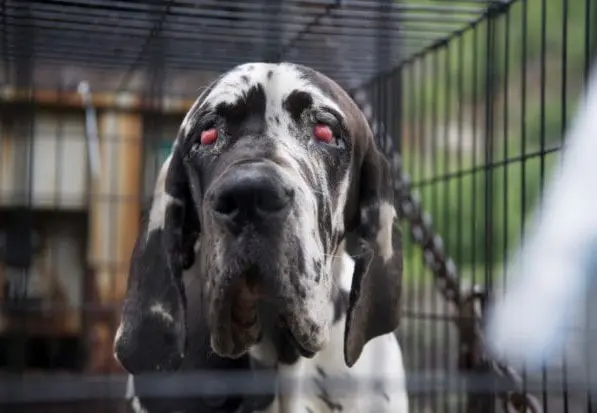
Ectropion is a condition in which the lower eyelid sags and rolls outward, away from the eyeball. This exposes the inner lining of the eyelid to dust, debris and bacteria, which can lead to irritation and infection.
Ectropion is often inherited and is most common in dogs with loose skin around the face. Responsible breeders avoid breeding affected dogs, so ask about the parents' eyes when buying a puppy.
What are the Symptoms of Ectropion?
The main sign is a droopy lower eyelid that shows red tissue. Other signs include excessive tearing, discharge and repeated eye infections.
Signs often appear in young dogs but can develop later in life. Keep an eye on any changes.
Treatment of Ectropion
Mild ectropion is often managed with eye lubricants and by treating infections as they occur. Your vet may prescribe drops or ointment.
If your Dane has frequent infections or eye damage, surgery to tighten the eyelid can help. Talk to your veterinarian as soon as you notice signs.
What is Entropion, and How does it Occur?
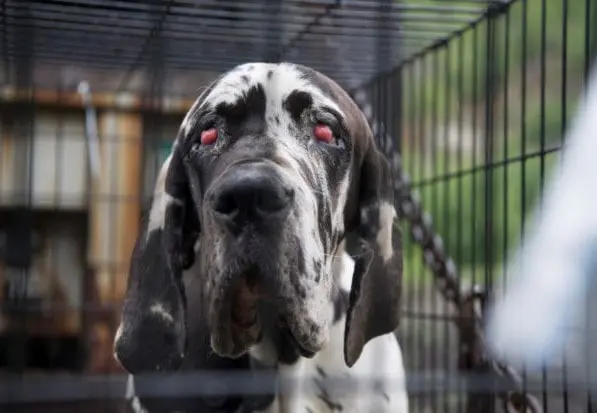
Entropion is a condition in which the eyelid rolls inward. It can affect the upper or lower lid, and the lashes and hair then rub against the surface of the eye.
That rubbing irritates the cornea and can cause painful ulcers. Inherited entropion often shows up in young, growing dogs. Types of entropion are as follows:
Inherited Entropion
This is the most common type. It occurs in breeds with loose facial skin or certain eyelid shapes, such as Great Danes, Shar-Peis and Chow Chows.
Acquired Entropion
Acquired entropion develops later in life, for example after scarring, injury or changes in the tissue around the eye. It is more common in older dogs.
Spastic Entropion
This type is caused by eyelid spasms, usually in response to another painful eye problem such as a corneal ulcer. It can happen in any breed at any age.
What are the Symptoms of Entropion?
The symptoms of entropion include:
- Excessive blinking or squinting
- Corneal ulcers
- Eyelid spasms
- Tearing eyes
- Pawing at the eyes
- Redness
Long-term rubbing can cause brown pigment to form on the cornea. If your Great Dane seems uncomfortable or keeps pawing at his eyes, see your veterinarian.
Treatment of Entropion
Entropion is treatable. Your vet may first use lubricating or antibiotic drops or ointment to protect the eye.
In puppies, a vet may place temporary sutures (eyelid tacking) to roll the lids outward while the head grows. This sometimes needs repeating, and the sutures are removed once the lids are in position.
Many dogs need permanent corrective surgery. Left untreated, entropion can scar the cornea and harm vision.
What is Glaucoma and How does it Occur?
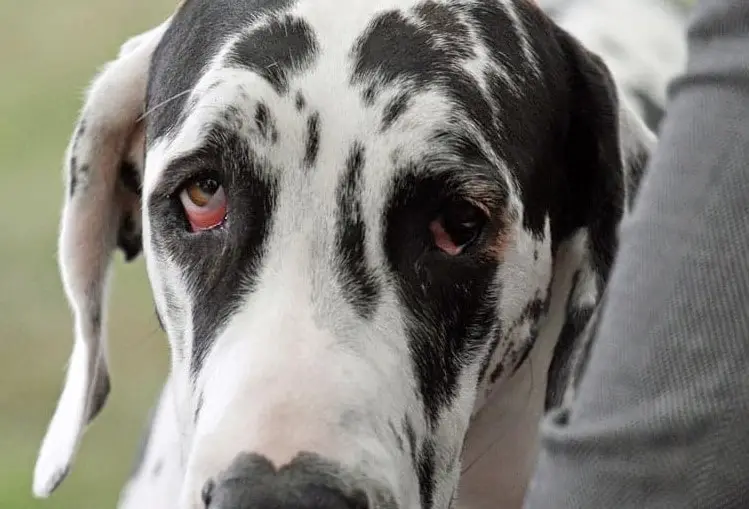
Glaucoma is a painful condition in which fluid cannot drain from the eye properly, so pressure inside the eye rises. High pressure damages the optic nerve and retina and can cause blindness quickly. Two types of Glaucoma are as follows:
Primary Glaucoma
Primary glaucoma is inherited and affects some breeds more than others. It can start in an otherwise healthy eye and often affects the second eye later.
Secondary Glaucoma
Secondary glaucoma results from another eye problem, such as inflammation, a tumor, bleeding, infection or a displaced lens.
Symptoms of Glaucoma
Glaucoma is an emergency. Signs include:
- Constant squinting
- Blinking
- Swollen eyes
- A cloudy or bluish cornea
- Excessive tearing
- Vision loss
- A dilated pupil
- Redness in the white part of the eye (Sclera)
Treatment of Glaucoma
If glaucoma is caught early, medication can lower the eye pressure and relieve pain. Your dog will need regular rechecks to monitor the pressure.
Some dogs need surgery. If the eye is already blind and painful, removing it may be the kindest way to end the pain.
What are Cataracts, and How does it Occur?
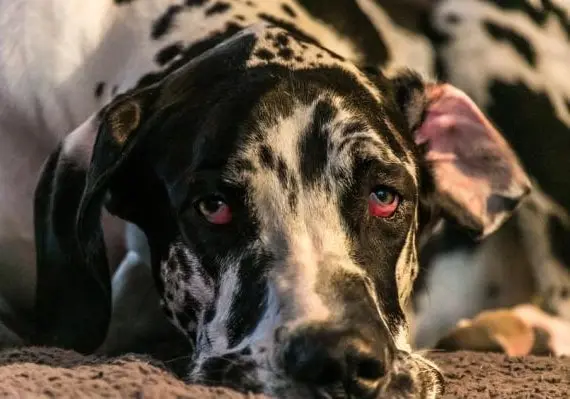
A cataract is cloudiness in the lens of the eye. It blocks light from reaching the retina and can lead to vision loss.
Some cataracts are inherited and can appear in young dogs. Others develop with age or from diabetes, injury or inflammation inside the eye.
Symptoms of Cataracts
Cataracts often get worse over time. Signs include a cloudy or white lens, bumping into things and trouble seeing in new places.
Cataracts themselves are not usually red, so a red or painful eye in a dog with cataracts can mean inflammation or glaucoma. See your vet promptly.
Treatment of Cataracts
The main treatment is surgery by a veterinary ophthalmologist, who removes the cloudy lens and usually replaces it with an artificial one. It is costly and not right for every dog.
If surgery is not an option, keep your Dane's surroundings familiar. Many dogs adapt well to vision loss using their senses of smell and hearing.
Other Reasons for Red Eyes in Great Danes
Red eyes can also come from dry eye, allergies, foreign objects or injury. Some causes are minor, but others need prompt treatment.
Corneal Ulceration
The cornea is the clear front surface of the eye. A scratch from a foreign object or pawing can become an ulcer, which is painful and can get infected.
Signs include squinting, discharge and pawing at the eye. A corneal ulceration needs quick veterinary care, because some infected ulcers can worsen within a day.
Environmental Irritant
Smoke, cleaning products and dust can irritate your dog's eyes and make them red. If redness doesn't clear quickly once the irritant is gone, contact your veterinarian.
Conjunctivitis
Conjunctivitis is inflammation of the conjunctiva, the pink membrane lining the eyelids and covering the white of the eye. Merck notes it is common in dogs and can be caused by infection, irritants or allergens. Treatment depends on the cause.
Dry Eyes
Dry eye happens when the tear glands don't produce enough tears. The cornea dries out, which makes the eyes red, sore and prone to thick discharge. Your vet can diagnose it with a simple tear test.
Allergies
Allergies can cause eye redness, itching and face rubbing. The sclera (the white of the eye) and the conjunctiva can become swollen and red.
Allergies can be hard to manage, so work with your veterinarian on a long-term plan.
Uveitis
Inflammation inside the eye is called Uveitis. It is painful, and affected dogs often squint and avoid bright light. Possible causes include:
- Tick-borne and parasitic diseases such as ehrlichiosis and toxoplasmosis
- Fungal diseases such as histoplasmosis, coccidioidomycosis, blastomycosis, and cryptococcosis
- Viral diseases such as distemper
- Bacterial diseases such as leptospirosis
- Cancer, high blood pressure and diabetes-related cataracts
Uveitis needs prompt veterinary care to find the cause and protect the eye.
Cherry Eye
In cherry eye, the tear gland of the third eyelid slips out of place and appears as a red, swollen lump in the corner of the eye. The exact cause is not clear. Vets usually recommend surgery to put the gland back in place.
Eye Injuries
If your Great Dane hurts an eye while playing, you might notice:
- Redness of tissues over the eye
- Tearing
- Swelling eyelid
- Redness of the white part of the eyeball (sclera)
- Squinting
Even a minor-looking injury can damage the cornea. Take your Dane to the veterinarian promptly.
How do you tell if your Great Danes has Eye Infection or Allergies?
Infection and allergies can look alike: redness, discharge, blinking, light sensitivity, swelling, squinting and pawing. Your veterinarian can tell them apart and prescribe the right treatment.
FREQUENTLY ASKED QUESTIONS
Why is the White of my Great Danes Red?
Red whites usually mean inflammation, which widens the blood vessels in the white part of the eye (sclera). Causes range from irritation to glaucoma, so have it checked.
Is it Bad if my Great Dane’s Eyes are Red?
It can be. Red eyes can signal irritation, infection, entropion, ectropion, uveitis or glaucoma, and some of these threaten vision.
Do red Eyes mean Great Danes are Tired?
Tiredness is not a reliable explanation for red eyes. If the redness doesn't clear quickly, see your vet.
How can I Soothe my Great Dane’s Red Eyes?
Gently wipe away discharge with a clean, damp cloth. Don't use human eye drops or home remedies, and see your vet for a diagnosis.
What can I do for my Great Dane’s Red Eyes?
Call the vet to schedule an appointment. Tell them when the redness started and any other signs you've noticed. Do not try to treat the redness yourself at home.
Wrapping up
Red eyes in a Great Dane can come from many causes, from simple irritation to glaucoma. See your vet promptly, and ask about the parents' eye history when buying a puppy.
- When Do Great Danes Stop Growing
- How Much Does Great Dane Weight
- How To Diagnose The Symptoms Of Bloat In Great Danes
- 6 Ways To Strengthen Your Great Dane Feet
- How To Care For A Great Dane Puppy
Sources
- Disorders of the Conjunctiva in Dogs, Merck Veterinary Manual
- Official Standard of the Great Dane, American Kennel Club