6 Ways to Strengthen your Great Dane Feet
Contents
- Does Genetics Affect Foot Structure in Great Danes?
- 6 Ways to Strengthen your Great Dane Feet
- 1. Go Outside and Play
- 2. Balance Games
- 3. Nail Trimming
- 4. Stretching
- 5. Fitness
- 6. Proper Diet
- FREQUENTLY ASKED QUESTIONS
- How can I strengthen my Great Dane's legs?
- How do I strengthen my Great Dane's weak pasterns?
- How can I increase my Great Dane bone density?
- Why does my Great Dane leg shake?
- Can Great Dane knuckling be cured?
- Wrapping Up
- Sources
Is your Great Dane suffering from weak or flat feet? Feet carry the whole body, and Great Danes have giant bodies.
Weak feet matter more in a breed that is already prone to joint and bone problems such as hip dysplasia. Foot development is especially important in puppies, and improper growth can lead to knuckling in Great Dane puppies.
Poor structure can cause pain, joint injury, and arthritis in adult Great Danes. Regular nail trims, the right exercise, and a proper diet all help. Here is how to strengthen your Great Dane's feet, and when to involve your vet.
Does Genetics Affect Foot Structure in Great Danes?
Genetics play a big role in a Great Dane's overall structure, including its feet. According to the illustrated standard, the front legs should look straight and parallel from the front.
The official AKC breed standard says strong pasterns "should slope slightly." It calls for round, compact feet with well-arched toes, "neither toeing in, toeing out, nor rolling to the inside or outside," and nails that are short and strong.
Splayed toes, east-west feet, and down pasterns are faults. A correct structure supports comfort, movement, and long-term health.
Genetics can also play a role if your Great Dane's feet turn out. Crooked legs can also come from a damaged growth plate, a problem called angular limb deformity.
Some of these cases can be corrected surgically. Have your veterinarian examine any puppy whose legs or feet look crooked.
6 Ways to Strengthen your Great Dane Feet
Here are 6 ways to strengthen your Great Dane's feet:
1. Go Outside and Play
Great Danes benefit from free play and walks on soft, natural ground. Free play is especially helpful for puppies.
If your Great Dane's nails are overgrown, long walks on hard surfaces add strain until the nails are trimmed. Slick floors such as laminate, tile, or wood make dogs slip, so lay down rugs or yoga mats where your Dane walks.
Look for safe variety: grass, sand, dirt paths, and gentle hills. A very short leash keeps your Dane from moving naturally.
Some owners use e-collars for off-leash freedom, but a well-fitted harness is what keeps pressure off the neck on leashed walks. Also, here you can choose the best collar for your Great Dane.
Great Dane puppies should be encouraged to explore different surfaces safely, at their own pace. Low ramps and tunnels help build confidence and coordination.
Don't let your dog make a habit of jumping on and off furniture or beds. Repeated hard landings can injure joints, and growing puppies are the most vulnerable. Want socialization tips for Great Dane?
2. Balance Games
Balance work engages the small stabilizing muscles, ligaments, and tendons. Ask your veterinarian or a canine rehabilitation therapist which exercises suit your dog, especially for a growing puppy.
Simple ideas include walking across a wide plank laid flat on grass, using [balance pods](https://www.amazon.com/Navaris-Hedgehog-Balance-Pods-Stability/dp/B07B9HSL5L?dchild=1&keywords=therapy dome&qid=1615305750&sr=8-3&linkCode=sl1&tag=animal-dome-20&linkId=f40fa1be8e6ad5cbe1e3f7d551cb6b1f&language=en_US&ref_=as_li_ss_tl), and slow sit-to-stand repetitions. For puppies, a low "playground" of cushions, gym mats, and tunnels builds confidence and body awareness.
Always supervise and keep it safe. Never force your Dane onto an unstable surface, and reward calm effort with treats and praise.
3. Nail Trimming
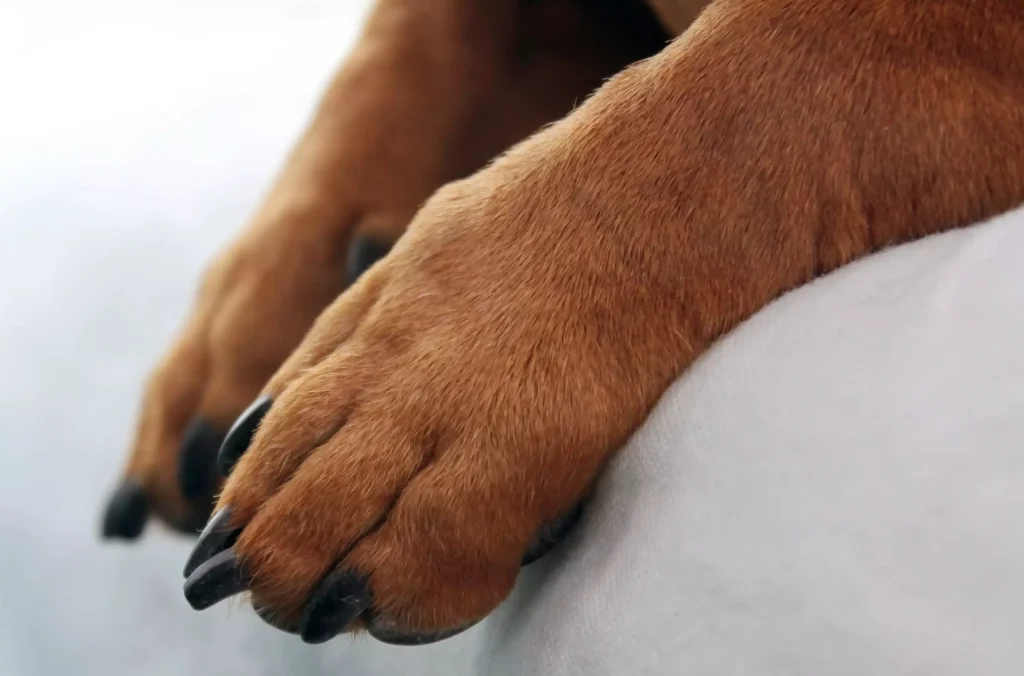
Overgrown nails are a common, fixable cause of splayed toes and poor foot posture. When nails are too long, they hit the floor first and push the toes and pasterns out of position with every step.
Trim a little at a time and often, so the nails stay short. Many owners trim or grind weekly.
If your Great Dane resists, ask your vet, groomer, or a trainer to help you build calm handling. We recommend [MPP Professional Grade Pet Nail Clipper](https://www.amazon.com/MPP-Professional-Clippers-Durable-Handled/dp/B07ML5DLYM?dchild=1&keywords=millers forge red handle&qid=1615267140&sr=8-3&linkCode=sl1&tag=animal-dome-20&linkId=aaaf6464816209c0baaac094bc5bd3fa&language=en_US&ref_=as_li_ss_tl) for trimming the nails and a Dremel Tool for smoothing them.
You can also use a GoPets Nail Clipper for quick cuts. A rotary tool is handy if you want to round the nail edges after clipping.
Avoid cutting into the quick, the living tissue inside the nail. If a nail bleeds heavily or keeps bleeding, call your vet.
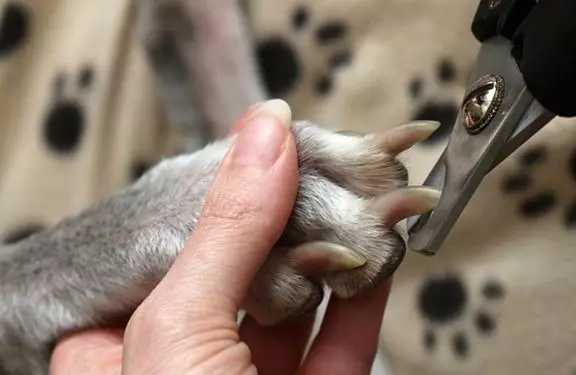
Here is an image of overgrown nails:
4. Stretching
Gentle stretching can help maintain range of motion in the joints. Keep stretches slow and pain-free, and ask your vet or a rehab therapist to show you safe ones for your dog.
5. Fitness
Dogs need regular exercise to stay strong. A wobble cushion or balance ball can help a Great Dane build strength and balance. You can use the Tomaz Wobble Cushion for strengthening exercises.
Place the cushion on a flat, non-slip surface, then let your Dane put its front feet on it. The cushion wobbles, so your dog has to work to stay balanced. Use treats to keep your dog standing square and steady.
Keep sessions short, and stop if your dog seems sore or tired. A canine rehabilitation professional can set up a safe program.
6. Proper Diet
Diet matters most while a Great Dane is growing. Feed a complete puppy food made for large or giant breeds rather than an adult or generic formula, and do not add calcium supplements unless your vet prescribes them.
Brands such as Royal Canin, Eukanuba, Purina Pro Plan, and Hill's Science Diet make large-breed puppy formulas. Whatever you choose, check that the label says the food is complete and balanced for growth of large-size dogs.
A diet that doesn't suit your dog can show up as loose stools, poor muscle tone, low energy, gas, a dull coat, or weight problems. Growth that is too fast or unbalanced is linked to joint problems such as arthritis and hip dysplasia.
So, consult your veterinarian about the right diet for your Great Dane. Here are our food guides for Great Danes:
- Best Dog Food For Great Danes with Diarrhea
- Best Dog Food For Great Danes with Skin Allergies
- Best Wet Dog Food For Great Danes
- Best Dry Dog Food For Great Danes
FREQUENTLY ASKED QUESTIONS
How can I strengthen my Great Dane's legs?
Regular walks on soft, varied ground, short balance sessions on pods or a wobble cushion, and slow sit-to-stand repetitions all help. Ask your vet or a rehab therapist to tailor the plan, especially for puppies.
How do I strengthen my Great Dane's weak pasterns?
Start with short nails, good nutrition, and controlled exercise on soft ground such as grass or sand. Some owners use elevated feed bowls so the dog will "stand tall to eat."
However, the Merck Veterinary Manual advises against raised feed bowls for dogs at risk of bloat, and Great Danes are at the top of that list. Talk to your vet before raising your dog's bowl.
How can I increase my Great Dane bone density?
Feed a complete, balanced food for your dog's life stage. Puppies need a large-breed growth formula, and extra calcium or vitamin D supplements can do harm unless your vet prescribes them.
Why does my Great Dane leg shake?
Leg tremors have many causes, including pain, weakness, and nerve problems. Great Danes can develop a condition called primary orthostatic tremor, which causes trembling in the legs while the dog is standing. Have your vet check any new or ongoing shaking.
Can Great Dane knuckling be cured?
Many puppies with mild knuckling improve with diet changes and controlled exercise. Severe cases may need further treatment, so have your vet examine any puppy that knuckles over.
Wrapping Up
You can support strong Great Dane feet with short nails, safe exercise, and the right diet. Ask your veterinarian for recommendations, and a qualified canine rehabilitation therapist can help with an exercise plan.
Sources
- Official Standard of the Great Dane, American Kennel Club
- Gastric Dilation and Volvulus in Small Animals, Merck Veterinary Manual
- Guidelines on Selecting Pet Foods, WSAVA Global Nutrition Committee