24 Things You Need to Know About Great Danes As An Owner
Contents
- 24 Interesting Facts About Great Danes
- 1. One of the Tallest Dog in the World
- 2. Exercise is a Must Need
- 3. This Breed Follows Their Noses
- 4. These Dogs Love Sports
- 5. Low Life Expectancy
- 6. National Dog of Germany
- 7. They have Massive Paws
- 8. They Love to Nap
- 9. Big Puppies at Birth
- 10. Great Danes Reach their Full Size in About Two Years
- 11. Highly Affectionate and Social
- 12. Proper Training is Necessary
- 13. Big Needs
- 14. Originate for Boar Hunting
- 15. Seven Official Colors
- 16. Apollo of Dogs and Gentle Giants
- 17. AKC Rank these Dogs for Working Group
- 18. Great Dane Puppies Eat a Lot
- 19. Great Danes are Bigger than they Look
- 20. State Dog of Pennsylvania
- 21. Puppies should Avoid Hard Exercise
- 22. Common Health Concerns for Great Danes
- 23. Minimal Grooming
- 24. Marmaduke and Scooby Doo
- FREQUENTLY ASKED QUESTIONS
- Is Great Dane a good family dog?
- Do Great Danes like to be held?
- What is special about a Great Dane?
- What two dogs make a Great Dane?
- Can Great Danes be left alone?
- Are Great Danes talkative?
- Wrapping Up
- Sources
Despite their size, Great Danes are known as gentle giants. They are playful, affectionate and usually easygoing. German nobles once used them to hunt wild boar.
The American Kennel Club calls the breed the "Apollo of Dogs." Great Danes regularly rank around the 20th most popular breed on the AKC breed list. Here's what every owner should know.
24 Interesting Facts About Great Danes
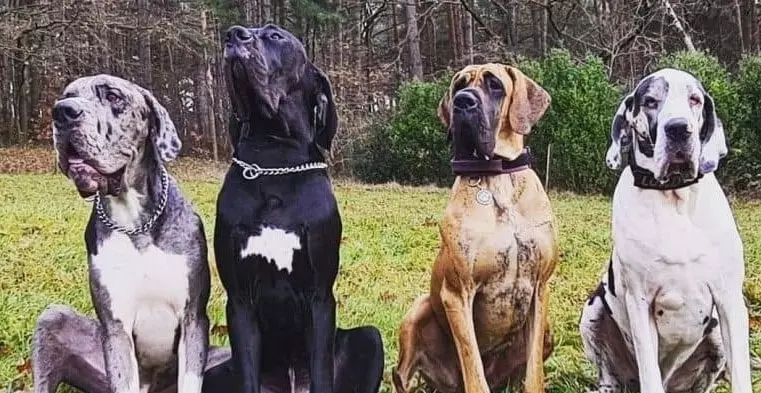
If you own a Great Dane or plan to, these facts will help you understand your dog.
1. One of the Tallest Dog in the World
According to the AKC, males stand 30 to 32 inches at the shoulder and weigh 140 to 175 pounds. Females stand 28 to 30 inches and weigh 110 to 140 pounds.
Standing on their hind legs, Great Danes are taller than most people. They move with a smooth, easy stride for such a big dog.
2. Exercise is a Must Need
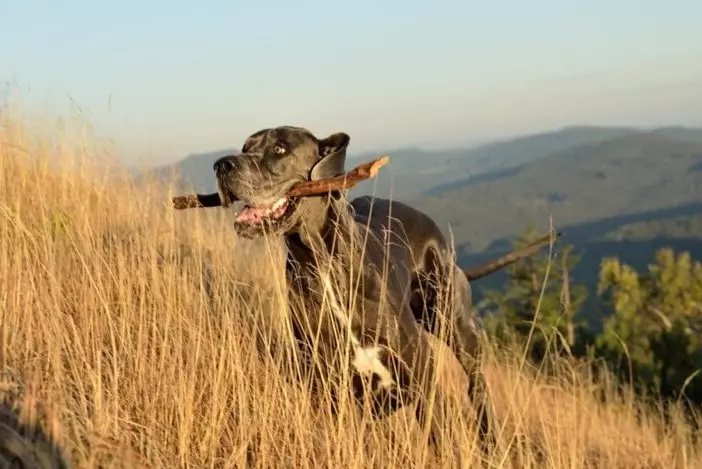
Great Danes need daily exercise, but not a lot of intense activity. The AKC says a brisk walk two or three times a day can be enough.
Adult Danes can join you on jogs or hikes. Wait until your dog is 2 years old, though, because hard running before then can damage growing joints.
3. This Breed Follows Their Noses
Danes tend to follow a scent wherever it leads. Keep them on a leash and only let them off in areas with a tall, secure fence.
They are alert, protective dogs and can be excellent guard dogs.
4. These Dogs Love Sports
Great Danes are strong, smart working dogs. They can take part in dog sports such as tracking, agility, weight pulling and Obedience.
5. Low Life Expectancy
The hardest part of owning a Dane is their short lifespan. The AKC lists a life expectancy of 7 to 10 years.
6. National Dog of Germany
The breed comes from Germany, where it is called the Deutsche Dogge, or "German dog." It is widely described as Germany's national dog.
7. They have Massive Paws
Great Danes have very large paws. Adult paws can be about the size of a man's spread hand.
8. They Love to Nap
Like many giant breeds, Great Danes tend to spend much of the day resting. Many owners call them couch potatoes.
That calm adult nature is one reason they suit indoor family life. Puppies are far more energetic.
9. Big Puppies at Birth
Great Dane puppies are large from day one compared with small and medium breeds. Their growth in the first year is dramatic. Learn more!
10. Great Danes Reach their Full Size in About Two Years
Great Danes keep growing and filling out for longer than small breeds. Most reach full height and weight by about 2 years old, while small breeds are usually grown by their first birthday.
11. Highly Affectionate and Social
Great Danes are affectionate and bond closely with their families. They usually have patient, gentle temperaments.
Because of their size, always supervise them around small children. A happy Dane can knock a toddler over by accident.
12. Proper Training is Necessary
A dog this big and strong must be well socialized and must obey basic commands. Start training and socialization early, while your puppy is still small.
Danes are usually eager to please, but some can be stubborn. Positive, consistent training works best.
13. Big Needs
Great Danes cost more than small dogs for food, medical care, beds, crates and other gear. Medication and surgery are often dosed by weight, so vet bills run higher too.
If you decide to bring a Dane into your life, budget for those bigger costs.
14. Originate for Boar Hunting
The AKC says German nobles once used Danes to hunt fierce wild boar. The breed is generally believed to come from mastiff-type dogs crossed with sighthounds such as the Irish Wolfhound and Greyhound.
Today, most Great Danes are companion dogs.
15. Seven Official Colors
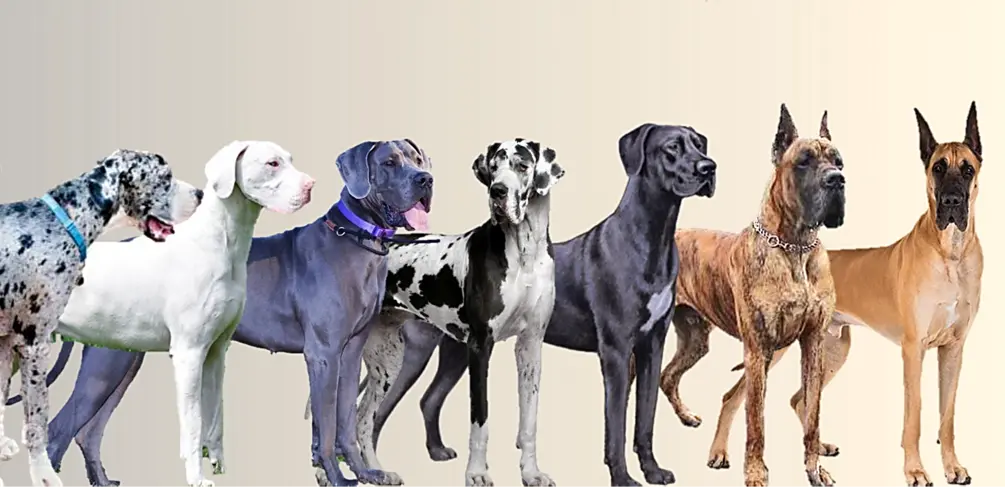
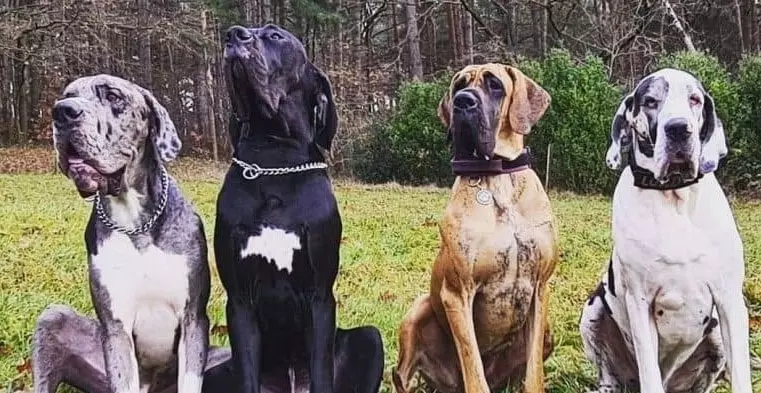
The AKC lists seven standard colors and patterns: brindle, fawn, blue, black, harlequin, mantle and merle. The black-and-white patched harlequin is probably the best known.
16. Apollo of Dogs and Gentle Giants
A Great Dane named Zeus measured 1.118 m (44 inches) at the shoulder and was recognized as the world's tallest dog.
As a breed, Irish Wolfhounds are usually the tallest on average, but Great Danes have held the individual record several times.
17. AKC Rank these Dogs for Working Group
The AKC places the Great Dane in the Working Group. The breed was recognized in 1887.
Today most Danes are companion pets. Some work as mobility service dogs because of their height. If you want to learn more, Service Dog Project will assist you.
18. Great Dane Puppies Eat a Lot
Growing Dane puppies eat a lot, but they should grow slowly and steadily. Feed a large-breed puppy food and follow your vet's guidance on portions.
Overfeeding a giant-breed puppy can push growth too fast and contribute to bone and joint problems. Click here to learn How much to feed a Great Dane puppy.
19. Great Danes are Bigger than they Look
Their long, lean lines can make Great Danes look slimmer than they are. Underneath is a lot of muscle and a heavy frame. Learn more about Great Danes growth.
20. State Dog of Pennsylvania
The Great Dane was named the state dog breed of Pennsylvania in 1965. A portrait of the state's founder, William Penn, shows him with a Great Dane.
21. Puppies should Avoid Hard Exercise
Great Dane puppies grow very fast. Hard exercise, long runs and repeated jumping can injure growing bones and joints.
Stick to short walks and free play, and ask your vet when your dog is ready for more. Read more about appropriate exercise for Great Dane puppies.
22. Common Health Concerns for Great Danes
Great Danes are prone to bloat, hip dysplasia, heart disease and some bone cancers. The AKC calls bloat, or gastric dilatation-volvulus (GDV), the number-one killer of Danes.
GDV is an emergency. The American College of Veterinary Surgeons says it needs immediate veterinary care and usually surgery. Signs include drooling, a swelling belly and retching without bringing anything up.
Feeding two smaller meals a day and avoiding hard exercise around mealtimes can lower the risk. Ask your vet about a preventive gastropexy, which tacks the stomach in place and can be done during a spay or neuter. Want more information about bloat or GDV?
23. Minimal Grooming
Great Danes have short, smooth coats that need little grooming. Weekly brushing and an occasional bath keep the coat in good shape. Want more to know about Dane grooming?
24. Marmaduke and Scooby Doo
The cartoon dogs Marmaduke and Scooby-Doo are both Great Danes. In real life, Danes are an intelligent, loving and easygoing breed.
FREQUENTLY ASKED QUESTIONS
Is Great Dane a good family dog?
Yes, when they are trained and socialized from puppyhood. Great Danes are known for being gentle, friendly and calm with their families.
Do Great Danes like to be held?
They are far too big to hold, but most Danes love to cuddle. Many lean on their people and try to share the couch.
What is special about a Great Dane?
Their size, combined with a gentle, dependable temperament. They were bred in Germany to hunt boar and later became guardians and companions.
What two dogs make a Great Dane?
The breed is believed to descend from mastiff-type dogs and sighthounds such as the Irish Wolfhound. It has been developed in Germany for centuries.
Can Great Danes be left alone?
Adult Danes are usually calm indoors, but they still need daily walks and company. Bored or lonely Danes can become destructive.
Are Great Danes talkative?
Some Danes are vocal and will "talk" with grumbles and groans, while others are quiet. Their deep bark makes them good at alerting you to visitors.
Wrapping Up
Great Danes make excellent family pets and love being with people. They show affection by leaning, cuddling and following you around.
If you want a Great Dane, plan for a big budget, a shorter lifespan and regular vet care. Questions? Leave a comment below. Thanks for reading!
Sources
- Great Dane Dog Breed Information, American Kennel Club
- Gastric Dilatation-Volvulus, American College of Veterinary Surgeons