For How Long do Great Danes Grow? | All you Need to Know
Contents
- How Fast a Great Dane Grow?
- Great Dane Weight and Growth Chart
- In How much Time does a Great Dane reach his Full Size?
- How to Support my Great Dane's Growth?
- Healthy Diet
- Manage Stress
- Proper Exercise
- Spaying and Neutering
- Why my Great Dane is too Short?
- Underfeeding
- Inappropriate Exercise
- Infection and Diseases
- Genetics
- How Big is a 5-month Great Dane?
- How to Deal with an Enormous Great Dane puppy?
- Leash Training
- Promote Calm Behavior
- Teach your Puppy Self-Control
- Socialization
- How much Bigger does a Great Dane get?
- Great Dane's Health Problems
- FREQUENTLY ASKED QUESTIONS
- Do Great Danes Grow Fast?
- When does Great Dane Stop Growing?
- Which Dog is Bigger than a Great Dane?
- What Weight is Healthy For a Great Dane?
- Are Great Danes Smart and Easy to Train?
- Wrapping up
- Sources
Great Danes are giants, and their breed standard calls them the Apollo of dogs. They are friendly and dependable. You might wonder how long Great Danes grow and when they reach their full size, because they get big even as puppies.
This article covers their growth, weight and the health issues tied to their size.
How Fast a Great Dane Grow?
Great Dane puppies grow quickly. Most gain weight fastest between about 2 and 6 months, then growth slows through the first year.
Most Danes reach close to their adult height around 18 months and keep filling out until about 2 years. Diet, health and genetics all affect the pace.
Great Dane Weight and Growth Chart
The ranges below are rough averages. Individual puppies vary a lot, so use your vet's body condition checks rather than a chart to judge your puppy.
| Age | Height | Weight |
| 2 months | 13 to 18 Inches | 15 to 30 lbs |
| 3 months | 17 to 23 inches | 25 to 45 lbs |
| 4 months | 20 to 25 inches | 45 to 65 lbs |
| 5 months | 24 to 30 inches | 60 to 85 lbs |
| 6 months | 26 to 33 inches | 65 to 100 lbs |
| 7 months | 27 to 34 inches | 70 to 110 lbs |
| 8 months | 28 to 34 inches | 80 to 120 lbs |
| 9 months | 28 to 35 inches | 85 to 125 lbs |
| 1 year | 29 to 36 inches | 95 to 140 lbs |
| Adult males | 30 to 32+ inches | up to 175 lbs |
| Adult females | 28 to 30+ inches | up to 140 lbs |
The AKC breed standard sets a minimum of 30 inches at the shoulder for males and 28 inches for females, with 32 and 30 inches preferred. AKC says males can weigh up to about 175 pounds and females up to about 140 pounds.
In How much Time does a Great Dane reach his Full Size?
Great Danes grow fast and reach most of their height in their first year to 18 months. Their weight and muscle keep developing until about 2 years.
A newborn Dane weighs only a pound or two, yet an adult can weigh more than 100 times that. Sadly, most Great Danes live between 7 and 10 years, shorter than many smaller breeds.
How to Support my Great Dane's Growth?
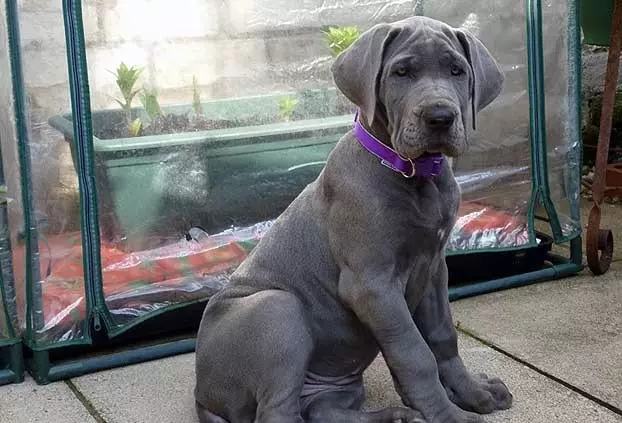
You can't change how big your Dane will get, but you can help him grow at a healthy pace. Here is how.
Healthy Diet
Feed a complete and balanced puppy food made for large or giant breeds. These foods control calories and calcium so the puppy does not grow too fast.
AKC notes that excessive growth in giant-breed puppies can lead to musculoskeletal disease. Overfeeding puts extra weight on growing joints and is linked to problems such as hip dysplasia, hypertrophic osteodystrophy and osteochondrosis.
Obesity is also hard on a giant dog's joints. Keep your Dane lean, count treats as part of the daily calories and ask your vet how much to feed.
Manage Stress
Keep your puppy's routine calm and predictable. Introduce him to new people, places and sounds gradually from a young age, and avoid overwhelming situations.
If your puppy stops eating or seems anxious, talk to your vet.
Proper Exercise
AKC advises waiting until a Great Dane is at least 2 years old before running with him regularly, because strenuous exercise can damage developing bones. Keep him off slippery floors to prevent falls.
Puppies still need daily activity. Short walks are a good choice and also help with socialization and leash practice.
Gentle play on grass, short fetch sessions and calm tug games are fine. Swimming can be easy on the joints, but supervise your dog closely in water.
Training, puzzle games and snuffle mats burn energy without stressing the joints. Once your Dane is fully grown and your vet agrees, you can build up to jogging and hiking.
Watch for limping, stiffness or fatigue, and stop when he seems tired. Never exercise him right before or after a meal: exercise around mealtimes is a risk factor for bloat (gastric dilatation-volvulus), and Great Danes are a high-risk breed.
Spaying and Neutering
Sex hormones help close the growth plates. Spaying or neutering before growth is finished can let the long bones grow longer, and some studies link early surgery in large breeds to joint problems.
Many vets now advise waiting until a giant-breed dog has finished growing. Talk to your vet about the right timing for your Dane, and ask about a preventive gastropexy, which Cornell notes is often done at the same time as a spay or neuter in at-risk breeds.
Why my Great Dane is too Short?
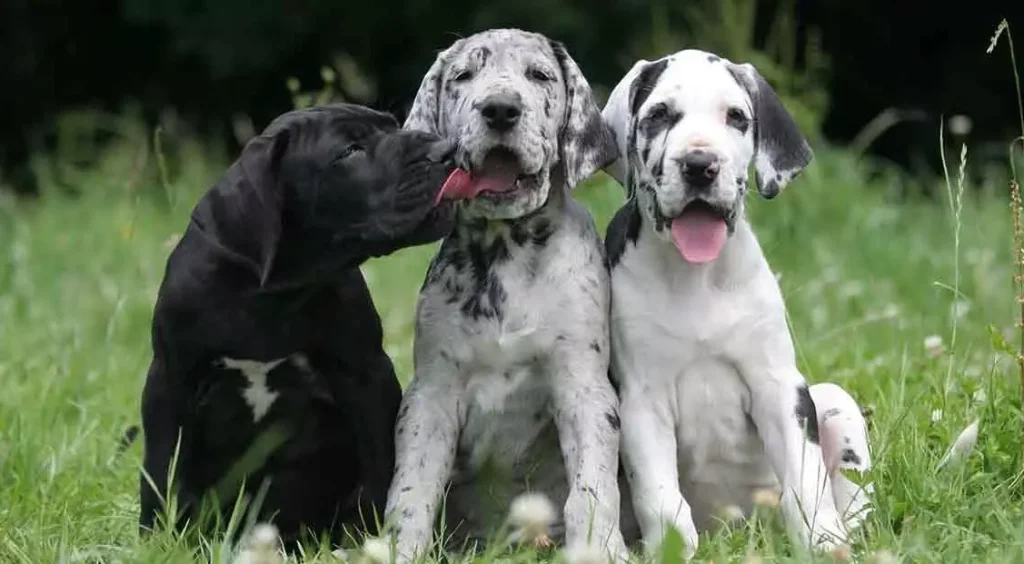
A Great Dane below the average height or weight is not necessarily unhealthy. Here are some factors that can make a Dane grow slower or smaller than expected:
Underfeeding
Do not overfeed a growing Dane, but do not underfeed him either. Ask your vet how much to feed and use a complete puppy food made for large or giant breeds.
Inappropriate Exercise
Too much hard exercise strains growing joints and bones. Combined with too little food, it can leave your Dane underweight.
Too little activity is also a problem, because puppies need regular movement to build muscle.
Infection and Diseases
Parasites, infections and other illnesses can slow growth. If your dog has a fever, a swollen belly, diarrhea, or eats a lot but does not gain weight, see your veterinarian promptly.
Genetics
Genetics set most of a Dane's final size. If his parents are on the small side, he is likely to be too.
How Big is a 5-month Great Dane?
Using the chart above, a 5-month-old Great Dane often weighs around 60 to 85 lbs. Males tend to be at the higher end and females at the lower end.
How to Deal with an Enormous Great Dane puppy?
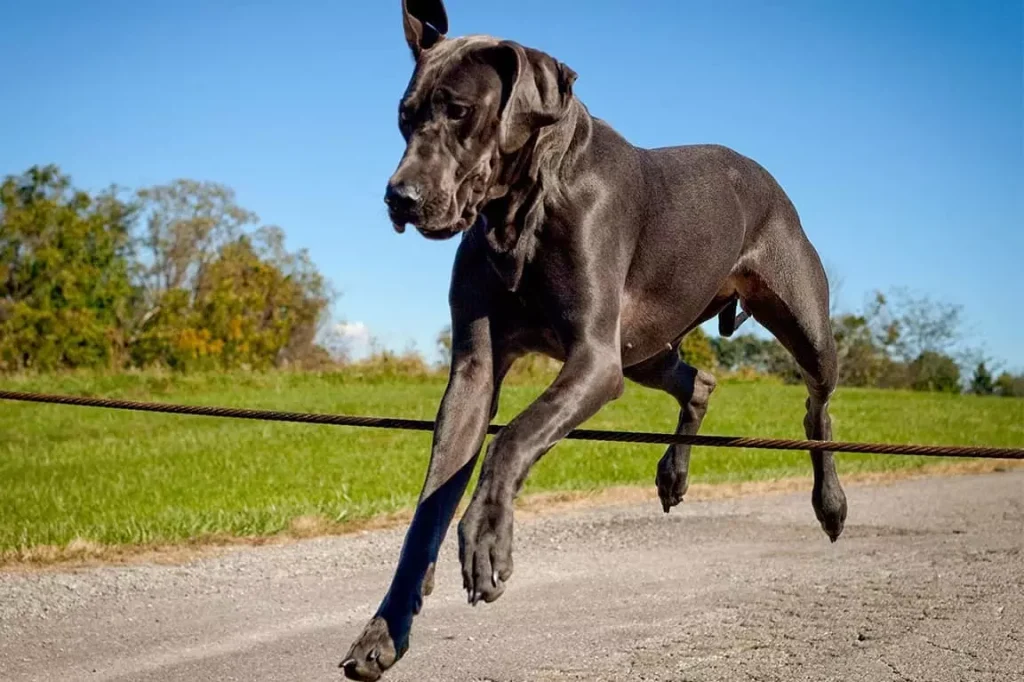
Danes grow fast, but their minds mature more slowly. You may have a 100-pound puppy who still acts like a baby, so training matters early. Here is how to manage your big puppy:
Leash Training
A Great Dane can easily overpower a person, so leash training is essential. Start by teaching your puppy to walk on a loose leash.
If he pulls, stop or change direction. Reward him when the leash is slack, and repeat until he learns.
Promote Calm Behavior
Start house rules while your puppy is small. Do not allow behavior you won't want from a 150-pound adult, such as jumping on people.
Be consistent with your rules, and give him enough exercise and mental work to burn off energy.
Teach your Puppy Self-Control
Teach self-control with patience and rewards. Start with sit: ask him to sit and give a treat when he holds the position.
If he stands up or gets distracted, withhold the treat and try again. Build up to stay and to a "place" command, where he goes to a mat and waits until you release him.
Practice these commands regularly. They are also useful for settling an excited dog.
Socialization
Great Danes generally love people. Practice calm greetings during puppyhood, and reward good behavior.
Expose your dog gradually to new people, places, situations and other animals so he grows into a confident adult.
How much Bigger does a Great Dane get?
Most Great Danes reach close to full height around 18 months and fill out until about 2 years. If you bought your Dane from a breeder, ask about the parents' height and weight for a rough idea of his adult size.
Big paws compared to the body often mean a puppy still has growing to do, though this is only a rough sign.
Great Dane's Health Problems
Great Danes have several health issues that can affect their lifespan. According to AKC, common causes of their short lifespan include bloat, cardiomyopathy, cancer and autoimmune disease.
Bloat is a life-threatening emergency, and Great Danes are among the breeds most at risk. Hip dysplasia, other joint problems and thyroid issues also occur in the breed.
FREQUENTLY ASKED QUESTIONS
Do Great Danes Grow Fast?
Yes. Great Danes grow very quickly in their first year, reach most of their height by about 18 months and finish filling out around 2 years.
When does Great Dane Stop Growing?
Most Great Danes stop growing taller around 18 months and finish filling out around 2 years. Every puppy is different. Adult males can weigh up to about 175 lbs.
Which Dog is Bigger than a Great Dane?
The Mastiff is usually heavier than a Great Dane. AKC's weight chart lists Mastiffs at 120 to 230 pounds and Great Danes at 110 to 175 pounds.
What Weight is Healthy For a Great Dane?
AKC lists Great Danes at about 110 to 175 pounds, with females at the lower end. A healthy weight depends on your dog's frame, so ask your vet to check his body condition.
Are Great Danes Smart and Easy to Train?
AKC says Great Danes respond well to firm, consistent training and are eager to please. Start training early, while your puppy is still small.
Wrapping up
Great Danes grow very fast and get big in just a few months. Support healthy growth with a large- or giant-breed puppy food, careful exercise and regular vet checkups.
Checkout our these Guides:
- When Do Great Danes Stop Growing
- How To Care For A Great Dane Puppy
- The Ultimate Secrets To FEED A GREAT DANE PUPPY
- 10 Best Dry Dog Food For Great Danes
- How Much Food Do Great Danes Eat
Sources
- Official Standard of the Great Dane, American Kennel Club
- Facts About the Great Dane That You May Not Know, American Kennel Club
- Great Dane Life Span & Health Issues, American Kennel Club
- Gastric dilatation volvulus (GDV) or "bloat", Cornell University College of Veterinary Medicine