The Real Reason Why Dolphins Are Friendly To Humans (And Other Dolphin Facts)
Contents
- Are Dolphins Naturally Friendly Towards Humans?
- Can Dolphins Be Dangerous?
- Why Do Dolphins Protect Humans?
- Types Of Dolphins That Are Friendly To Humans
- Bottlenose Dolphin
- Short-Beaked Common Dolphin
- Atlantic Spotted Dolphin
- How Do Professional Trainers Train Dolphins?
- Operant Conditioning
- Target Method
- Hand Signal Training
- Final Words
- Sources
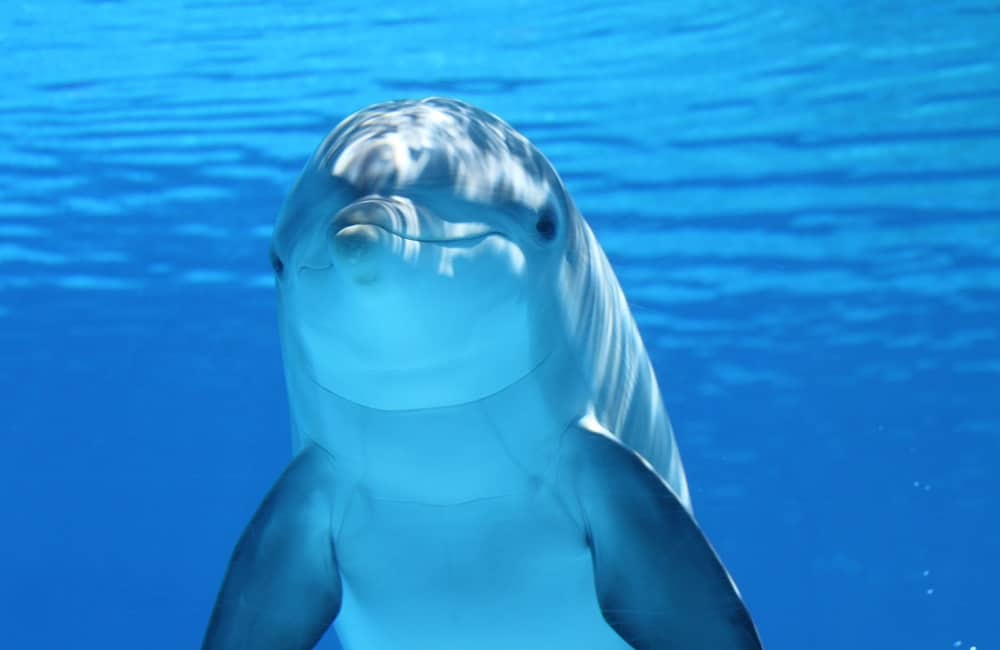
Dolphins are marine mammals known for leaping, playing and approaching boats. Many people think of them as friendly and easy to train but should not be pets.
Dolphins are wild animals, even though they are well known for being friendly. People should give them space and respect, because dolphins can bite or ram people when stressed or harassed.
But why are dolphins friendly to humans even if they are wild animals?
Dolphins seem friendly because they are intelligent, highly social and curious, so many will approach boats and swimmers. That curiosity is not the same as affection. Wild dolphins that people feed lose their natural wariness, which puts them at risk.
Are Dolphins Naturally Friendly Towards Humans?
Dolphins have large brains and live in complex social groups. That intelligence and sociability make them curious about people and quick to learn in human care.
There is no good evidence that dolphins see people as part of their pod. Some wild dolphins approach people, while many keep their distance.
Feeding changes their behavior. NOAA Fisheries warns that dolphins fed by humans lose their natural wariness and learn to link people with food. That puts them closer to boats, propellers and fishing gear.
That is why NOAA asks people to admire wild dolphins from a distance and never feed them.
Can Dolphins Be Dangerous?
Yes. Adult bottlenose dolphins are large, strong animals, and they can injure people.
Bites and ramming have been reported, often when people feed, chase or try to touch wild dolphins. Trainers who work with dolphins also follow safety rules for the same reason.
Dolphins can seem friendly, but they are wild animals. If you see them in the wild, stay back, don't chase or touch them, and never feed them.
Why Do Dolphins Protect Humans?
There are well-known stories of dolphins appearing near swimmers threatened by sharks or guiding people toward shore. These stories are anecdotal, and scientists can't confirm the dolphins' motives.
Dolphins live in groups called pods. Pod members cooperate, play together, and sometimes defend each other from predators.
Dolphins may sometimes act protectively around people, but there is no evidence that they see humans as pod members. Curiosity and defensive behavior toward sharks are more likely explanations.
Types Of Dolphins That Are Friendly To Humans
There are several dozen dolphin species worldwide, including a few river dolphins.
Below are three species people often meet in the wild or see in aquariums.
Bottlenose Dolphin
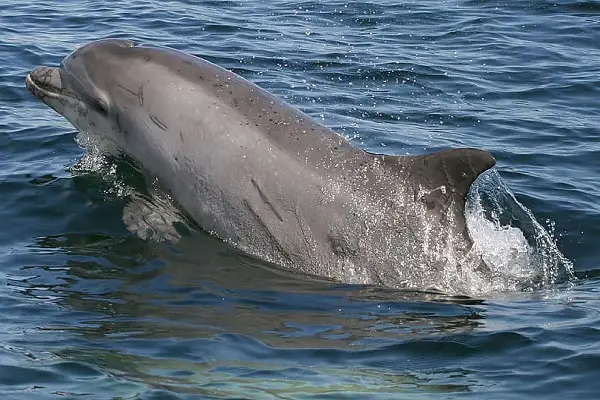
The bottlenose dolphin is the best-known dolphin species. It belongs to the family Delphinidae and lives in coastal and offshore waters around the world.
NOAA describes bottlenose dolphins as a highly intelligent species that uses sound to communicate and hunt. Adults are about 6 to 13 feet long and weigh 300 to 1,400 pounds.
They are the dolphins most often seen in aquariums and on television. The U.S. Navy has also trained bottlenose dolphins to help find underwater objects such as mines.
A main threat to bottlenose dolphins is bycatch: getting caught or entangled in fishing gear. They can also swallow or get tangled in recreational fishing line and marine debris.
Short-Beaked Common Dolphin

The short-beaked common dolphin lives in warm-to-cool waters, mostly offshore. It is found in the Atlantic and Pacific oceans, among other regions.
It is smaller than a bottlenose dolphin. According to NOAA's short-beaked common dolphin profile, adults are about 6 to 8 feet long and average around 170 pounds.
It is an abundant species that often travels in groups of hundreds, and sometimes in "mega-pods" of thousands.
Common dolphins appear in ancient Greek and Roman art. You can tell them from bottlenose dolphins by their color: a dark cape and a yellowish-tan and gray hourglass pattern on each side.
Atlantic Spotted Dolphin
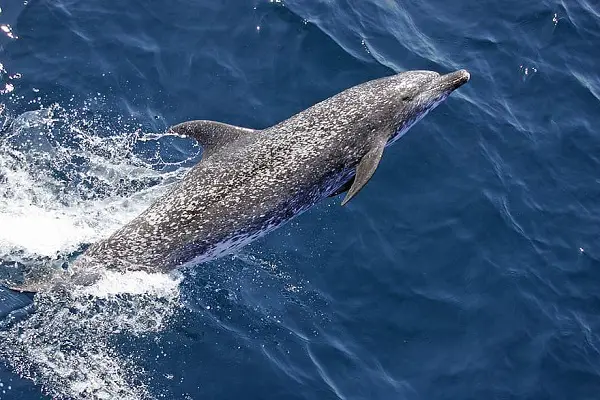
This species lives in the warm Atlantic, including U.S. waters from southern New England to the Gulf. Adults are about 5 to 7.5 feet long.
Calves are born without spots. NOAA says spots start to develop after about one year and become darker and more widespread as the dolphin matures.
Atlantic spotted dolphins are fast, social swimmers that often ride boat wakes. Like other dolphins, they communicate with whistles and usually travel in groups.
How Do Professional Trainers Train Dolphins?
Have you ever wondered how trainers teach dolphins to perform behaviors? The methods are based on careful, step-by-step reinforcement.
Operant Conditioning

Trainers use positive reinforcement through operant conditioning. When a dolphin performs the right behavior, it gets a reward such as fish.
Complex behaviors are broken into small steps, and each step is rewarded until the dolphin learns the whole behavior.
Target Method

Another method is targeting. The target is an object, such as a pole with a float, that the dolphin learns to touch or follow.
To teach a hoop jump, trainers first reward the dolphin for swimming through a hoop at the surface. Then they raise the hoop a little at a time, rewarding each success.
Hand Signal Training

Trainers also teach a different hand signal for each behavior. Once learned, the signal tells the dolphin which behavior to perform.
Final Words
Dolphins are intelligent, social animals that play an important role in ocean ecosystems.
The best way to be a friend to wild dolphins is to watch them from a distance, never feed them, and keep fishing line and trash out of the water.
Sources
- Common Bottlenose Dolphin, NOAA Fisheries
- Short-Beaked Common Dolphin, NOAA Fisheries
- Atlantic Spotted Dolphin, NOAA Fisheries