E-Collar vs. Shock Collar | What’s the Difference

Contents
- History of E-collar vs. Shock collar
- What is an E-collar?
- How Do they Work?
- Are E-collars Secure for your Dogs?
- Using E-collar to Train your Dog
- Train the Dog to Obey your Commands
- Correcting Uncontrollable Actions
- Advantages and Disadvantages of E-collar
- Advantages:
- Disadvantages:
- What are Shock Collars?
- Are Shock Collars Cruel for Dogs?
- Types of Shock Collars
- Advantages and Disadvantages of Shock Collar
- Advantages:
- Disadvantages:
- FREQUENTLY ASKED QUESTIONS
- Are E-collar and Shock Collar the Same?
- Do E-collars Hurt Dogs?
- Should the Dog Wear an E-collar all Day?
- Do Professional Dog Trainers use Shock Collars?
- Can a Shock Collar Cause Brain Damage?
- Wrapping up
- Sources
Many dog owners wonder whether an e-collar and a shock collar are different tools. In most cases they are the same device under two names.
"E-collar" (electronic collar) is the broader term the industry prefers. A remote training e-collar delivers an electric stimulation through two contact points on the dog's neck, which is what people mean by a shock collar.
This guide explains how these collars work, the types you'll see, and what veterinary behavior experts say about using them.
History of E-collar vs. Shock collar
Electronic training collars have been sold for decades, and the technology has changed a lot. Modern units usually offer many stimulation levels, and many add a tone or vibration mode.
The name changed more than the basic idea. Marketing moved from "shock collar" to "e-collar," "remote trainer" or "static correction," but the stimulation setting is still an electric stimulus. Checkout the Best collar for your Dog.
What is an E-collar?

An e-collar is a collar with a receiver that can deliver a stimulus when you press a button on a handheld remote. Depending on the model, the stimulus can be a tone, a vibration or an electric stimulation.
A vibration-only or tone-only collar does not shock. A collar with a stimulation setting does, whatever the box calls it.
How Do they Work?
The dog wears the receiver on its neck, and you trigger it with the remote. The stimulation is meant to be unpleasant enough to interrupt a behavior.
In learning terms, this is positive punishment or negative reinforcement: the dog changes its behavior to stop or avoid the unpleasant sensation. Some e-collars also include GPS tracking.
Are E-collars Secure for your Dogs?
Veterinary behavior experts advise against them. The American Veterinary Society of Animal Behavior (AVSAB) position statement lists electronic shock collars among the training tools that rely on pain and should be avoided.
AVSAB says aversive methods can harm animal welfare and the human-animal bond. It also reports that studies found no evidence they work better than reward-based training, including for recall.
If you already use an e-collar, use the lowest level your dog notices, never use it in anger, and stop if your dog shows fear or stress. Better still, talk to your vet or a certified behavior professional about reward-based alternatives.
Using E-collar to Train your Dog
Start with verbal cues and reward good behavior with treats, toys or praise. Most problems people use e-collars for, such as barking, jumping on people, nipping and chewing, respond to reward-based training.
Aggression toward people or other animals is a special case. Have your dog checked by a veterinarian first, since pain and medical problems can cause aggression, then work with a veterinary behaviorist or certified trainer.
Train the Dog to Obey your Commands
If you choose to use an e-collar despite these concerns, follow these safety basics:
- Let your dog be comfortable: Have your dog wear the collar (switched off) for a few days before training so it doesn't link the collar itself with discomfort.
- Use the lowest setting: Start at the lowest level and only go higher if your dog doesn't notice it. If you feel you need a high setting, stop and consult your vet or a qualified trainer.
- Fit and check the skin: A collar that is too tight, or left on too long, can cause pressure sores under the contact points. Check the skin daily.
- Reward what you want: Praise, treats and play for the right behavior do more to teach your dog than any correction.
Correcting Uncontrollable Actions
Dogs learn at different speeds, and a dog that seems uncontrollable may be anxious, under-exercised or in pain. Be patient and consistent, and pair any training with clear verbal cues.
For dangerous habits like chewing electrical cords, manage the environment first. Block access, supervise and give your dog safe chew toys.
Harsh corrections can make a dog fearful or distrustful and can damage your relationship. A dog that trusts you is easier to train.
Advantages and Disadvantages of E-collar

Here are the advantages and disadvantages of e-collars:
Advantages:
- It works at a distance.
- Many models offer tone and vibration settings in addition to stimulation.
- Some models include GPS tracking.
Disadvantages:
- The stimulation setting relies on discomfort or pain.
- It can cause fear, anxiety and stress.
- It can damage your bond with your dog.
- Poor fit or overuse can injure the skin.
Checkout Our these Guides:
- Are Great Danes Good With Cats | Detailed Guide (2022)
- Why Do Great Danes Lean | 10 Reasons Along With Training (2022)
- How Smart Are Great Danes | Detailed Comparison (2022)
- When Do Great Danes Stop Growing | Weight & Growth Chart In 2022
- 11 SECRETS ABOUT DIFFERENCE BETWEEN EUROPEAN AND AMERICAN GREAT DANE
What are Shock Collars?
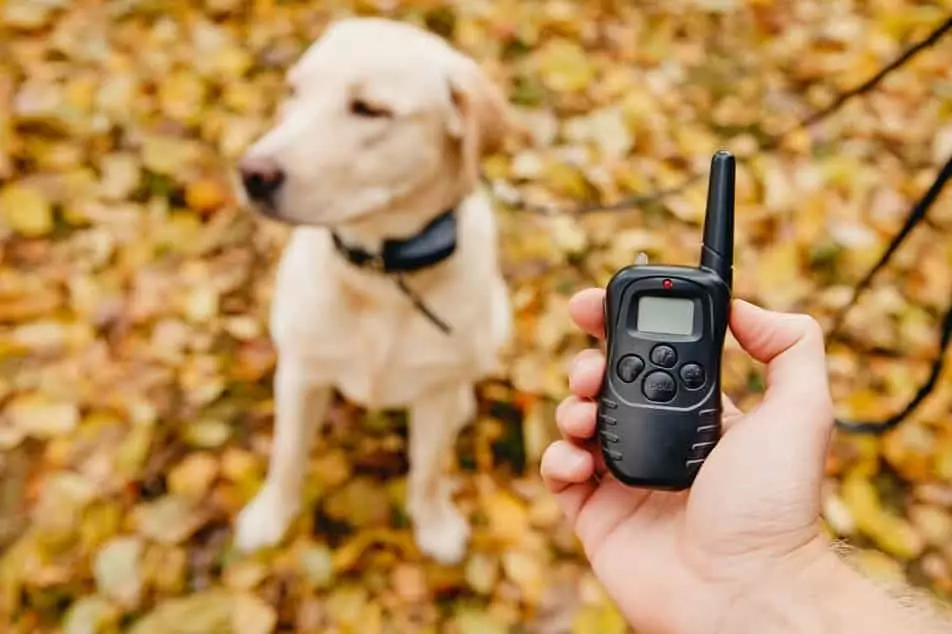
A shock collar is any collar that delivers an electric stimulus to the dog's neck. Most remote training e-collars fall into this group when used on their stimulation setting.
Are Shock Collars Cruel for Dogs?
AVSAB's position is that pain-based tools, including electronic shock collars, should not be used in dog training. It recommends reward-based methods for all training, including behavior problems.
Overuse or misuse can lead to anxiety, aggression and fear. That's why many professional trainers and veterinary groups reject them.
Types of Shock Collars
The three common types are remote training collars, containment (invisible fence) collars and anti-bark collars.
Containment collars usually beep as the dog nears the boundary and deliver a stimulus if it keeps going. Anti-bark collars trigger automatically when they detect barking, and remote training collars are triggered by a person with a handheld transmitter.
Advantages and Disadvantages of Shock Collar

Here are the advantages and disadvantages of the shock collar:
Advantages:
- It works at a distance.
- It comes in three main varieties.
Disadvantages:
- It relies on discomfort or pain.
- It can cause fear, anxiety and aggression.
- Research has not shown it to work better than reward-based training.
FREQUENTLY ASKED QUESTIONS
Are E-collar and Shock Collar the Same?
Mostly, yes. A shock collar is an e-collar with an electric stimulation setting. A collar that only beeps or vibrates is an e-collar but not a shock collar.
Do E-collars Hurt Dogs?
The stimulation setting is designed to be unpleasant, and at higher levels it can be painful. How a dog reacts varies, but AVSAB classes electronic shock collars as pain-based tools.
Should the Dog Wear an E-collar all Day?
No. Wearing the contact points against the skin for long periods can cause pressure sores. Remove it after training and check the skin under it daily.
Do Professional Dog Trainers use Shock Collars?
Some do, but many do not. Veterinary behavior organizations such as AVSAB recommend reward-based training only.
Can a Shock Collar Cause Brain Damage?
There's no good evidence that a properly fitted collar causes brain damage. The well-documented risks are fear, stress, aggression and skin injury.
Wrapping up
In practice there is little difference between a shock collar and an e-collar with a stimulation setting. "E-collar" is mostly the industry's preferred name.
Veterinary behavior experts recommend reward-based training instead. If you're struggling with a stubborn or reactive dog, ask your vet to rule out medical causes and refer you to a qualified behavior professional.
Want to Learn More? Checkout Our Product review Articles:
- 7 Best Collar For Great Danes | Top Picks & Buyers Guide (2022)
- 9 Best Elevated Dog Bowls For Great Danes | Top Picks (2022)
- 8 Best Brushes For Great Danes | Top Picks & Buyers Guide In 2022
- 7 Best Toys For Great Danes In 2022 | Our Top Pick & Buying Guide
- 8 Best Dog Food For Great Dane With Diarrhea | 2022 Reviews
Sources
- The Use of Humane Dog Training Methods (Position Statement), American Veterinary Society of Animal Behavior