Piranhas As Pets? 5 Things You Should Consider Before Getting One
Contents
- Are Piranhas Safe To Be A Pet?
- Are Pet Piranhas Safe For Kids?
- What Things To Consider Before Buying Pet Piranha?
- Type Of Piranha
- Space
- Money
- Legality
- Commitment
- What Supplies Do I Need For A Pet Piranha?
- Piranha Tank
- Aquarium Supplies
- Daily Foods
- Water
- What Are The Different Types Of Piranhas?
- Genus Pygocentrus
- Genus Serrasalmus
- Genus Pristobrycon
- Genus Catoprion
- Genus Pygopristis
- How Long Do Piranhas Live?
- What Should I Feed Them?
- Alternative Pet Fish For Piranha
- Final Words
- Sources
Are you thinking of getting a piranha and keeping it as a pet? If so, read this first.
Below is what you need to know about piranhas before you buy one.
Are Piranhas good pets? Piranhas can be kept by experienced fishkeepers where they are legal, but they are illegal in many US states. They need a large tank, strong filtration, a heater and careful handling, so they are not beginner fish.
Let’s go through the questions people ask most before getting a pet piranha.
Are Piranhas Safe To Be A Pet?
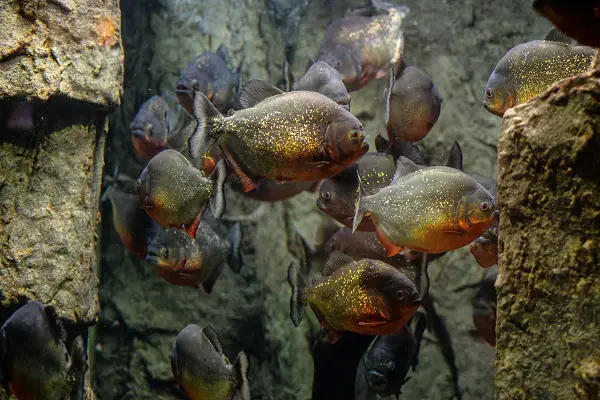
Piranhas are not the man-eaters movies show, but they have razor-sharp, interlocking teeth and can bite hard. Kept in a proper tank and handled carefully, they are manageable for experienced keepers.
Most piranhas are skittish and stressed by sudden movement. Bites usually happen when someone puts a hand in the tank, especially during feeding or cleaning.
Real attacks on people in the wild are uncommon and usually cause minor injuries, though serious bites do occasionally happen.
If you are serious about getting a piranha, keep the tank in a quiet place and use long-handled tools for maintenance. Don’t keep them with other fish, which they will often bite or eat.
Are Pet Piranhas Safe For Kids?
Piranhas are not a good choice for children to care for. Tank maintenance means working near very sharp teeth, and mistakes can lead to bites.
If you have young children and keep piranhas, use a secure lid and keep the tank where kids can’t reach into it. An adult should do all feeding and cleaning.
If you are a kid who wants a piranha, talk to your parents first. An easier fish is a better place to start.
So the answer is: piranhas can live in a home with kids if an experienced adult cares for them and the tank is secure, but they are not a kids’ pet.
What Things To Consider Before Buying Pet Piranha?
The things you have to consider before buying a pet piranha are:
- Type Of Piranha
- Space
- Money
- Legality
- Commitment
Type Of Piranha
Before anything else, decide which kind of piranha you want.
Piranhas are freshwater fish from South America, and there are many species (see below). They differ in size, temperament and how well they tolerate tankmates of their own kind.
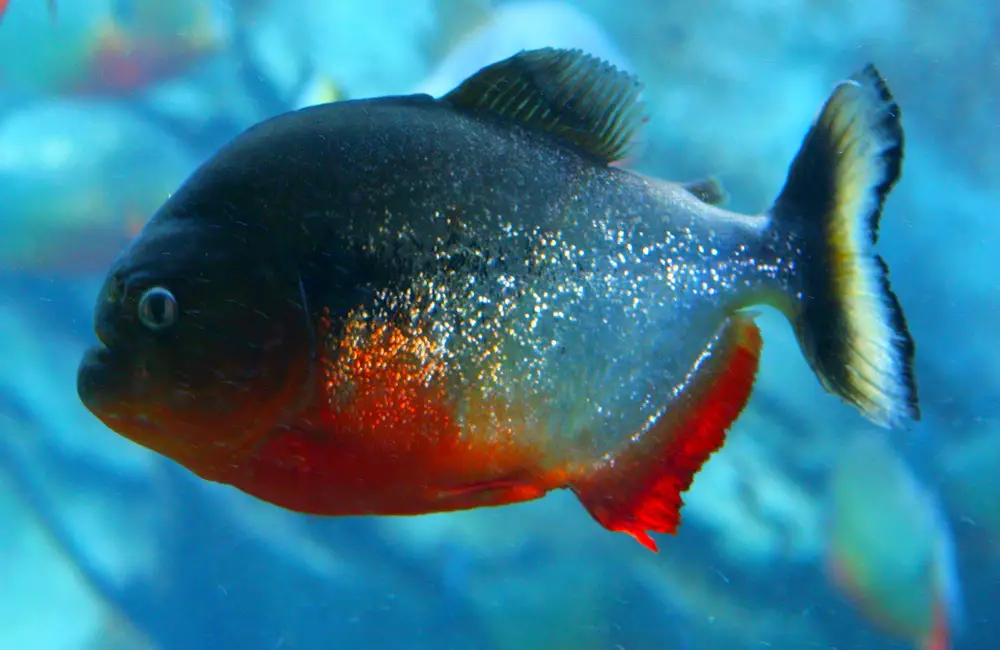
The red-bellied piranha is the species kept most often. Do proper research on any species before you buy.
Space
Next, make sure you have room for a big enough tank.
Larger species need much larger tanks. Piranhas are also shy and like places to hide, so plan room for plants, rocks or driftwood.
Put the tank away from direct sunlight, which can cause algae blooms and temperature swings, and away from heaters, drafts and heavy foot traffic.
Money
Piranhas cost more to keep than many fish. The tank, filter, heater, decorations and frozen foods add up.
Plan for ongoing costs too, such as food, water conditioner, test kits, filter media and electricity.
Legality
Many US states ban or restrict piranhas because they could harm native fish if released. A US Fish and Wildlife Service risk screening lists restrictions in states including Alabama, California, Florida, Georgia, Texas and Utah, among many others.
Texas, for example, classifies all species of Pygocentrus, Serrasalmus, Pristobrycon, Pygopristis and Catoprion as harmful or potentially harmful. Check your state wildlife agency’s rules before buying, and never release any aquarium fish into the wild.
Commitment
If the four things above check out, the last thing to consider is commitment.
Piranhas can live 10 years or more, according to the Smithsonian’s National Zoo. Weekly water changes, water testing and careful feeding are part of the deal for that whole time.
What Supplies Do I Need For A Pet Piranha?
The supplies you need for a pet piranha are:
- Piranha Tank (Aquarium)
- Aquarium Supplies
- Daily Foods
- Water
Piranha Tank
First, you need a large tank with a secure lid. Red-bellied piranhas can grow to a little over a foot long and weigh up to 4 pounds, and some other species get larger.
The right size depends on the species and how many you keep. Red-bellied piranhas are usually kept in small groups, which takes a big tank.
Bigger is better. A larger tank keeps water quality more stable and gives the fish room to swim and hide.
Aquarium Supplies
The list of aquarium supplies that you need are:
- Filtration system
- Heater
- Thermometer
- Power Head
- Decorations
Piranhas are messy eaters and produce a lot of waste, so they need strong filtration. Canister filters are a popular choice for large tanks.
Piranhas are tropical fish, so you need an aquarium heater to keep the water warm and steady.
A thermometer lets you check the water temperature without putting your hands in the tank.
Add plants, rocks and driftwood for decoration and hiding spots. Piranhas are shy, and cover helps them feel secure and less stressed.
Daily Foods
Piranhas need a varied, mostly meaty diet. Feed only what they eat within a few minutes, and remove leftovers so they don’t foul the water.
In the wild, the Smithsonian’s National Zoo notes that red-bellied piranhas eat a lot of fins nipped from larger fish, plus flesh, small fish, insects, invertebrates and occasionally fruit.
Water
Fill the tank with fresh water and keep it warm and well filtered.
If you use tap water, treat it with a water conditioner to remove chlorine and chloramine. Test the water regularly and do partial water changes to keep ammonia and nitrite at zero.
What Are The Different Types Of Piranhas?
Fish called piranhas belong to several genera. The five usually included are:
- Genus Pygocentrus
- Genus Serrasalmus
- Genus Pristobrycon
- Genus Catoprion
- Genus Pygopristis
Genus Pygocentrus
Pygocentrus piranhas have three species: Pygocentrus cariba, the red-bellied piranha, and the piraya.
The cariba lives in the Orinoco basin of Venezuela and Colombia. The red-bellied piranha is found throughout the low-lying Amazon River basin and is the piranha most often kept as a pet.
The piraya lives in Brazil’s São Francisco River. It is large and is not a good choice for most home aquariums.
Genus Serrasalmus
Serrasalmus is the largest piranha genus, with many species. Many Serrasalmus piranhas don’t tolerate others of their kind well and are usually kept alone.
Well-known species include Serrasalmus rhombeus, the redeye or black piranha, and Serrasalmus maculatus. They live in rivers across much of South America.
Some Serrasalmus species stay small enough for home aquariums, but research the adult size of the exact species.
Genus Pristobrycon
Pristobrycon is a genus of piranhas found in the Amazon basin and rivers of the Guianas.
Scientists still debate how these species are related to other piranhas. They are rarely kept in home aquariums.
Genus Catoprion
The wimple piranha is the only species in Catoprion. It feeds mostly on scales it bites off other fish.
Wimple piranhas stay small, but they still need a well-filtered tank and shouldn’t be kept with other fish.
Genus Pygopristis
The Pygopristis genus has only one species, Pygopristis denticulata.
It is known for its distinctive teeth, which have extra points (cusps).
It lives in rivers of northern South America, including the Orinoco and rivers of the Guianas.
How Long Do Piranhas Live?
Red-bellied piranhas have a lifespan of 10 years or more, according to the Smithsonian’s National Zoo.
Lifespan varies by species and care. Good water quality, a proper diet and a low-stress tank help them live longer.
What Should I Feed Them?
Piranhas are mostly carnivores, though many also eat some plant matter. Check the needs of your species.
Good foods include thawed frozen fish, shrimp, krill and earthworms. At the National Zoo, red-bellied piranhas get a gelatin diet of greens, proteins and nutrients, plus smelt, shrimp, herring and earthworms.
Avoid feeding live feeder fish, which can carry disease and parasites into your tank.
Many keepers also use quality carnivore pellets. Some piranhas take small amounts of fruit or vegetables.
Avoid fatty mammal meat like beef and chicken, which can foul the water and isn’t part of a natural piranha diet.
Below are foods you can feed to your pet piranhas:
- Thawed frozen fish
- Frozen shrimp and krill
- Prawns
- Earthworms
- Carnivore pellets
- Small amounts of fruit
- Small amounts of vegetables
Alternative Pet Fish For Piranha
If you are not sure you can care for a piranha, or they are banned where you live, here are some alternatives to consider:
-
Koi Fish
Koi are omnivores that live in outdoor ponds. They can grow large and live a long time, but they are legal in most places and easier to keep than piranhas.
-
Silver Dollar
Silver dollars are peaceful relatives of piranhas that are mostly plant eaters. They look similar and do well in groups in a large tank.
-
Clown Loach
The clown loach is a tropical freshwater fish from Southeast Asia. Clown loaches are peaceful and fun to watch, and they do best in groups in a large tank.
-
Peacock Bass
Peacock bass are predatory fish native to the Amazon and Orinoco basins. They grow very large and need a huge tank, and some states restrict them too.
Final Words
If you want a pet piranha, check that they are legal where you live, and make sure you can give them a large tank and years of care.
Piranhas are not the man-eaters movies suggest. Most are skittish fish that are more afraid of you than you are of them, but their bite deserves respect.
Sources
- Red-bellied piranha, Smithsonian’s National Zoo and Conservation Biology Institute
- Ecological Risk Screening Summary: Slender Piranha, U.S. Fish and Wildlife Service