Can Penguins Be Pets? 18 Impressive Penguin Facts
Contents
- Why Penguins Are Not Good Pets?
- Can You Train A Pet Penguin?
- How Much Does A Penguin Cost?
- Is It Illegal To Own A Pet Penguin?
- Are Penguins Dangerous To Humans?
- How Fast Are Penguins?
- Walk
- Swim
- Run
- What Do Penguins Eat?
- Can Humans Eat Penguin Meat?
- What Do Baby Penguins Look?
- Are Penguins Endangered?
- Where Do Penguins Live?
- How Smart Are Penguins?
- How Soft Are Penguins?
- Why Do Penguins Huddle Together?
- Why Do Penguins Collect Pebbles?
- Final Words
- Sources
Penguins are some of the cutest birds in the world, and penguin videos are hugely popular online. Some people even wonder if they could keep one as a pet. Is it a good idea?
Can I keep a penguin as a pet? No. Wild penguins are protected, several species are endangered, and in practice only accredited zoos and aquariums with permits keep them. Even where it isn’t spelled out as illegal, private ownership is effectively impossible, and penguins have needs no home can meet.
Here are the facts about penguins, and why they don’t make good pets.
Check the cute and fluffy penguin video first before you continue reading!
https://www.youtube.com/watch?v=FkgoTUQ7hrw
Why Penguins Are Not Good Pets?
Penguins are kept by zoos and aquariums that have permits, trained staff, and special facilities. Private individuals generally can’t get those permits.
Even people living in countries with wild penguins can’t take one home. Wild penguins are protected by law in the countries where they live.
Even if you could get one, penguins make poor pets. Here’s why.
Penguins are highly social birds that live in colonies. A penguin kept alone would be stressed, so zoos keep them in groups.
Another reason is their habitat. Depending on the species, penguins need chilled or temperature-controlled housing, a large pool with filtered water, and space to walk and nest.
Building and running that kind of habitat costs a lot. Penguins also poop often, including in their pool, so water quality needs constant care.
Food is another challenge. Penguins eat fresh fish and other seafood every day, and zoos often add vitamin supplements to their diet.
They also need care from a veterinarian who knows birds and marine animals, which is hard to find.
Penguins need daily feeding and care, so a penguin owner could never just leave for a vacation. Zoos have teams of keepers for that reason.
If you love penguins, a stuffed toy penguin or a zoo membership is a much better choice.
Can You Train A Pet Penguin?
Zoo penguins can be trained to do simple things, such as stepping on a scale or coming when called, which helps keepers care for them. They can’t be potty trained.
Some zoos offer penguin encounters where you can meet a penguin with a keeper present. These penguins are used to people, but they still don’t like being grabbed or hugged.
If you try to touch a wild penguin, it may bite or strike with its flippers. Penguin bites are painful because of their strong, hooked beaks. So keep your distance from wild penguins and visit a zoo or aquarium instead.
How Much Does A Penguin Cost?
Penguins aren’t legally sold as pets, so any website or ad offering a pet penguin is a red flag. Zoos usually get penguins through breeding programs and transfers between accredited institutions.
The bigger cost is care. Housing, chilled water, filtration, food and veterinary care for a group of penguins runs far beyond what a household can manage.
Is It Illegal To Own A Pet Penguin?
For practical purposes, yes. Wild penguins are protected, and keeping penguins requires permits that are generally limited to zoos, aquariums and research facilities.
Are Penguins Dangerous To Humans?
Penguins are not dangerous to humans in general. They don’t hunt people and usually avoid them.
Penguins can become aggressive if you get too close, especially near their nests or chicks, and they may bite or slap with their flippers.
When you visit a beach with penguins, they may look at you out of curiosity, but you should never approach or feed them. Many places have rules about how close you can get.
Researchers need permits to work close to penguins.
If you want to see penguins up close, visit an accredited zoo or aquarium. Some offer guided encounters with trained penguins.
How Fast Are Penguins?
Penguins are built for swimming. Let’s check how fast they swim, run, and walk.
Walk
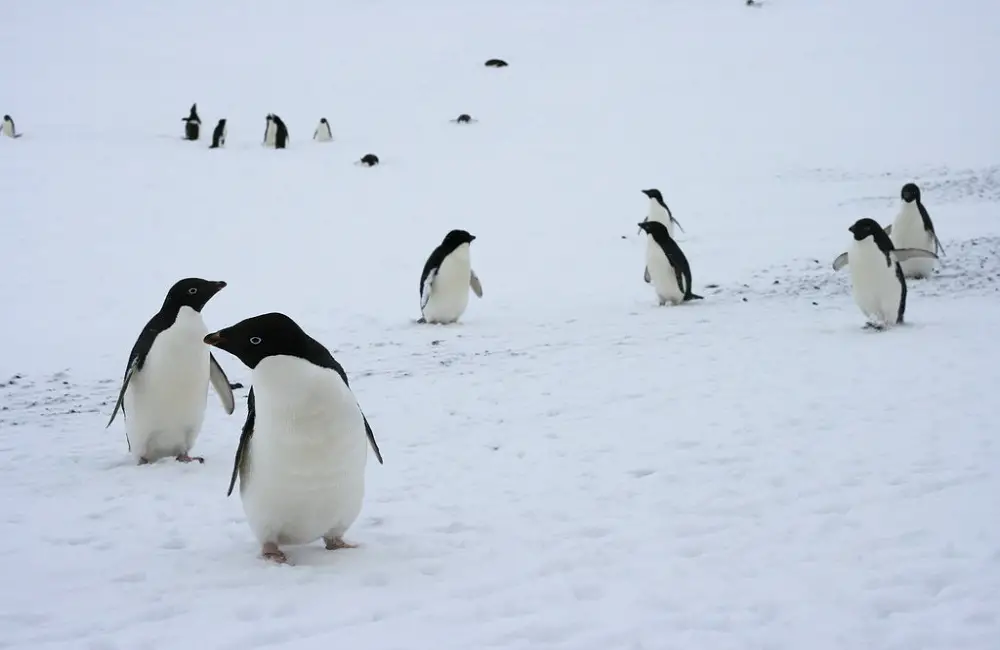
Penguins waddle slowly on land, and speed varies by species. The Australian Antarctic Division notes that Adélie penguins average about 2.5 km/h when walking on ice, and they can travel many kilometers.
Swim
Penguins swim to hunt and to escape predators. The San Diego Zoo says African penguins can swim up to 15 mph when hunting. Gentoo penguins are often described as the fastest swimmers.
Run
Penguins don’t really run. When they need to move faster on ice and snow, some species slide on their bellies, which is called tobogganing.
What Do Penguins Eat?
Penguins are carnivores. They hunt underwater and catch prey one at a time.
Depending on the species, their diet includes:
- Fish
- Krill
- Squid
- Other small crustaceans
How much a penguin eats depends on its size and season. Penguins eat a lot before molting and breeding, then may fast for weeks while they molt or guard a nest.
Can Humans Eat Penguin Meat?
Penguins are protected, so killing or eating one is illegal in the countries where they live. In the past, explorers and sealers did eat penguins and their eggs, which harmed some populations.
What Do Baby Penguins Look?
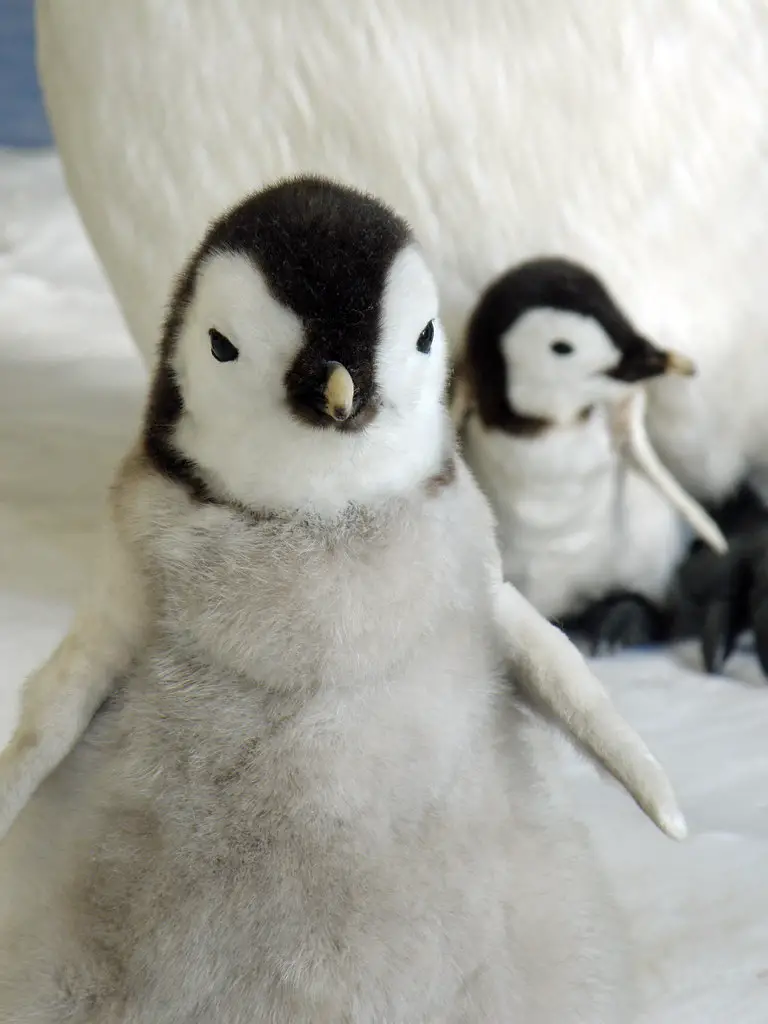
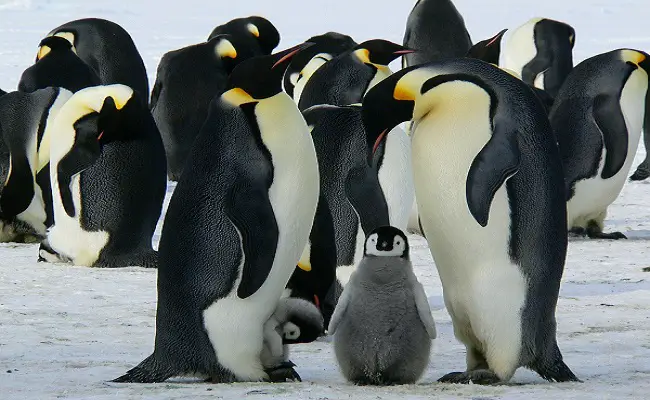
Penguin chicks hatch covered in soft down that is gray, brown or white, depending on the species. They later grow waterproof feathers, and young penguins first have juvenile plumage before they get the adult black-and-white pattern. For Adélie penguins, chicks replace their down with adult feathers at about 7 to 9 weeks, then head to sea.
Below are the pictures of a baby penguin.
Are Penguins Endangered?
Some are. Several penguin species are threatened, and the African penguin is listed as Critically Endangered. The San Diego Zoo says fewer than 20,000 African penguins remain, mostly because of food shortages.
Other species, like the Adélie penguin, are listed as least concern. Even so, wild penguins are protected, and harming them can lead to fines or jail.
Where Do Penguins Live?
According to the Australian Antarctic Division, there are 18 penguin species, and they are only found in the Southern Hemisphere. Five species live in Antarctica, including the emperor penguin, and others live in South America, South Africa, Australia, New Zealand and on islands.
How Smart Are Penguins?
Penguins are social birds that live in colonies. They recognize their mates and chicks by voice, which helps them find each other among thousands of birds.
Zoo penguins can learn routines and simple training, like stepping onto a scale. There is no evidence that penguins are the smartest animals on Earth or smarter than dogs, though.
Adélie penguins carefully choose pebbles to build nests that keep their eggs above meltwater.
Watch the video below of a penguin building its nest on the ground.
https://www.youtube.com/watch?v=h843zCDziV8
How Soft Are Penguins?
Penguin feathers are short, stiff and tightly packed, and they are coated with oil to keep them waterproof. So penguins feel smooth and firm rather than fluffy, except for chicks covered in down. Their feathers often smell fishy.
Why Do Penguins Huddle Together?
Have you ever seen penguins huddle together? If yes, do you wonder why?
Penguins huddle together to share body heat and shelter from wind. Emperor penguins are famous for huddling through the Antarctic winter, and chicks of many species group together for protection and warmth.
Why Do Penguins Collect Pebbles?
Penguins such as Adélies and gentoos build nests out of pebbles. A raised pebble nest keeps eggs out of meltwater. Pebbles are valuable, and penguins sometimes steal them from their neighbors’ nests. Males may offer pebbles during courtship, and many pairs return to the same partner each season, though they don’t always mate for life.
Final Words
Penguins are protected wild animals that need cold water, a colony and expert care, so they can’t be pets. If you want a pet, choose a domesticated animal, and enjoy penguins at a zoo or aquarium.
Do you like what you read? Feel free to share us on any of your social media accounts!
Source: fluffyplanet.com, seaworld.org, penguinsblog.com
Sources
- Penguins, Australian Antarctic Division
- Adélie penguin, Australian Antarctic Division
- African Penguin, San Diego Zoo Wildlife Alliance