Can Cows Be Pets? Everything You Should Know Before Getting A Pet Cow!
Contents
- What Is A Cow?
- Things To Consider Before Buying A Pet Cow
- What Type Of Cow Do You Like To Get?
- Do You Have Enough Space For Your Pet Cow?
- What Are You Going To Feed To Your Pet Cow?
- How Experienced Are You Into Cows?
- How Committed Are You In Taking Care Of A Cow?
- Decided To Buy A Cow? What's Next?
- How Much Does A Cow Cost?
- How Much Does A Cow Cost Annually?
- Where Can I Buy A Cow?
- Do Pet Cows Can Be Kept In Your House?
- Are Cows Friendly To Humans?
- Are Cows Can Be A Better Pets Than Dogs?
- Do Cows Like To Be Petted?
- 7 Best Type Of Cows That Can Be A Good Pet
- Blonde d'Aquitaine
- British White
- Devon
- Galloway
- Lincoln Red
- Hereford
- Holstein Friesian Cattle
- 7 Interesting Facts About Cows
- 1. Cows spend about half the day lying down
- 2. Cows chew their cud
- 3. A milking dairy cow eats a lot
- 4. Cows enjoy rubdown
- 5. Cows have 32 teeth
- 6. Cows spend hours a day eating
- 7. Cows drink a lot of water
- Final Words
- Sources
A pet dog is great, but have you ever thought about keeping a pet cow? Cows can be gentle, curious and affectionate. They also need a lot of space, food and care.
Here's what you should know first.
Can cows be good pets? Yes, cows can be good pets if you have enough land, the right facilities and the time to care for them. Well-handled cows are often calm and friendly, and they can recognize the people who care for them. But a cow is a big, long-term commitment, and it is not a backyard pet.
Before getting a pet cow, think through the points below so you know whether you're ready.
What Is A Cow?
Strictly speaking, a cow is a female bovine (cattle) that has had a calf. A young female that hasn't calved is a heifer, an intact male is a bull, and a castrated male is a steer.
For pets, cows and steers are the usual choices. Bulls can be dangerous, even when raised by hand, and are not suitable pets.
Keep in mind that a cow only produces milk after giving birth. A milking cow must be milked every day, usually twice a day. That is a big commitment if you only wanted a companion animal.
Things To Consider Before Buying A Pet Cow
Think these points through before you buy. They'll save you and your cow trouble later.
What Type Of Cow Do You Like To Get?
Cattle are broadly divided into beef breeds and dairy breeds. Beef cattle are raised for meat, and dairy cattle for milk.
Each type has different needs. Smaller, docile breeds are often easier for beginners to handle.
Have a veterinarian examine any animal before you buy it. Check for signs of illness, parasites and lameness, and ask about its vaccination and health history.
Do You Have Enough Space For Your Pet Cow?
Cows need a pasture or a large, safe enclosure, sturdy fencing, and shelter from weather. They cannot live in your house.
Check your local zoning rules too. Many towns don't allow cattle on residential lots.
Cows are herd animals. A single cow kept alone can become stressed and lonely, so plan to keep at least two cattle or give your cow suitable companions.
What Are You Going To Feed To Your Pet Cow?
Cows eat mainly grass on pasture and hay when grass isn't growing. Milking dairy cows need extra feed to keep up their condition.
In cold climates, you'll need to buy or store hay for winter. Cattle also need salt and mineral supplements, and a constant supply of clean water.
Water needs are large. Penn State Extension notes that a lactating cow will drink 30 to 50 gallons of water daily, and even more in hot weather.
Make sure you can afford feed year-round before getting a cow.
How Experienced Are You Into Cows?
You don't need a degree to keep a cow, but you do need to learn the basics. That includes feeding, handling, hoof care, vaccinations and signs of illness.
If it's your first cow, talk to an experienced cattle owner, your local extension office, and a large-animal veterinarian before buying. A gentle, calm breed is a good choice for beginners.
How Committed Are You In Taking Care Of A Cow?
Cattle can live for many years, so this is a long-term commitment. They need care every day, including holidays and bad weather.
Ask yourself whether you have the money, space and time. Make sure there's a large-animal vet nearby who will treat your cow.
If you are fully committed and have the land and budget, a cow can be a rewarding companion. If you plan to keep a dairy cow for milk, remember she has to be bred, calve and be milked daily.
Decided To Buy A Cow? What's Next?
If you've thought through the points above and still want a cow, here's what to expect.
How Much Does A Cow Cost?
The price of a cow depends on age, breed, sex, size and whether it's a beef or dairy animal. Prices also rise and fall with the cattle market.
Young calves usually cost far less than grown cows, and registered or high-producing animals cost the most. Check current prices with local sellers, livestock auctions or your extension office, since cattle prices change often.
When you're ready to buy, keep two things in mind.
First, have the animal checked for health problems before you pay. Learn the signs of a healthy cow versus a sick one.
Second, compare prices. Look at several animals and sellers before you commit.
How Much Does A Cow Cost Annually?
The purchase price is only the start. Feed, hay, minerals, vet care, fencing and shelter all add up.
Your yearly cost depends on how much pasture you have. Cattle on good grass need much less purchased feed, while cattle without pasture need hay year-round.
Other costs to plan for include:
- Grain or other supplements, if needed
- Vet bills and routine vaccinations
- Minerals and salt
- Fencing, shelter and water system upkeep
- Halters, feeders, water tanks and other equipment
Where Can I Buy A Cow?
You can buy cattle from local farms, breeders and livestock auctions. There are also online listing sites.
It's safest to see the animal in person before buying. Here are some sites that list cattle for sale:
- http://www.ranchworldads.com/
- http://www.uproducers.com/cattle-for-sale/
- http://www.cattlerange.com/
- http://www.cattle-exchange.com/
Do Pet Cows Can Be Kept In Your House?
Cows need a pasture or a large, well-fenced area where they can move around, graze and rest. They also need shelter, such as a barn or run-in shed.
Can pet cows be kept in your house? No. Cows are far too big to live indoors, and they need space to graze and move. Plan for pasture, fencing and a barn or shelter before you get one.
Are Cows Friendly To Humans?
If you're thinking of buying a cow, you're probably wondering whether cows are friendly.
Are cows friendly to humans? Many cows are calm and friendly with people they know, especially when handled gently from a young age. But every cow is large and strong, and a frightened cow can kick or knock you down. Bulls are much more aggressive and dangerous than cows.
A well-handled cow can be a gentle companion on a farm. Always be careful around any cattle, especially a cow with a young calf.
Are Cows Can Be A Better Pets Than Dogs?
What counts as a pet is partly a matter of opinion. Many people consider animals they care for outdoors, like horses or cows, to be pets.
Can cows be better pets than dogs? For most people, no. Cows are much larger than dogs and need far more space, food, money and specialized care.
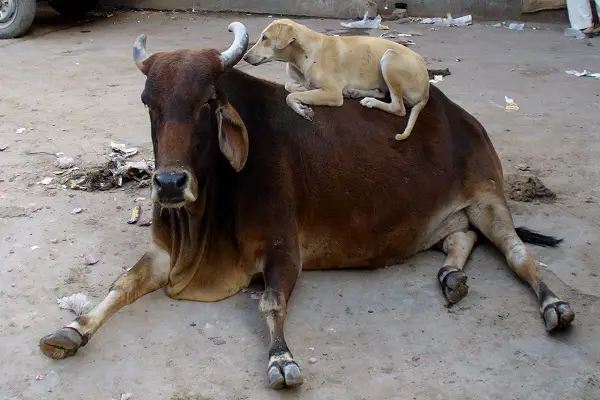
Cows can still be rewarding for the right owner. Many cows enjoy attention from familiar people and show affection in their own ways.
But a cow is a farm animal with farm-animal needs. If you don't have land and livestock experience, a dog is the more practical choice.
Do Cows Like To Be Petted?
Many cows enjoy being scratched and brushed by people they trust.
Do cows like to be petted? Many do. Cows often enjoy brushing and scratches, especially on the neck and head. Gentle, regular handling builds trust between you and your cow.
7 Best Type Of Cows That Can Be A Good Pet
Temperament varies between individual animals, but these breeds are often described as docile. Handling and training matter just as much as breed.
Blonde d'Aquitaine
The Blonde d'Aquitaine is a French beef breed from the Aquitaine region in the southwest of France. It is large, with a coat ranging from light cream to light brown, and it is known for heat tolerance.
British White
The British White is a polled (naturally hornless) breed from East Anglia, England. It is white with black or red points on the ears, nose and feet, and it is raised mainly for beef in the U.S.
Devon
Devon cattle come from southwestern England. They are also known as Red Devon or Ruby Red.
They are medium-sized, red-coated cattle known for being hardy and adaptable.
Galloway
Galloway cattle come from the Galloway region of southwest Scotland. They have thick, shaggy coats, which help them tolerate cold weather.
They're hornless, hardy and raised for beef. They come in several colors, including black, dun and belted patterns.
Lincoln Red
The Lincoln Red comes from Lincolnshire, England. It was once a dual-purpose breed for milk and meat but is now kept mainly for beef.
It is a deep red breed known for being hardy and easy to manage.
Hereford
The Hereford comes from Herefordshire in western England. It's one of the most widespread beef breeds in the world and is easy to spot by its red body and white face.
Herefords are known for being docile and good foragers. Some are horned and some are polled.
Holstein Friesian Cattle
Holstein Friesians come from the Dutch provinces of North Holland and Friesland. They're the classic black-and-white dairy cow and are known for producing very large amounts of milk.
They're large animals, and as dairy cows they need daily milking once they've calved. Like all cattle, they're social and do best with herd mates.
7 Interesting Facts About Cows
1. Cows spend about half the day lying down
Cows rest a lot. The University of Minnesota Extension notes that cows desire 12 to 14 hours of lying time a day and will give up eating time to get it.
If their resting surface is uncomfortable, cows lie down less, which can affect their health.
2. Cows chew their cud
Cattle are ruminants. They swallow their food, bring it back up later and chew it again, called chewing the cud. They spend many hours a day ruminating, often while lying down.
3. A milking dairy cow eats a lot
Cows that are producing milk need far more feed than dry cows. They lose a lot of energy and nutrients making milk, so they must eat a large amount to keep up their body condition.
4. Cows enjoy rubdown
Many cows enjoy being brushed and scratched, especially on the head and neck. Some farms even install large rotating brushes for cows to use.
5. Cows have 32 teeth
Adult cattle have 32 teeth. They have no upper front teeth, just a tough dental pad that the lower front teeth press against when they tear grass.
6. Cows spend hours a day eating
Cattle on pasture spend many hours a day grazing. Housed dairy cows eating a prepared ration spend about 3 to 5 hours a day eating, according to the University of Minnesota Extension.
7. Cows drink a lot of water
A milking cow can drink 30 to 50 gallons of water a day, and more in hot weather. Cows also produce a lot of manure, so plan for daily cleanup and manure management.
Final Words
A cow can be a great companion if you have a farm or plenty of land. Many cows are gentle and affectionate with their owners.
But keeping a cow is not easy. It takes space, money, daily care and a long-term commitment. Plan carefully before you bring one home.
Sources
- Clean Drinking Water Is Essential to Cows, Penn State Extension
- How overstocking affects cow performance, University of Minnesota Extension