Can Magpies Be Pets? Everything You Didn’t Know About Magpies
Contents
- Things To Consider Before Getting A Pet Magpie
- Space
- Is It Legal?
- Shiny Things
- Other Pets
- Safety
- Commitment
- Attention
- They Have Strong Beak
- Are Pet Magpies Safe?
- What Supplies Do You Need For Your Pet Magpie?
- Types Of Magpie That Can Be Pets
- Are Females Or Males Magpies Better Pets?
- How Long Do Magpies Live?
- What Should I Feed My Pet Magpie?
- How Old Should Kids Be To Keep A Pet Magpie?
- Should You Catch A Wild Magpie And Make It As Pet?
- Alternative Pet Birds For Magpies
- Final Verdict
- Sources
Are you living in Australia, the United Kingdom or the United States? If yes, are you wondering about getting a pet magpie? If yes is your answer again, you have to keep reading.
We have gathered the information you need before you consider a pet magpie, including the law, their needs and better alternatives. But first, let us find out if they are good pets.
Are magpies good pets? In most cases, no. Magpies are wild birds protected by law in the UK, the United States and Australia, so you generally can't take one from the wild or keep one without a permit or licence.
They are intelligent and social, but they need space, a varied diet and the company of other magpies, which is very hard to provide at home.
Now let's take a look at the other things you need to know about magpies and the law, their behavior and their care.
Things To Consider Before Getting A Pet Magpie
Below are the different things you should consider before even thinking about a pet magpie:
Space
Magpies are active birds that fly, hop and forage. A cage is not enough. A magpie kept by a licensed wildlife carer usually needs a large aviary where it can fly.
If you don't have room for a big aviary, you can't give a magpie a decent life.
Is It Legal?
In many places, keeping a magpie is illegal without a permit. Here is a quick overview:
- United Kingdom: Under the Wildlife and Countryside Act 1981, it is an offence to take any wild bird or to possess a live wild bird, except as the law allows.
- United States: Native magpies are protected under the Migratory Bird Treaty Act. The U.S. Fish and Wildlife Service issues permits for possessing migratory birds, and only for specific purposes such as rehabilitation or education.
- Australia: The Australian magpie is protected native fauna. In Western Australia, for example, it is an offence to kill, injure, trade, keep or move one without a permit. Rules vary by state, so check with your state wildlife agency.
Always check with your local wildlife agency before keeping any wild bird.
Never take a wild magpie, including a fledgling on the ground. Young magpies often leave the nest before they can fly well, and their parents are usually nearby. If a bird is injured or truly orphaned, contact a licensed wildlife rescue group.
Shiny Things
Many people believe magpies love shiny things, but research says otherwise. A University of Exeter study found that magpies are not attracted to shiny objects and don't routinely steal trinkets. They were actually wary of new and unfamiliar objects.
Other Pets
Dogs and cats can kill birds, so any magpie kept by a licensed carer must be well out of reach of other pets.
Magpies also shouldn't be housed with other kinds of birds. They are predators of small birds, eggs and nestlings, and other birds can be injured or stressed.
Safety
Magpies have strong, sharp beaks. A frightened or territorial magpie can peck hard, so they are not suitable around young children.
Commitment
Any bird kept in captivity needs daily care for its whole life. Never take on a bird you aren't able to care for long term.
Releasing a hand-raised magpie later isn't simple, either. Birds that grow up around people often struggle in the wild, which is why rehabilitation is best left to licensed carers.
Attention
Magpies are very social and intelligent. They live in pairs or family groups and need constant mental stimulation. A single magpie left alone in a cage all day will be bored and stressed.
They Have Strong Beak
Magpies have a strong, sharp beak. Licensed carers often wear gloves when handling them to avoid painful pecks.
Are Pet Magpies Safe?
Wild magpies are not dangerous most of the year, but you should never try to catch one. It is illegal in many places, stressful for the bird, and you can get pecked.
In Australia, some magpies swoop at people to protect their eggs and young during the nesting season, from about August to October.
Western Australia's Department of Biodiversity, Conservation and Attractions notes that each bird usually swoops for only a few weeks and defends an area of about 100 meters around its nest.
Magpies raised around people may become used to them, but they are still wild birds with wild instincts.
So in conclusion, wild magpies should be left in the wild, and only licensed wildlife carers should keep magpies in captivity.
What Supplies Do You Need For Your Pet Magpie?
If you are a licensed wildlife carer, a magpie typically needs:
- A large aviary with room to fly
- A sheltered area or nesting spot
- Natural wooden perches
- A varied, species-appropriate diet
- Clean water for drinking and bathing
- Enrichment and foraging opportunities
- Access to a vet who treats wild birds
- An easy-to-clean floor or tray
Magpies are social, so licensed carers often raise young magpies with others of their kind. That helps them learn normal behavior and improves their chances if they are released.
Types Of Magpie That Can Be Pets
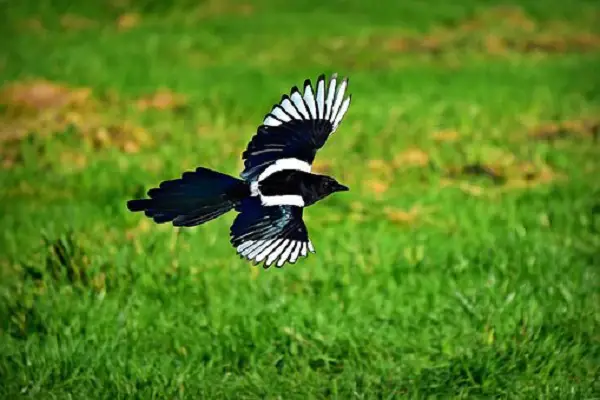
Several different birds are called "magpies," and some of them aren't closely related. Here are four that people often ask about:
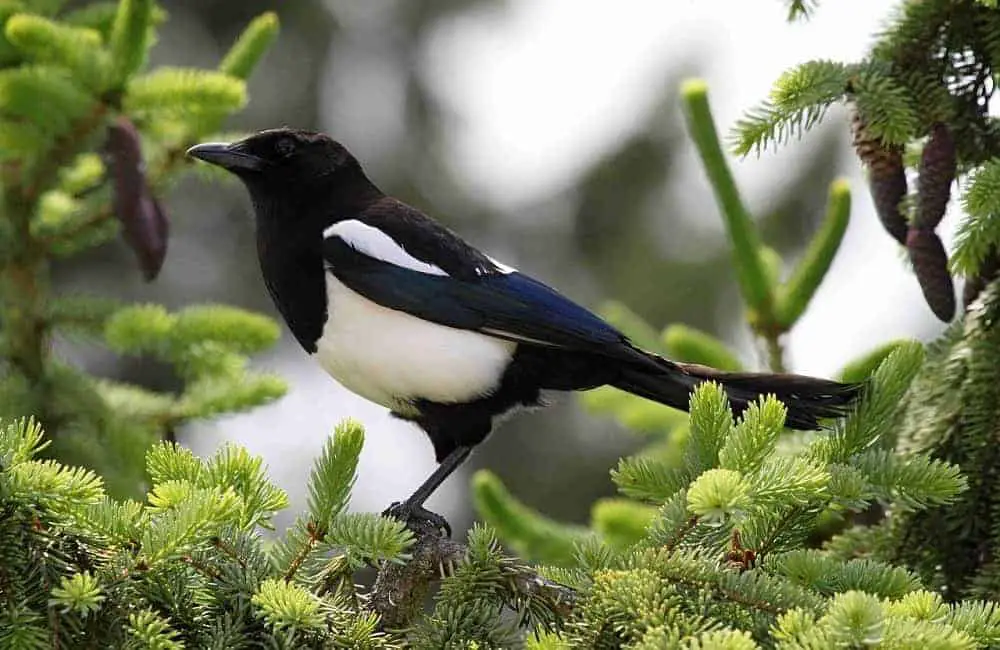
- Eurasian Magpie The Eurasian magpie (Pica pica) is the common black-and-white magpie of Europe and much of Asia. It is a member of the crow family and is often seen in towns and parks. In the UK it is protected under wildlife law like other wild birds.
- American Magpies North America has two native species: the black-billed magpie of the West and the yellow-billed magpie, found only in California. Both are protected under the Migratory Bird Treaty Act, so they can't be kept as pets.
- Oriental Magpie Robin The oriental magpie robin is a black-and-white songbird found across South and Southeast Asia. Despite the name, it is not a true magpie. It is a member of the Old World flycatcher family, known for its song, and in many countries it is protected.
- Azure-Winged Magpie The azure-winged magpie is a member of the crow family found in East Asia, with a related species in Spain and Portugal. It is smaller than the Eurasian magpie and lives in noisy family groups.
The Australian magpie is a different bird again. It is a large butcherbird, not closely related to the Eurasian magpie, despite its black-and-white look.
Are Females Or Males Magpies Better Pets?
Neither sex makes a good pet. Magpies are social birds that live in pairs or family groups, and they need the company of other magpies.
Magpies can become very attached to the people who raise them, which is one reason licensed carers try to avoid over-taming birds they plan to release.
How Long Do Magpies Live?
Lifespan depends on the species. Most wild Eurasian magpies live only a few years, though some survive much longer. Australian magpies can live considerably longer, especially in captivity.
Wild birds face predators, disease, cars and harsh weather, so many die young. A bird in good captive care may live longer, but only if its needs are fully met.
What Should I Feed My Pet Magpie?
Wild magpies are omnivores. They eat insects, worms, grubs, seeds, fruit, small animals, eggs and carrion.
A magpie in captivity needs a varied, balanced diet that copies what it would eat in the wild. Licensed carers usually feed:
- Insects such as mealworms and crickets
- Worms
- Small amounts of lean raw meat
- Fruits such as berries
- Commercial insectivore or omnivore bird food
Avoid feeding magpies:
- Junk foods
- Coffee
- Candies
- Bread
- Sausage
- Other processed or salty foods
If you're caring for a magpie, ask a wildlife carer or avian vet to check the diet. Poor diets cause serious bone and feather problems in young birds.
How Old Should Kids Be To Keep A Pet Magpie?
Magpies aren't suitable pets for children of any age. They are protected wild birds with complex needs, and their sharp beaks can cause painful injuries.
If your child loves magpies, encourage them to watch and learn about the wild birds in your area instead.
Should You Catch A Wild Magpie And Make It As Pet?
No. You should never try to catch a wild magpie.
It is illegal in many places, stressful for the bird, and wild birds can carry parasites and diseases. If you find an injured magpie, contact a licensed wildlife rescue group or vet.
If magpies visit your backyard, enjoy watching them from a distance and let them live their wild lives.
Alternative Pet Birds For Magpies
If you want a pet bird, choose a species that has been bred in captivity for generations. Here are some popular options:
- Canaries Canaries are small songbirds known for their singing. They enjoy their owners' company but usually don't like to be handled.
- Parrots Parrots range from small to very large. Many can learn to mimic speech. They need a lot of time, attention, enrichment and time out of their cage.
- Budgies Budgies are gentle birds that are easy to tame and often enjoy being handled. They are social, so many owners keep them in pairs.
- Cockatiels Cockatiels are gentle and affectionate, and they can fit in smaller homes. They love to interact with their owners and other cockatiels.
- Finches Finches are lively, social birds that do best in pairs or small groups. They don't usually like handling, but they are fun to watch.
Final Verdict
Magpies are clever, intelligent birds, but they are not good pets. In the UK, the United States and Australia they are protected, and keeping one generally requires a permit or licence. If you want a pet bird, choose a captive-bred species, and leave wild magpies where they belong.
Sources
- Wildlife and Countryside Act 1981, Section 1, UK legislation.gov.uk
- Migratory Bird Treaty Act of 1918, U.S. Fish & Wildlife Service
- New study takes the shine off magpie folklore, University of Exeter
- Fauna Notes: Magpies, Swooping and Safety Issues, Western Australia Department of Biodiversity, Conservation and Attractions