
Why Are Leopards So Dangerous? Answered!
Contents
Leopards are spotted big cats and some of the most skilled hunters in the wild. They are strong, stealthy and very adaptable.
Why are leopards dangerous? Leopards are powerful, stealthy ambush hunters that are mostly active at night. They adapt well to living near people, where they may take livestock and pets. A cornered, injured or surprised leopard can attack.
Reason Why Leopards Are Dangerous
Leopards are strong for their size, with sharp claws and teeth. They can drag heavy prey and carry kills high into trees.
Like most wild animals, an injured or cornered leopard is more likely to fight than flee. That's one reason wounded leopards are considered especially dangerous.
Leopards hunt alone. San Diego Zoo Wildlife Alliance says that, except during breeding season, leopards lead a solitary life.
They are ambush hunters, not long-distance chasers. San Diego Zoo Wildlife Alliance says a leopard stalks and pounces rather than chases its prey over long distances, with bursts of speed up to about 36 miles per hour.
Each leopard has a home range. Leopards mark it with urine and by rubbing their faces against rocks and tree trunks.
Leopards are usually nocturnal, resting by day and hunting at night. They often rest in trees or dense cover during the day.
Their excellent night vision gives them an advantage over prey in the dark.
Leopards stalk quietly until they are close, then pounce. They usually kill with a bite to the throat or neck.
They often stash kills high in trees so lions and hyenas can't steal them.
Are Leopards Unpredictable?
Leopards are hard to predict because they are secretive and don't follow a fixed hunting pattern. San Diego Zoo Wildlife Alliance notes that a leopard doesn't have a predictable pattern to hunting.
That flexibility helps them survive in many habitats, from rainforests to deserts and the edges of cities.
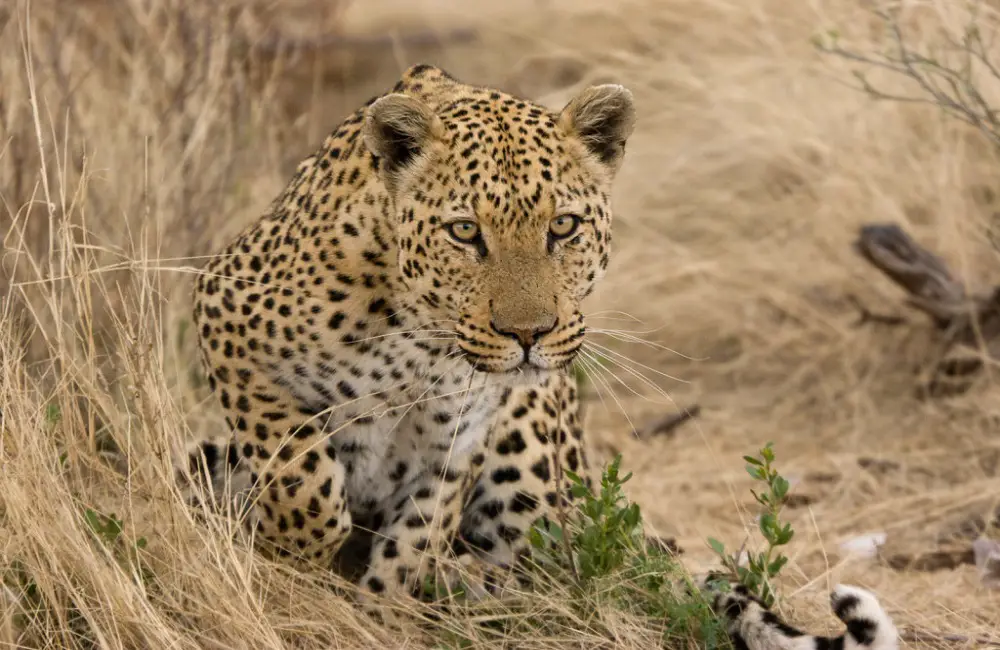
Leopards also show warning signs. A leopard that growls, flattens its ears or crouches with a twitching tail is telling you to back off.
Which Is The Most Dangerous Type Of Leopard?
No leopard subspecies is naturally more dangerous than another. Risk depends on where leopards and people live close together.
In parts of India and Africa, leopards live near villages and farms. There they may prey on dogs, goats, cows and other livestock, and conflicts with people are more common.
Are Leopards Dangerous To Humans?
Leopards can be dangerous to humans, but most avoid people. Attacks are rare compared with how many leopards live near people.
Leopards that live near villages sometimes take livestock and pets. San Diego Zoo Wildlife Alliance notes that ranchers protecting livestock frequently poison leopards, which is a major threat to the species.
Are leopards dangerous to humans? Leopards usually avoid people. Attacks are more likely where leopards live close to villages, when one is cornered or injured, or at night near homes. Small children are most at risk.
If you live or travel in leopard country, take sensible precautions, especially at dawn, dusk and night.
Is Leopard The Most Dangerous Animals To Humans?
Leopards are not the most dangerous animals to people. Most leopards avoid humans, and attacks are uncommon.
But, is a leopard the most dangerous animal to humans? No. Mosquitoes kill far more people than any big cat, because they spread diseases like malaria.
Which Is A More Dangerous Lion Or Leopard?
Lions are social and hunt in groups. The National Zoo notes that females are the primary hunters, although males sometimes join them.
Leopards are solitary and hunt alone.
So, who is more dangerous? Lion or leopard?
Lions are bigger and stronger than leopards, and both can kill people. Neither is "safe" to approach, so treat both with the same caution.
Lions live in open country and are often easier to spot. Leopards are secretive and well camouflaged, which makes surprise encounters more likely.
How To Prevent A Leopard Attack?
If you live in or visit a place with leopards, follow these precautions:
- Never approach a leopard, even if it seems calm.
- Never go near a cub. The mother is likely nearby.
- Keep livestock and pets in secure enclosures at night.
- Don't let children play outside alone at dawn, dusk or night in leopard areas.
- If you meet a leopard, don't run. Face it, make yourself look big, and back away slowly.
- If a leopard comes toward you, shout, clap and wave your arms.
Final Thoughts
Leopards are powerful, stealthy predators that usually avoid people. If you live where leopards are common, keep your pets and livestock secure and follow local wildlife advice.


