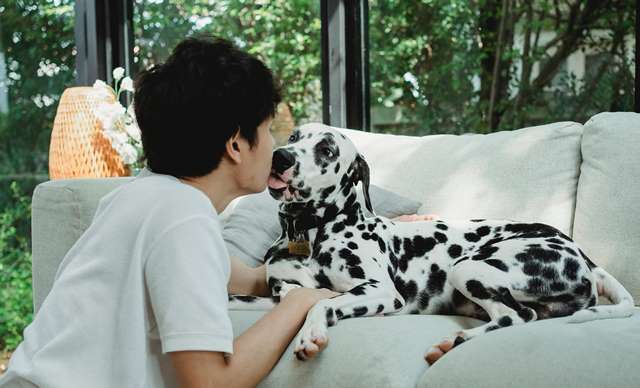
Why Does My Cat Sleep by the Door? Feline Sleeping Habits
Contents
- Key Takeaways
- Cat Sleep Patterns
- Natural Instincts and Survival
- Sleep Positions and What They Indicate
- The Significance of the Doorway
- Territory and Security
- Curiosity and Control
- Behavioral Reasons Behind Door-Sleeping
- Attention and Separation Anxiety
- The Allure of Warmth and Comfort
- Improving Your Cat's Sleeping Habits
- Providing Alternatives to the Door
- Understanding and Addressing Anxiety
- Frequently Asked Questions
- What causes cats to prefer sleeping by the door during nighttime?
- What does it mean when a stray cat decides to sleep outside your door?
- Should I keep my bedroom door closed while my cat is sleeping by it?
- Sources
If your cat naps by the front door or curls up outside your bedroom door every night, you are not alone. Cats choose this spot for a handful of practical reasons.
The answer to "Why does my cat sleep by the door?" usually comes down to wanting to be near you, keeping watch over its territory, and picking up the sounds and smells that pass through.
Key Takeaways
- Cats often sleep by the door to stay close to you or wait for you.
- Doorways let a cat keep an eye on household comings and goings.
- The habit is usually harmless, but signs of distress when you are away are worth discussing with your vet.
Cat Sleep Patterns
A doorway is a good lookout spot. Your cat can hear and smell what is happening beyond the door and notice right away when you come or go.
For a cat that is attached to you, sleeping by the door also means being in the right place the moment you appear.
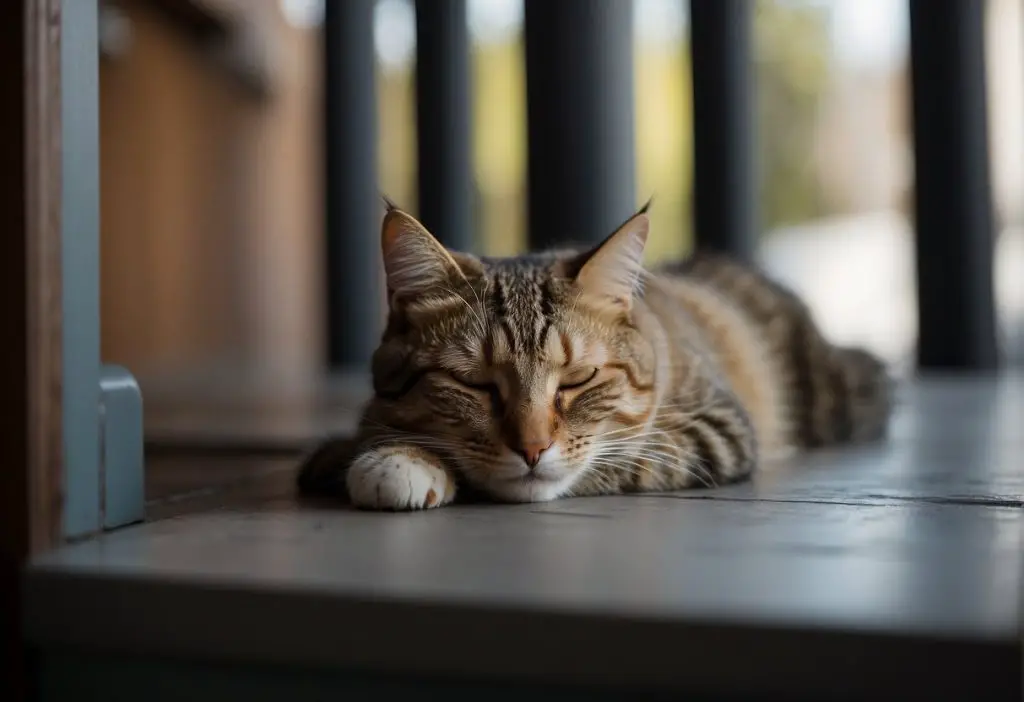
Cats sleep many hours a day, often in short naps, and they pick their spots carefully.
Natural Instincts and Survival
Cats are both predators and prey in the wild, so they tend to sleep lightly and wake quickly. They often choose resting spots where they can stay aware of their surroundings.
- Alertness: Cats often pick sleeping spots that let them notice movement and sound.
- Survival: A spot near an exit gives a quick way out if something startles them.
Sleep Positions and What They Indicate
Sleep positions can hint at how relaxed your cat is.
- Side Sleeping: A cat stretched out on its side, belly partly exposed, is usually very relaxed and feels safe.
- Loaf Position: A cat with its paws tucked under its body is comfortable but can get up quickly if needed.
The Significance of the Doorway
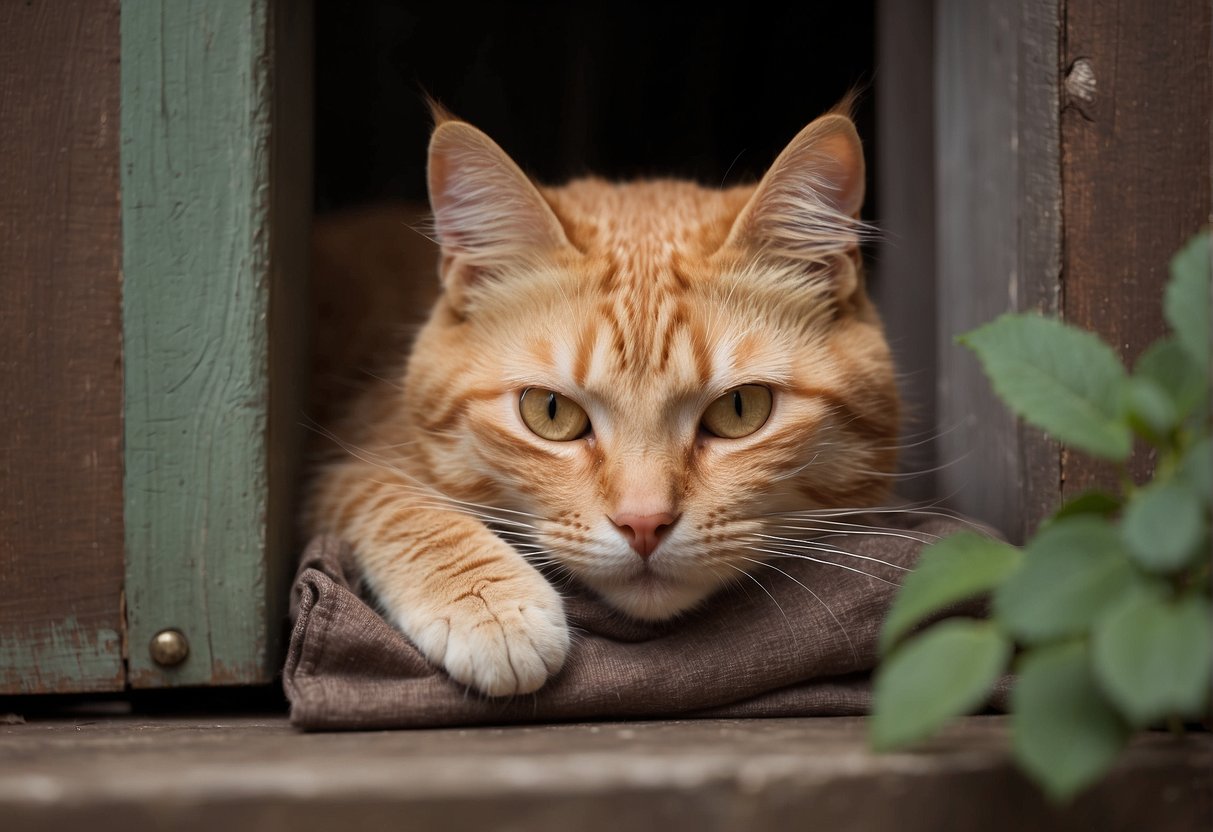
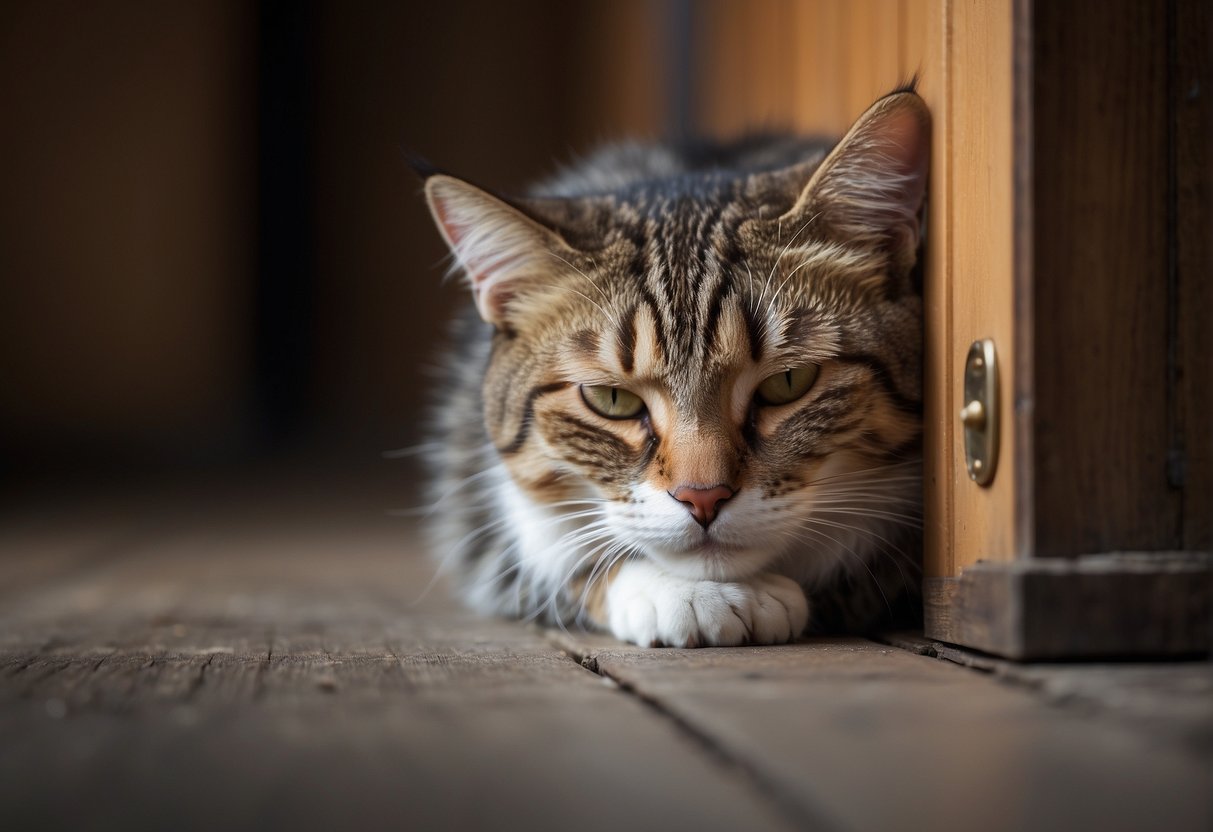
A door is a boundary in your cat's world. Things come and go through it, which makes it an interesting place to be.
Territory and Security
Cats are territorial, and a doorway is the edge of the space they know. The Merck Veterinary Manual notes that scent plays a big role in a cat's environment, and doorways are where new smells come in. Sleeping there lets a cat monitor that edge.
- Key reasons for territorial behavior at the door:
- Monitoring access points
- Noticing new smells and sounds early
- Watching for other animals outside
A cat that can see and hear what is happening tends to feel more in control. The doorway gives it that vantage point.
- How the door helps a cat feel secure:
- It can watch who comes and goes
- It can retreat quickly if something startles it
Curiosity and Control
Cats are curious. Sleeping by the door keeps them close to the action and lets them react to sounds and smells from the other side.
- Curiosity-driven behaviors at the door:
- Observing household movements
- Responding to sounds and smells from beyond the door
Cats also like having a say in what happens in their space. A closed door blocks part of their territory, and some cats would rather wait by it than be shut out.
- Ways control shows at the door:
- Being first through when it opens
- Keeping track of a room it cannot get into
Behavioral Reasons Behind Door-Sleeping
Two other common reasons are attachment to you and the comfort of the spot itself.
Attention and Separation Anxiety
Many cats wait by the door because they want to be near you. A cat that sleeps outside your bedroom door may simply want to be where you are.
Some cats also become distressed when left alone. They may wait by the door until you come home.
- Signs of seeking attention:
- Meowing or scratching at the door
- Weaving between your feet when you come in
- Possible signs of separation-related distress:
- Excessive vocalization when alone
- Peeing or pooping outside the litter box, destructive scratching, or overgrooming
If you notice these signs, talk to your vet. They can rule out medical causes and suggest a behavior plan.
The Allure of Warmth and Comfort
Some doorways are simply comfortable. A glass door may let in a warm patch of sunlight, and a floor vent near a door can be a cozy spot in winter.
On the other hand, a draft under a door can carry interesting outdoor smells, which some cats enjoy investigating.
- Factors that can make a door appealing:
- Sunlight through glass doors
- Nearby heat vents
- Smells and sounds from outside
Improving Your Cat's Sleeping Habits
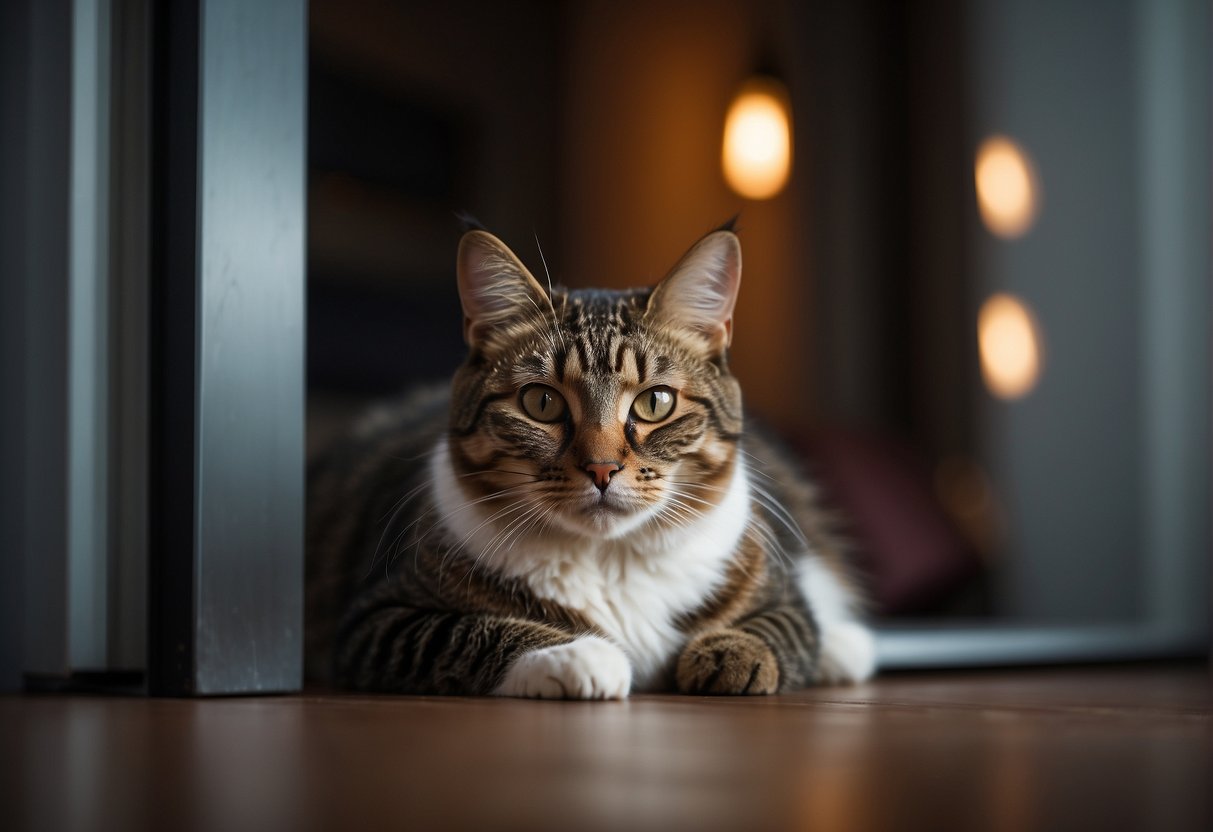
You do not need to stop this habit if it does not bother you. If your cat blocks a busy doorway or wakes you up, these tips can help.
Providing Alternatives to the Door
Set up a cat bed or a soft blanket near the door, but out of the walkway. Your cat keeps its view without getting stepped on.
A cat tree with a perch can also give your cat a high lookout spot, which many cats prefer.
- Positioning Suggestions:
- Cat bed: Place the bed within view of the door, but not in the doorway.
- Cat tree: Ensure the cat tree is stable and offers a cubby or perch near the top.
| Location | Item | Benefit |
|---|---|---|
| Beside the door | Cat bed | Provides warmth and comfort. |
| In the same room | Cat tree | Height offers security and oversight. |
Understanding and Addressing Anxiety
If your cat seems anxious, try to find out what is causing it. Giving your cat more control over its space, such as a cat flap on an interior door, can help reduce anxiety related to feeling shut out or confined.
A predictable routine for meals, play, and bedtime also helps cats feel secure.
- Anxiety Reduction Strategies:
- Install an interior cat flap: Lets your cat move between rooms on its own.
- Maintain a routine: Predictability can reduce stress in cats.
If you install a cat flap to the outdoors, choose a microchip-activated model so neighborhood cats cannot come in. Spend regular one-on-one time with your cat, just as you would with your dog, to strengthen your bond and help it feel safe.
Frequently Asked Questions
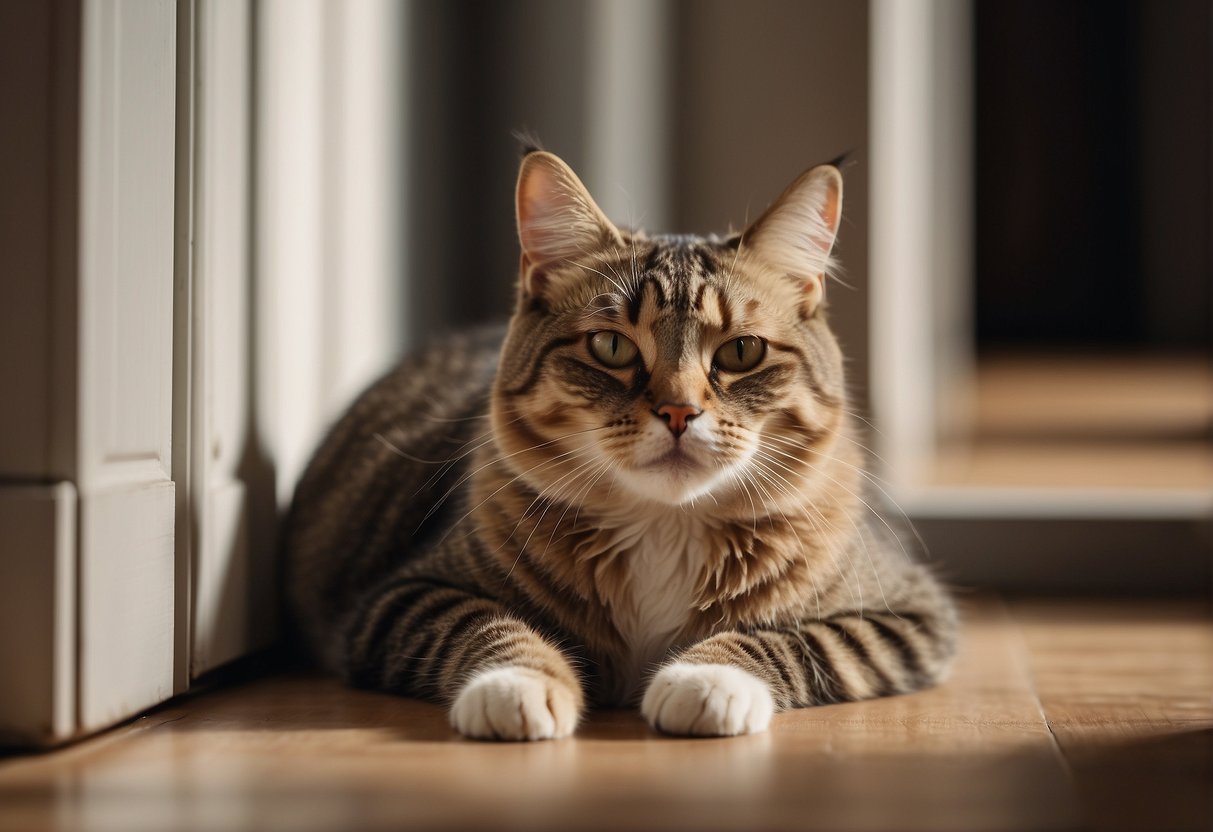
What causes cats to prefer sleeping by the door during nighttime?
Most often, your cat wants to be near you. A closed bedroom door also blocks part of its territory, so it may wait there to keep watch or to be let in.
What does it mean when a stray cat decides to sleep outside your door?
A stray sleeping by your door may be looking for shelter, warmth, or food. It may also have found your doorstep a safe resting place. If it seems sick or injured, contact a local animal shelter or rescue.
Should I keep my bedroom door closed while my cat is sleeping by it?
That is up to you. If your cat sleeps calmly, a closed door is fine. If it scratches or meows to get in, you can either let it in or give it a comfortable bed and some play right before bedtime.
Sources
- Normal Social Behavior in Cats, Merck Veterinary Manual
- Aggression in Cats, ASPCA