When to Remove Dead Kitten from Mother: Timings and Tips
Contents
- Key Takeaways
- Recognizing the Loss of a Kitten
- Identifying a Stillborn Kitten
- Understanding the Mother Cat’s Reaction
- Immediate Actions to Take
- Removing the Deceased Kitten Safely
- Health Risks and Infection Control
- Seeking Professional Veterinary Support
- Caring for the Surviving Kittens and Mother
- Providing Nutrition and Comfort
- Monitoring for Signs of Illness
- Ensuring a Stress-Free Environment
- Preventing Future Losses
- Risk Factors for Kitten Mortality
- Preventative Measures
- Frequently Asked Questions
- How can you tell if a kitten has died after birth?
- Do mother cats understand when one of their kittens has died?
- What are the signs that a pregnant cat may have a dead kitten inside her?
- Sources
When a cat gives birth, most kittens arrive healthy, but sometimes a kitten is stillborn or dies in the first days of life.
Losses like this are common in cats. A veterinary review of feline neonatology reports stillbirth rates of 5 to 12.5% in published studies, so a loss does not mean you did something wrong.
It is important to monitor the mother cat’s behavior, as she may naturally remove the deceased offspring herself. If she does not, give her a short time with the kitten, then remove it gently, ideally within a few hours, to protect the health of the mother and her surviving kittens.
Key Takeaways
- Let the mother sniff and inspect the kitten briefly, then remove the body within a few hours.
- Wear gloves, keep the body cool, and ask your vet whether they want to examine it.
- Call your vet the same day; a stillbirth can signal a problem with the mother or the litter.
Recognizing the Loss of a Kitten
When a kitten dies, try to notice it as soon as possible. Your prompt actions help protect the surviving kittens and the mother.
Identifying a Stillborn Kitten
If a kitten is motionless, not breathing, and shows no signs of life shortly after birth, it is likely stillborn. Important indicators of a stillborn kitten include:
- Lack of movement: The kitten is not moving and does not respond to gentle stimuli.
- No breathing: There is no chest movement or breathing effort.
A newborn that is limp but still has a heartbeat may sometimes be revived. If you are unsure, call your vet or an emergency clinic right away rather than assuming the kitten is dead.
Understanding the Mother Cat’s Reaction
Mother cats react to a dead kitten in different ways. Some may show:
- Restlessness or searching behavior.
- More frequent or different vocalizations.
Many mothers sniff, lick or nudge the kitten, then move it away from the nest or ignore it. Others stay close to it for a while. Either reaction is normal, but leaving the body in the nest for long is not good for the litter.
Immediate Actions to Take
When you find a deceased kitten in the litter, act calmly and quickly. Focus on safe removal, cleaning, and a call to your vet.
Removing the Deceased Kitten Safely
Wear disposable gloves. Wrap the kitten in a cloth or paper towel and place it in a sealed plastic bag.
If your vet may want to examine the body to find the cause of death, keep it refrigerated (not frozen) and bring it in as soon as possible.
Health Risks and Infection Control
Some kittens die from infections, including viruses such as feline herpesvirus, calicivirus, feline leukemia virus and panleukopenia, according to the feline neonatology review. That is why hygiene matters.
Replace soiled bedding and wash your hands well. If you disinfect, use a product your vet recommends, rinse well, and let the area dry before the mother and kittens return. Never mix bleach with other cleaners.
Seeking Professional Veterinary Support
Contact your veterinarian soon after the kitten is found. A vet can check the mother for retained kittens or placentas, check the surviving kittens, and help find the cause of death.
Call right away if the mother is straining without delivering, has a foul-smelling discharge, a fever, or stops eating.
Caring for the Surviving Kittens and Mother
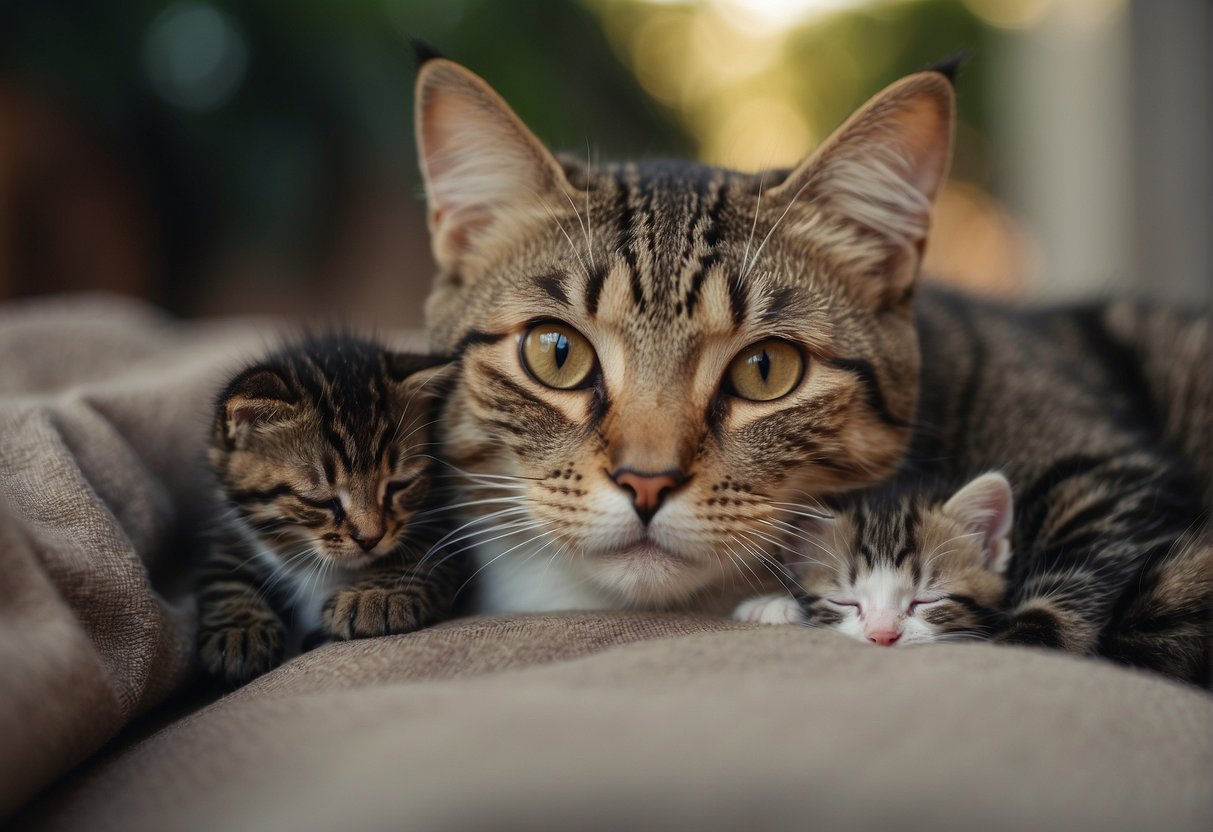
After the loss, focus on the health of the surviving kittens and the nursing mother. That means close observation, good nutrition, and a quiet nest.
Providing Nutrition and Comfort
A nursing cat needs extra calories to make milk. Ask your vet about the right diet; many recommend a complete kitten food during pregnancy and nursing.
- High-quality kitten food: Rich in calories and nutrients.
- Fresh water: Available at all times.
If the mother cannot produce enough milk, your vet may advise supplementing with a commercial kitten milk replacer. Never use cow’s milk.
Bottle-Feeding Schedule (only if your vet advises supplementing):
A veterinary guide to hand-raising kittens recommends feeding every 2 to 4 hours in the first week, then every 4 to 6 hours until weaning. Weaning onto solid food usually starts at around 4 weeks.
Monitoring for Signs of Illness
Watch the litter closely. Call your vet if you see:
- Lack of appetite or failure to gain weight
- Lethargy or weak suckling
- Abnormal respiratory sounds or difficulty breathing
- Diarrhea or vomiting
Weighing kittens daily on a kitchen scale is one of the easiest ways to spot a problem early. Ask your vet when to bring the mother and litter in for a check-up after the loss.
Ensuring a Stress-Free Environment
A calm, warm nest supports both the mother and her kittens. Consider the following:
- A warm, secluded, and quiet nesting area away from household foot traffic.
- Warmth: newborn kittens cannot regulate their body temperature. For kittens without their mother, the hand-rearing guide above advises keeping their immediate surroundings at 32–34°C (89.5–93°F) in the first week, then lowering it gradually to about 24°C (75°F) over the following weeks. A healthy mother provides much of this warmth herself, so focus on a draft-free nest in a warm room.
- Minimal handling: Limit handling of kittens to essential care to reduce stress on both the kittens and the mother.
Keep the mother cat’s routine as regular as possible to lower her stress.
Preventing Future Losses
Not every loss can be prevented, but knowing the risk factors helps you plan with your vet.
Risk Factors for Kitten Mortality
Low Birth Weight: Kittens born very small are much more likely to be stillborn or die early.
Infections: Viral and bacterial infections in the mother or the litter can cause stillbirth and neonatal deaths.
Congenital and Genetic Defects: Some kittens are born with defects that are not compatible with life.
Maternal Factors: The queen’s age, health and litter size all affect kitten survival. The neonatology review links very young queens to higher kitten mortality and older queens to more stillbirths.
Preventative Measures
Regular Check-ups: Schedule veterinary appointments before breeding and during pregnancy.
Vaccination and Parasite Control: Keep the mother’s vaccines and parasite prevention current before pregnancy, as your vet advises.
Proper Nutrition: Feed a complete diet suited to pregnancy and nursing.
Medication Management: Never give a pregnant or nursing cat any medication, including human medicines, without your vet’s approval.
Spaying cats you do not plan to breed prevents these losses entirely.
Frequently Asked Questions
These answers cover common concerns about a kitten that dies at or after birth.
How can you tell if a kitten has died after birth?
A kitten that has died will not breathe, move or respond to gentle rubbing. If you are not sure, call your vet or an emergency clinic right away.
Do mother cats understand when one of their kittens has died?
Mother cats often notice that a kitten is not moving. They may sniff, lick or nudge it, and then move it away from the nest or ignore it.
What are the signs that a pregnant cat may have a dead kitten inside her?
Warning signs include straining hard without delivering a kitten, a foul-smelling or green-black discharge, fever, lethargy, or loss of appetite. These are emergencies: call your vet right away.
Sources
- Feline neonatology: From birth to commencement of weaning, Journal of Feline Medicine and Surgery (PMC)
- Playing Mum: Successful management of orphaned kittens, Journal of Feline Medicine and Surgery (PMC)
- Miscarriage in Cats, VCA Animal Hospitals