Why Do Hens Run Before Mating? Real Reason Why Hens Run!
Contents
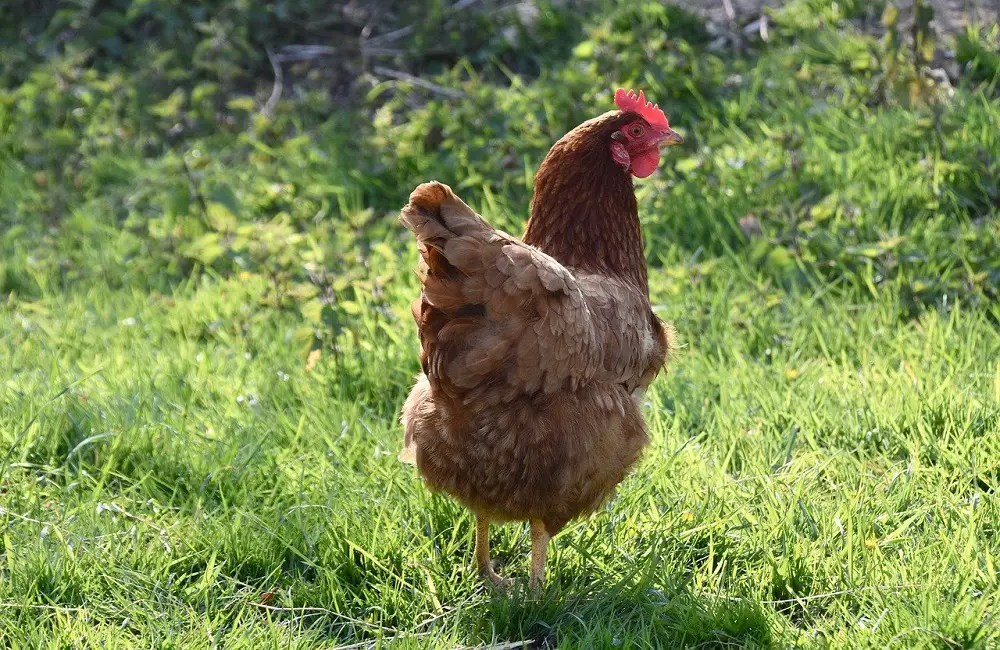
If you keep a rooster with your hens, you will see them mating. It's a normal part of flock life and the way you get fertile eggs that can hatch into chicks.
One thing that puzzles many owners is why a hen runs away from a rooster, and why he chases her.
Why do hens run before mating? A hen usually runs because she is not willing to mate at that moment, or does not prefer that rooster. Pushy roosters may chase and mate with her anyway.
Let's dig into how chickens mate and what's normal.
How Do Chickens Mate?
When a rooster dances around a hen or chases her, mating is likely about to happen.
Dominant roosters usually get the most mating opportunities. Even so, a hen will often avoid a rooster and run away rather than crouch for him.
Here's what roosters and hens typically do.
Rooster Mating Behavior
A healthy rooster is interested in mating much of the time, especially during the breeding season.
Chickens are long-day breeders: their reproductive systems respond to longer days, which is why laying picks up as days lengthen. Courtship and mating are most active in spring and summer.
One courtship display is called tidbitting. The rooster calls and picks up and drops bits of food to tell the hens he has found something to eat.
Tidbitting doesn't always lead straight to mating, but it helps him win the hens' interest. Hens tend to favor roosters that offer food.
When several roosters compete for the same hens, they may chest-bump and fight. Weaker roosters usually back off.
The dominant rooster tries to stop others from mating with his hens. As he ages, younger roosters may challenge him.
Lower-ranking roosters still look for chances to mate, often when the dominant male isn't watching.
Another display is the wing dance, or "waltz." The rooster circles the hen, dropping the wing nearest to her toward the ground.
Some roosters skip courtship entirely and simply grab a hen.
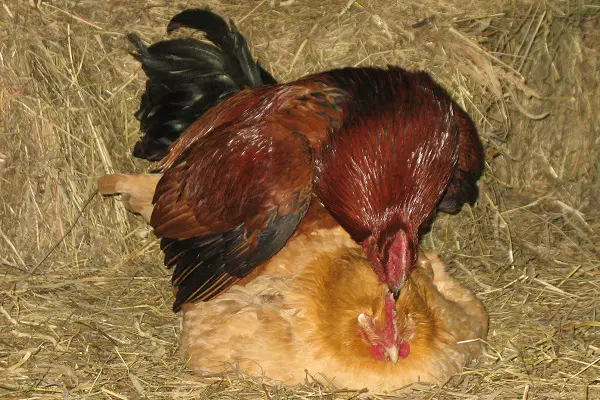
During mating, the rooster steps onto the hen's back and grips the feathers on her neck or head with his beak to keep his balance.
Mating can look rough, and that's usually normal. But watch for aggressive roosters and overmating. Too many matings can leave hens with bare backs, injured skin or wounds, especially when there are too many roosters for the number of hens.
Hen Mating Behavior
Hens lay eggs with or without a rooster. A rooster is needed only if you want fertile eggs.
When there are several roosters, hens can be choosy. They tend to prefer roosters that offer food, look healthy and have bright combs.
Hens may also change their minds. A hen may accept a tidbit from one rooster and then mate with another.
If a hen accepts a rooster, she crouches, lowers her head and spreads her wings slightly. This is a willing squat.
Some hens go broody and sit on their eggs to hatch them. A broody hen usually avoids roosters and may peck at one that bothers her.
The Mating Mechanics
So the mating works like this:
First, the rooster mounts the hen's back. Then he lowers his tail to one side of hers so their vents meet.
Afterward, he hops off and goes back to his business as if nothing happened.
Roosters have no external penis. Sperm is passed from the rooster's cloaca to the hen's in a brief contact often called the "cloacal kiss," and the hen everts her vent to receive it.
The sperm travels up her oviduct, where it can fertilize eggs. Hens also store sperm in special sperm-storage tubules in the oviduct for days or even several weeks after mating.
Because of this storage, a hen doesn't need to mate before every egg to keep laying fertile eggs for a while.
At What Age Do Chickens Start Mating?
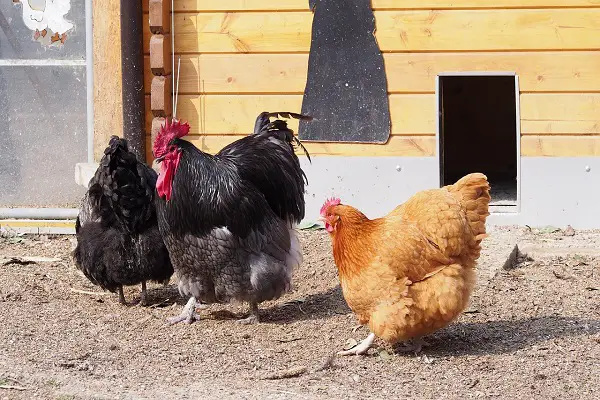
Mating is fun to watch, but at what age do roosters and hens begin to mate?
Rooster
At what age do roosters start mating? Young roosters (cockerels) often start trying to mate at about 4 to 5 months of age, though it varies by breed.
Young cockerels can be clumsy and rough, grabbing hens' neck feathers and chasing them noisily.
Hen
At what age do hens start mating? Young hens (pullets) usually start laying at around 18 to 22 weeks, depending on breed and day length. Once they are laying, they are mature enough to mate.
Hens can be choosy about which rooster they accept. In a flock with only one rooster, though, they have little choice.
Why Do Roosters Faint After Mating?
Some owners report a rooster that seems to collapse or lie still after mating. Healthy roosters normally hop off and walk away, so a rooster that faints, collapses or struggles to breathe is not normal.
Why do roosters faint or die after mating? There's little reliable research on this. A rooster that collapses after mating may be ill, overheated, very old or overweight, or may have an underlying heart or breathing problem.
If your rooster collapses, keep him cool and quiet and contact a poultry veterinarian. Check the whole flock for signs of illness.
Why Your Rooster Is Not Mating With Hens?
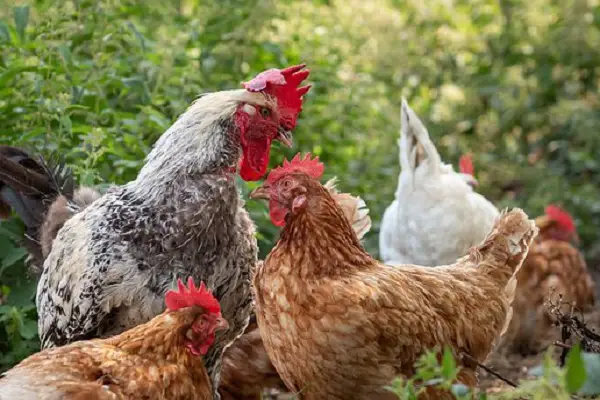
If you have hens and a rooster in your backyard, you may notice that your rooster isn't mating with the hens.
Roosters are usually bigger and stronger than hens. But some roosters mate rarely or not at all.
Why do some roosters not mate with hens? Common reasons include youth or inexperience, a lower rank under a more dominant bird, illness, old age, molting, heat stress and short winter days. Some roosters also mate mostly when people aren't around.
If a mature rooster shows no interest for a long time, check him for illness or parasites, and consider the season and his age.
Final Verdict
Roosters court and chase hens to mate, and hens often run from roosters they don't want. That chasing is part of normal flock behavior.
Still, keep an eye on your flock. Overmating or aggressive roosters can injure hens, so make sure you don't keep too many roosters for the number of hens.
Sources
- Raising Chickens for Egg Production, Poultry Extension
- Mating induces the expression of immune- and pH-regulatory genes in the utero-vaginal junction containing mucosal sperm-storage tubuli of hens, PubMed Central (U.S. National Library of Medicine)