Do Male Cats Recognize Their Kittens? What We Know
Contents
In cats, mothers do almost all the work of raising kittens. That is true of big cats too: lionesses raise the cubs, while male lions mostly defend the pride.
So do male house cats recognize their own kittens? Let's look at what is actually known.
Do male cats recognize their kittens? There is no good evidence that tomcats can tell which kittens they fathered. A single litter can have more than one father. Some toms are gentle or tolerant with kittens they know, but that is about familiarity and temperament, not recognizing their own offspring.
Below, I cover how male cats tend to act around kittens and how to introduce them safely.
Related Article: Do cats get tired of meowing?
Can A Male Cat Even Know Which Kittens Are His?
Probably not. Female cats often mate with more than one male, and kittens in the same litter can have different fathers.
A study of free-roaming cats by Say, Pontier and Natoli found multiple fathers in 70 to 83% of litters in an urban population, compared with 0 to 22% in a rural one.
With paternity that mixed, a tom has no reliable way to know which kittens are his.
How Do Male Cats Act Around Kittens?
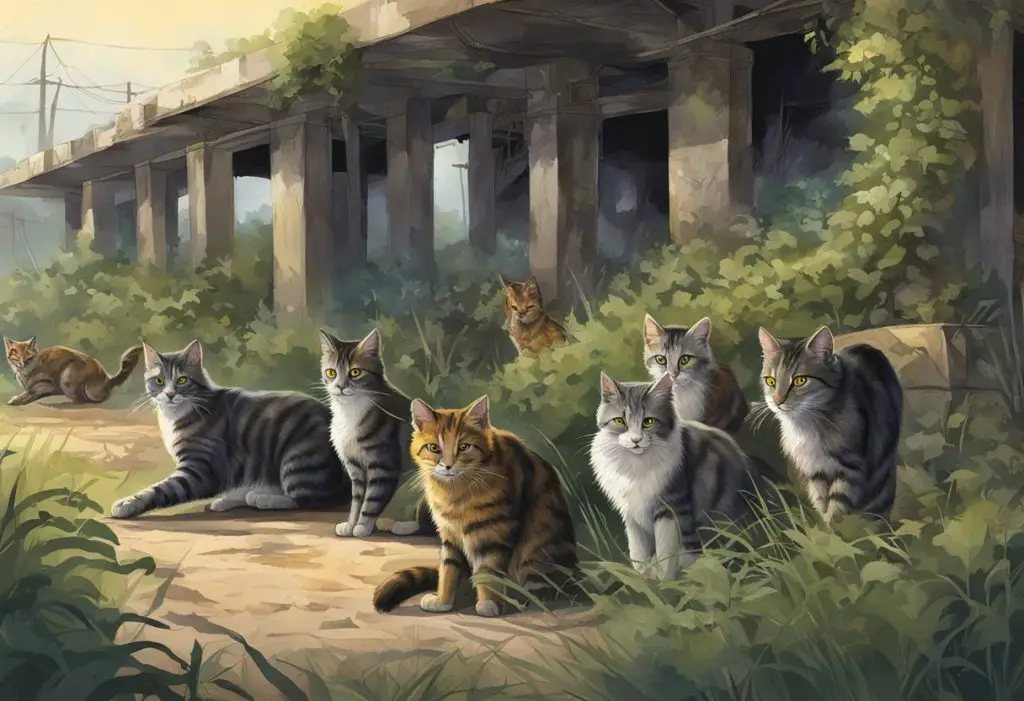
It varies a lot by individual. Some toms ignore kittens. Some are tolerant or even play with and groom them. Others are hostile.
In my own experience, our neutered tom sniffed the kittens, walked away and went back to sleep. That is common, but it is not guaranteed.
Kittens learn hunting skills mainly from their mother, not their father.
Do Male Cats Help Female Cats Take Care Of Kittens?
Generally, no. Mother cats nurse, clean, protect and teach the kittens.
In free-roaming colonies, related females sometimes help each other, sharing nests and even nursing each other's kittens.
Will Male Cats Hurt Or Kill Kittens?
They can. Unfamiliar toms, especially unneutered ones, may attack kittens. This is one reason to keep adult males away from newborn litters.
In lions, the pattern is well documented. Males that take over a pride will kill all cubs that cannot run from them, according to the Smithsonian's National Zoo.
Scientists think this kind of behavior can help a new male because the mother returns to breeding sooner. The reason why is because they want to reduce potential competition in their territory and to induce the female cats to come into heat, at least in theory.
Mother cats very occasionally harm or abandon kittens, usually when stressed, sick or unable to care for them. If a mother cat seems to be rejecting or harming her kittens, call your vet right away.
Can A Male Cat Be Around Newborn Kittens?
It is safest to keep adult male cats away from newborn kittens. Kittens don't need their father; they need their mother and a calm, warm, safe nest.
An intact male near a mother cat can also get her pregnant again soon after she gives birth. If you have an intact male and female, ask your vet about spaying and neutering.
How To Introduce A Male Cat To Kittens
Maybe you have kittens in the house, or you are bringing home a new kitten to live with your adult male cat. Either way, go slowly and supervise.
- Keep the kittens in a separate room at first, so the adult cat can get used to their scent.
- Next, let them see each other through a baby gate, screen door or carrier.
- Watch the adult cat's body language. Calm sniffing is good. Hissing, growling, stalking or a fixed stare means go back a step.
- When both seem relaxed, allow short, supervised meetings.
- Never leave a small kitten alone with an adult cat until you are sure they get along.
If you see aggression, separate them and talk to your vet.
Final Words
Male cats likely can't recognize which kittens are theirs, because one litter can have several fathers. Some toms are tolerant or even affectionate with kittens, while others can be dangerous.
Keep adult males away from newborns, introduce older kittens slowly, and spay and neuter your cats to prevent unplanned litters.
Source: catbeep.com, pets.thenest.com
Sources
- High variation in multiple paternity of domestic cats (Felis catus L.) in relation to environmental conditions, Proceedings of the Royal Society B (Say, Pontier and Natoli, 1999)
- Lion, Smithsonian's National Zoo and Conservation Biology Institute