
Complete List Of Animals Without Tails (Picture Gallery)

Contents
Most mammals, birds, reptiles and fish have tails, and they use them in many ways. But some animals don't have tails, and they get along fine without one.
Today, we are going to feature animals that don't have tails.
Related Article: Other Animals That Wag Tails
Mammals That Don't Have Tails
Below are mammals that have no tail, or only a tiny one:
Manx Cat

The Manx is a cat breed from the Isle of Man, an island between Great Britain and Ireland. Many Manx cats have no visible tail at all, while others have a short stub.
The taillessness comes from a natural genetic mutation that appeared in the island's cat population centuries ago. Because the cats lived on an island, the trait spread.
The Manx gene is dominant, so one copy is enough to shorten the tail. The same gene affects the spine, and some Manx cats have spinal and bowel problems, known as Manx syndrome. Kittens with two copies of the gene don't survive.
Manx cats can still walk, run and balance well. Tail length varies a lot, and Manx litters can include kittens with no tail, stumpy tails or full-length tails.
Apes
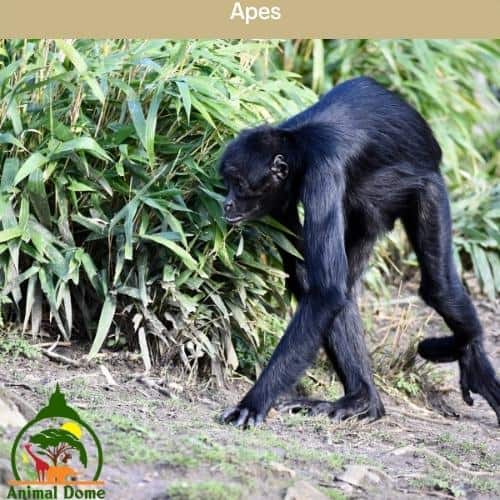
Most monkeys have tails, but apes don't. Apes are native to Africa and Southeast Asia. They are humanity's closest living relatives, and humans are apes too.
There are two groups of non-human apes: great apes and lesser apes (gibbons). Like humans, all apes lack a tail and have only a tailbone.
When did apes lose their tails? Researchers at New York University found a genetic change in the TBXT gene that likely helped cause tail loss in our ancestors about 20 to 30 million years ago. That was long before modern humans evolved.
Barbary Macaques

The Barbary macaque is a monkey native to the Atlas Mountains of Algeria and Morocco, and a small population lives on Gibraltar. Unusually for monkeys, males help care for infants.
Barbary macaques eat mostly plants, plus some insects. They are often called tailless, but they actually have a tiny vestigial tail that is hard to see. Several other macaque species also have very short tails.
Hyrax
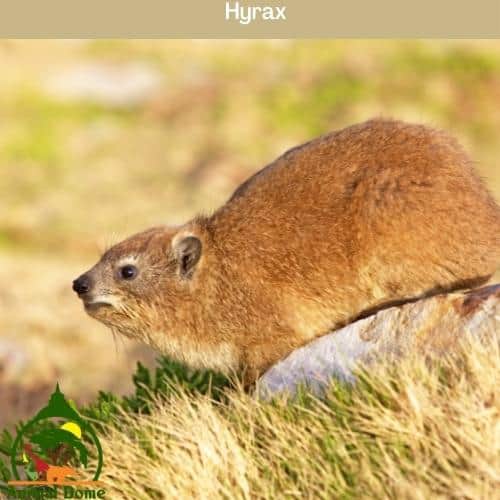
Hyraxes, or dassies, are small, furry herbivores. They usually measure 30 to 70 centimeters long and weigh 2 to 5 kilograms. Hyraxes live in Africa and southwestern Asia.
Hyraxes have no visible tail. Only a tiny stump remains.
Here is a surprising fact: hyraxes are related to elephants. Hyraxes, elephants and manatees share a common ancestor and belong to the same group of mammals.
Other Animal Species That Have No Tails
The following may be obvious as to why they don't have tails but I have listed other fun reasons why each doesn't need a tail in the first place.
Starfish
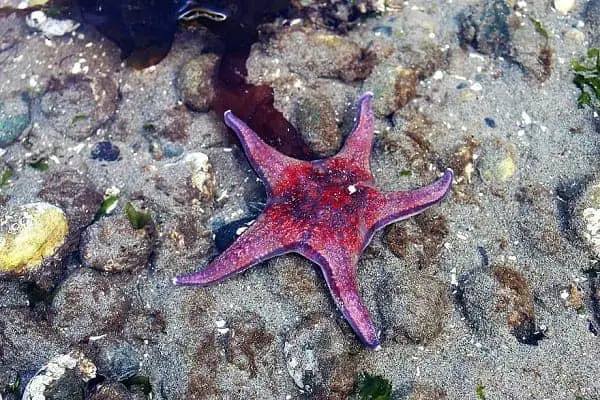
Starfish, also called sea stars, live in the ocean and belong to the class Asteroidea. There are about 2,000 species. Despite the name, they are not fish, and none live in fresh water.
Aside from having no tails, sea stars have no brain and no blood. Seawater pumped through their bodies does many of the jobs blood does. Some species can live for decades, and many can regrow lost arms.
Most sea stars are predators. Many eat mollusks like clams, mussels and oysters.
Jellyfish
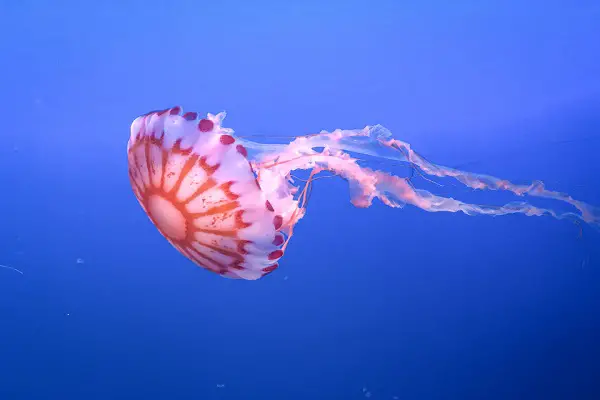
Aside from having no tails, jellyfish have no brain, heart or bones. Their bodies are shaped like a bell or umbrella, with the mouth in the center underneath. Most have no eyes, though box jellyfish do.
Jellyfish are carnivores. They eat plankton, small crustaceans, small fish, fish eggs and larvae, and sometimes other jellyfish.
Jellyfish catch prey with stinging cells on their tentacles, which inject venom.
Most jellyfish stings are painful but minor. Some, like box jellyfish, can be life-threatening. Get emergency medical help right away for a severe sting or any trouble breathing.
Sea Urchins
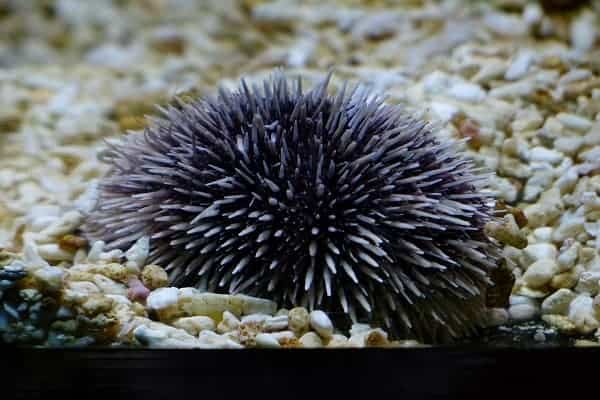
Sea urchins are spiny, round animals that live on the sea floor. They belong to the class Echinoidea, and there are about 950 species living in oceans around the world.
Sea urchins have no tails and don't need one. They move slowly using tiny tube feet and their spines.
Sea urchins mostly graze on algae and kelp, scraping it up with five sharp teeth. Some also eat small animals or dead material.
Stepping on a sea urchin is painful, and broken spines can get stuck in the skin. A few species are venomous. Rarely, a sting can cause severe reactions, so see a doctor if spines stay in the skin or if you feel unwell.
Corals
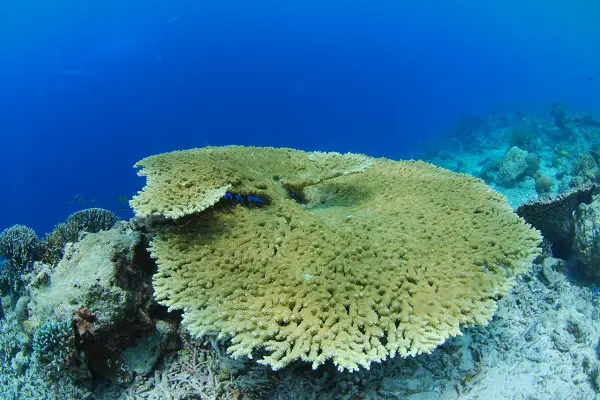
If you didn't know that corals are animals, you're not alone. They look like plants or rocks, but they are animals.
Corals are invertebrates in the phylum Cnidaria. Most live in colonies made of many tiny polyps. Coral reefs are home to a huge number of fish and other sea life.
Corals have no tails. They come in many colors, sizes and shapes, and they are related to jellyfish and sea anemones.
Spiders
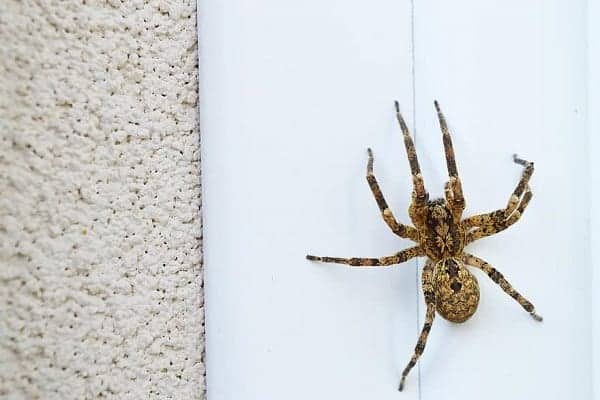
Spiders are arachnids with eight legs. Almost all have fangs and venom, which they use to catch prey. All spiders make silk, though not all build webs.
Spiders don't have tails. Some of their relatives do have tail-like parts, such as the whip-like "tail" of the vinegaroon.
Many spiders have poor eyesight and rely on vibrations, but jumping spiders have excellent vision. Some spiders lay hundreds or even thousands of eggs at a time, wrapped in silk egg sacs.
Spiders are carnivores. They eat insects like mosquitoes, flies and moths, and sometimes other spiders. They help people by keeping insect numbers down.
Centipedes
Centipedes are arthropods in the class Chilopoda. They range from a few millimeters to about 30 centimeters long and live around the world.
The name centipede means "100 feet," but the number varies. Centipedes have from 15 to 191 pairs of legs, and the number of pairs is always odd, so no centipede has exactly 100 legs.
Almost all centipedes are carnivores. They eat insects, spiders, worms and other small animals, including other centipedes. The first pair of legs is shaped into venomous claws for catching prey.
Centipedes don't have tails. Their last pair of legs often points backward and can look like antennae or a tail.
Millipedes
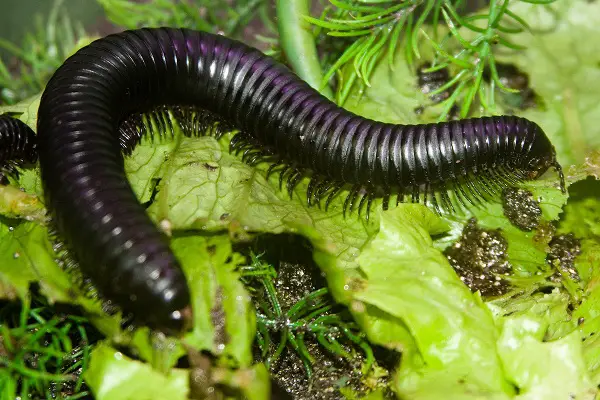
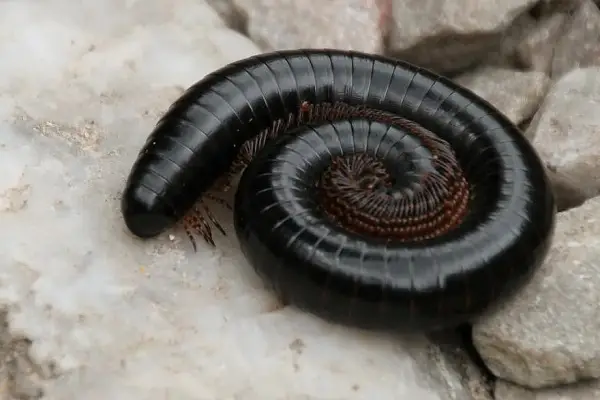
Millipedes are arthropods known for having two pairs of legs on most body segments. The name means "thousand feet."
For a long time, no known millipede had 1,000 legs. The record holder was Illacme plenipes from California, with 750 legs. Then, in 2021, scientists described Eumillipes persephone, an underground millipede from Western Australia with 1,306 legs.
Even though millipedes have many legs, they are slower than centipedes. Most millipedes move slowly through soil and leaf litter.
Millipedes help nature by breaking down dead leaves and other decaying plant material.
Millipedes don't have tails and don't need one to get around.
Octopus
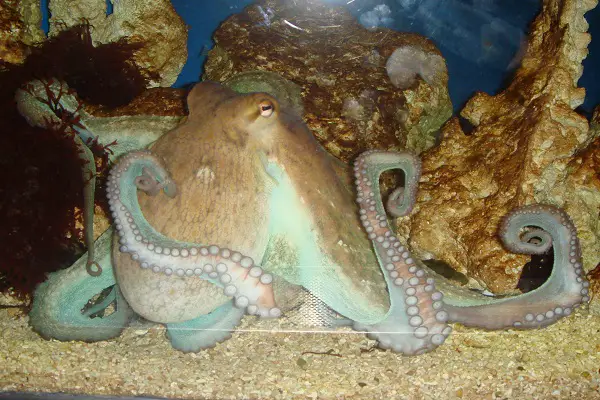
Octopuses are soft-bodied animals with eight arms. There are about 300 species of octopuses in oceans around the world.
Aside from having no tails, octopuses have three hearts and blue blood.
Common predators of octopuses include sharks, moray eels and conger eels. To escape, octopuses squirt ink, change color and squeeze into tight spaces.
Octopuses are also known for being smart. They don't need tails because they move and balance using their arms and jet propulsion.
Amblypygi
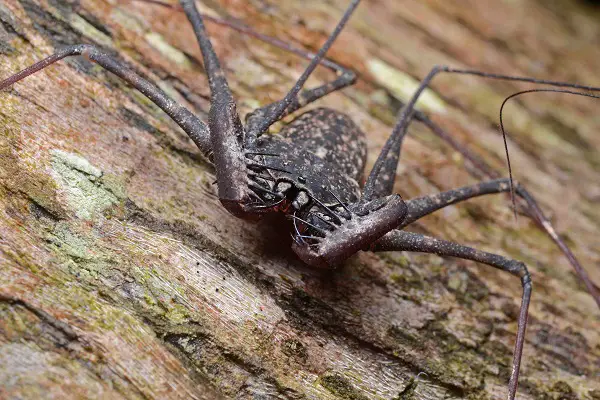
Amblypygi, also known as tailless whip scorpions or whip spiders, are an ancient order of arachnids. Despite the name, they are not scorpions, and unlike scorpions and vinegaroons, they have no tail. They live in tropical and subtropical regions.
Whip spiders look scary, but they have no venom glands and are harmless to people.
Whip spiders eat insects like moths, flies and crickets, and other small invertebrates. They catch prey with their spiny front legs.
Barnacles
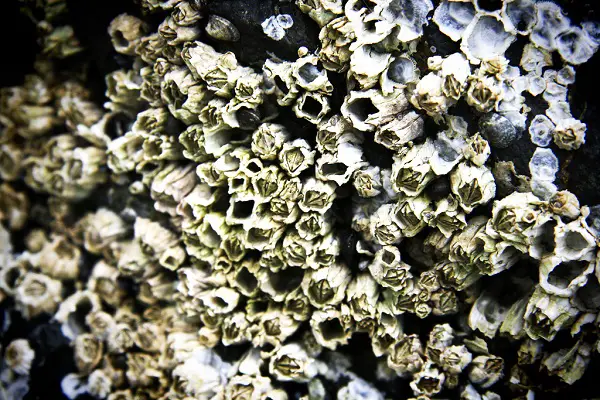
Barnacles are crustaceans, related to crabs and lobsters. They live in shallow and tidal waters, attached to rocks, docks, ships and even whales.
Barnacles look like they don't move, but they are busy eating. They sweep plankton out of the water with feathery legs.
As you can see in the picture above, barnacles don't have tails, and they don't need one.
Kiwi Birds
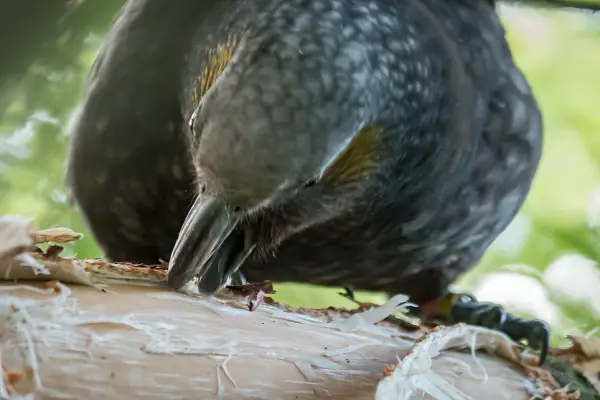
Kiwi birds can't fly. They have tiny wings hidden under their feathers, and they have no tail.
Kiwis live only in New Zealand. They are about the size of a chicken and are the smallest living ratites, the group that includes ostriches and emus.
Animal That Has The Strongest Tail
Some animals have powerful tails. Which one is the strongest?
Which animal has the strongest tail? The blue whale, the largest animal that has ever lived, has a strong claim. Its huge tail flukes push its body, which can weigh well over 100 tons, through the water.
Crocodiles, kangaroos and other large whales also have very powerful tails.
Even though blue whales are huge, they eat tiny animals. They feed almost entirely on krill, small shrimp-like crustaceans. Another fun fact: a blue whale's tongue can weigh about as much as an elephant.
What Is The Use Of Tail In Animals?
Tails may look like extras, but they have many uses.
Many land animals, like horses and cows, use their tails to swat away biting insects. Cats, kangaroos and many other animals use their tails for balance. Some monkeys use grasping tails to hold onto branches.
Fish use their tails to push through the water and steer. Scorpions use their tails to deliver venom.
Dogs use their tails for balance when running and turning, and to communicate. A dog's tail shows a lot about its mood.
Final Thoughts
Every part of an animal's body has a purpose. Tails are important for animals that have them, but many animals do just fine without one.


