
Why Do Elephants Obey Humans? (With Other Facts!)
Contents
Elephants are the largest land animals, strong enough to flip a car. Yet many captive elephants follow human commands. Why?
Why do elephants obey humans? Elephants obey humans because they have been trained to. Good facilities use rewards; cruel ones use fear and pain. Either way, elephants are wild animals, not domesticated ones, and an untrained elephant has no reason to obey anyone.
The Other Reasons Why Elephants Obey Humans
Elephants obey people only after training. The method makes a big difference to the elephant's welfare.
Modern zoos use positive reinforcement. The San Diego Zoo Wildlife Alliance says its care specialists use operant conditioning and positive reinforcement training so elephants can take part in their own health care, such as foot checks.
With this kind of training, elephants choose to take part because they get rewards, and they can build trust with their keepers.
There is also a cruel way. In some places, young elephants have been "broken" with confinement, beatings and fear until they submit. Elephants trained this way obey out of fear.
In simple words, elephants obey humans either for rewards or out of fear of punishment.
Humans are the biggest threat to elephants. San Diego Zoo Wildlife Alliance notes that a healthy adult elephant's only real threat is people, through poaching and shrinking habitat.
In the past, many young elephants were captured from the wild for work and entertainment, and their family members were sometimes killed in the process.
Taking elephants from the wild is now restricted or illegal in many countries. The best place for a wild elephant is with its family in protected habitat.
Are Elephants Friendly To Humans?
Elephants are not naturally friendly or unfriendly to humans. They are intelligent, social animals whose behavior depends on their experiences with people.
Elephants can also be dangerous. They remember threats, and elephants that have been harassed or hunted are more likely to avoid or confront people.
Wild elephants that are not used to people will keep away or warn them off. Captive elephants can form working relationships with keepers, but they still injure and sometimes kill people.
Why Do Elephants Charge Humans?
Elephants charge to protect themselves, their calves and their space.
Many charges are mock charges, meant to scare a threat away. A real charge is extremely dangerous, so give elephants plenty of room.
Captive elephants can charge too. Elephants are never fully domesticated, and keepers in many zoos now work with them from behind protective barriers.
Do Elephants Understand Humans?
Elephants pay close attention to people. Studies show they can tell some groups of people apart by sound and smell and judge which are more likely to be a threat.
In a study in Kenya's Amboseli National Park, researchers played recordings of men from two ethnic groups saying the same phrase. National Geographic reports that elephants responded more defensively to the voices of Maasai men, whose group has a history of conflict with elephants, than to Kamba men.
They also reacted more defensively to Maasai men than to Maasai women or boys. The difference held even when researchers changed the pitch of the voices.
Elephants have the largest brains of any land animal and good long-term memories. Elephants that lose family members to people may stay wary of humans for years.
How Do Elephants Show Affection?
Elephants live in close family groups led by an older female, the matriarch. Family members show affection in several ways.
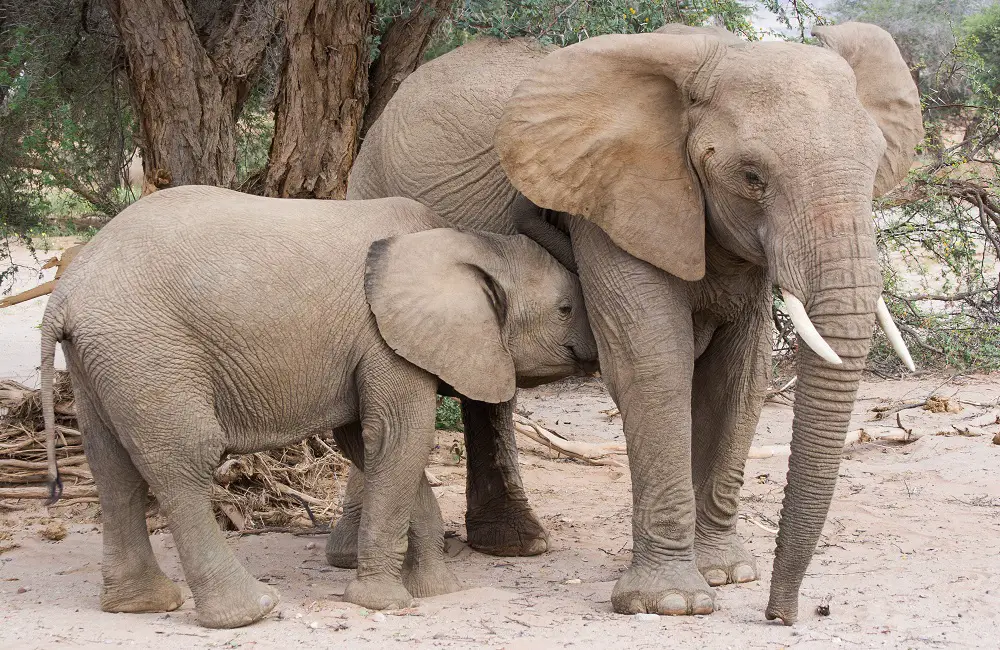
They use their trunks to touch, stroke and greet each other, and to comfort a stressed family member. Calves sometimes put their trunks in their mothers' mouths for reassurance.
Elephants also communicate with sound. Low rumbles help keep the group in contact and seem to signal that everything is okay.
Elephants trumpet when excited or alarmed, and they make loud calls during greetings and other important events, such as a birth.
Elephants are social, emotional animals. Scientists have recorded behavior that looks like stress, grief and excitement.
Can Elephants Bond With Humans?
Elephants form strong bonds within their family groups. Captive elephants can also form trusting relationships with keepers who care for them over many years.
Do Elephants Feel Love?
Scientists can't measure love in animals directly, but elephants show strong social bonds, comfort each other, and react to the death of family members.
Elephants can also tell how people treat them, and they remember both good and bad experiences.
How Smart Are Elephants?
Elephants are very intelligent. They have the largest brains of any land animal, can use simple tools, solve problems and recognize many individuals.
At least one captive Asian elephant has been recorded imitating words of human speech.
As described above, African elephants can also tell human voices apart by group, sex and age and respond to the ones most likely to be a threat. Rather than mobbing the sound as they do with a lion's roar, they bunched together quietly and sniffed the air.
Elephants also show strong interest in the remains of dead elephants, touching and smelling the bones. Check the video below about how elephants mourn for their dead loved ones.
https://www.youtube.com/watch?v=Ku\_GUNzXoeQ
These behaviors show how smart and social these giant animals are.
Final Words
Elephants obey humans because they are trained, and the kindest training uses rewards, not fear.
Elephants are threatened by poaching and habitat loss. Protecting wild elephants and their habitat is the best way to help them.
Sources
- Elephant, San Diego Zoo Wildlife Alliance
- Elephants Can Hear Age, Gender, Ethnicity in Human Voices, National Geographic