
Why Do Lobsters Have Two Different Claws?
Contents
Lobsters are large marine crustaceans that live on the ocean floor. Clawed lobsters, such as the American lobster, have two big front claws.
Lobsters can walk forward, backward and sideways. To escape quickly, they flip their tails under their bodies and shoot backward.
If you look closely at a lobster’s claws, you’ll see they don’t match. Why?
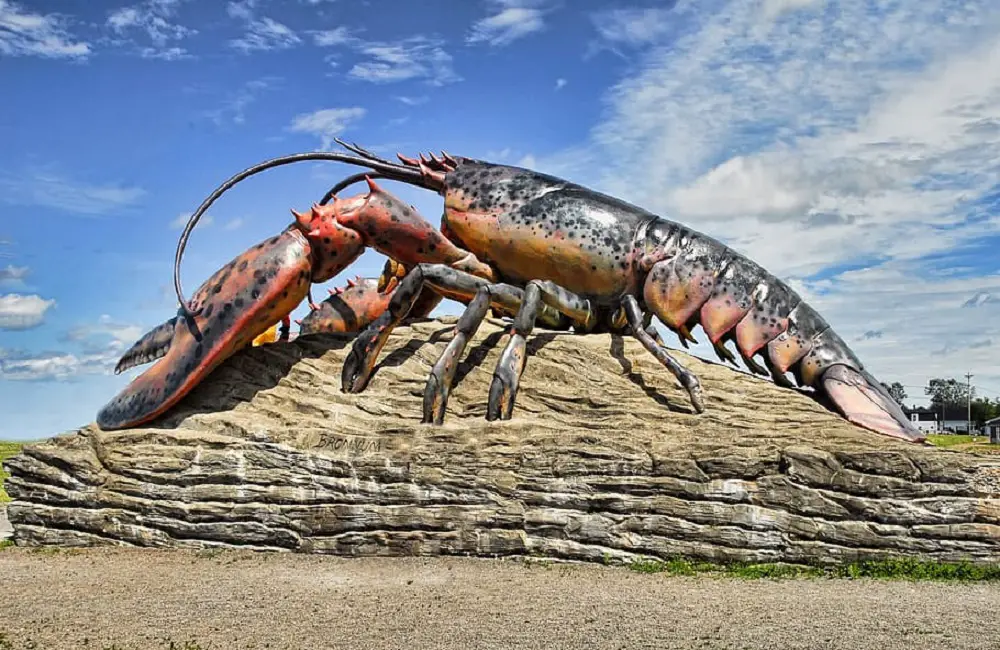
Lobsters have two different claws because each does a different job. The big, blunt-toothed crusher claw pulverizes shells. The thinner, sharper claw, called the cutter, ripper or pincer, grabs and tears food. The claws start out identical in young lobsters and become different as they grow.
Below, we explain how each claw works and why they end up different.
Why Do Lobsters Have Two Different Claws?
Many people think of it like being left- or right-handed. That idea is not far off.
Young American lobsters start with two matching claws. Early in their juvenile stages, one side becomes the crusher and the other becomes the cutter.
Rearing experiments showed that the claw with more reflex activity in young lobsters becomes the crusher, and the other becomes the cutter. The crusher can end up on either the left or right side.
The crusher claw is the bigger one. According to NOAA Fisheries, it is a big-toothed claw for pulverizing shells. It has rounded, molar-like teeth, and its closing muscle is made up only of slow-type muscle fibers. That makes it strong but slow, good for steady crushing.
The cutter claw has sharper, finer teeth, like a steak knife. Its closing muscle has mostly fast fibers, so it snaps shut quickly but with less force.
Working together, the cutter grabs and holds prey while the crusher cracks open hard shells. The lobster then uses its cutter and smaller legs to tear the food apart.
Adult lobsters eat crabs, clams and other mollusks, worms, sea urchins, sea stars, fish and seaweed.
Where Do Lobsters Use Their Two Different Claws?
Lobsters use their claws to feed, defend themselves and fight other lobsters. The cutter grabs, and the crusher delivers the strong squeeze.
Can Lobsters Hurt You With Their Claws?
Yes. A lobster’s crusher claw can pinch hard enough to hurt and break the skin, though it is very unlikely to cut off a finger.
That’s why lobsters sold live often have rubber bands on their claws. Handle live lobsters by the body, behind the claws.
You won’t usually meet lobsters on the beach. They live on the seafloor, from shallow coastal waters to depths of more than 2,000 feet.
Final Words
Lobsters have two different claws because they need two tools: a strong, slow crusher for breaking shells and a fast, sharp cutter for grabbing and tearing food. The claws begin the same and change as the young lobster grows.
Sources
- American Lobster, NOAA Fisheries
- Differential reflex activity determines claw and closer muscle asymmetry in developing lobsters, Science (via Europe PMC)


