
Why Do Animals Stop Growing? The Real Truth About The Growth Of Animals!
Contents
- Why Do Animals Stop Growing?
- Do Animals Have Unlimited Growth?
- What Are The Animals That Never Stop Growing?
- Lizards
- Snakes
- Amphibians
- Corals
- Sharks
- Fishes
- Turtles
- Kangaroos
- What Are The Factors That Affect The Growth Of Animals?
- Genes
- Diet and Food
- Environment
- What Animals Grow Very Big?
- Whales
- Sharks
- Elephants
- Giraffes
- Bears
- Ostriches
- Saltwater Crocodiles
- Final Words
- Sources
Animals come in a huge range of sizes, from tiny plankton to blue whales.
That raises a few questions. Do all animals stop growing? Will a small fish stay small all its life? And the big one:
Why do animals stop growing?
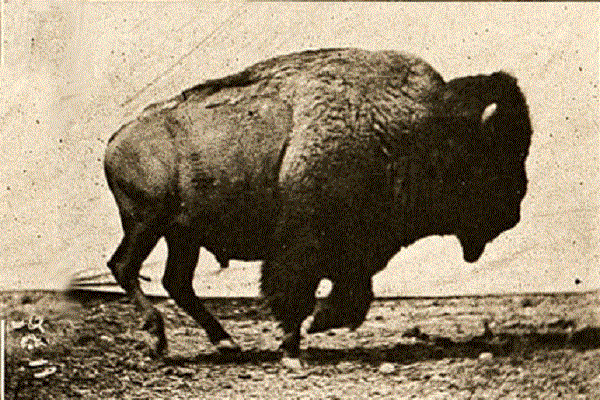
Most mammals and birds stop growing because their genes and hormones are programmed to end growth at adulthood. In mammals, the growth plates at the ends of the long bones close, so the skeleton cannot get longer. Other animals, such as many fish and reptiles, keep growing slowly for life, though few live long enough to get huge.
Let’s look at both kinds of growth and the animals that never fully stop.
Why Do Animals Stop Growing?
Every species has genes that set its typical adult size. That is why elephants are large and plankton are tiny.
Growth is controlled by hormones, such as growth hormone. In mammals and birds, growth slows as the animal matures, and in mammals the bone growth plates close.
Stopping at a set size has advantages. A bigger body needs much more food, and size affects how an animal moves, hides, and keeps warm or cool. Each species’ adult size is a trade-off shaped by its habitat and way of life.
Food matters too. A young animal that does not get enough to eat may stay smaller than its genes allow.
Do Animals Have Unlimited Growth?
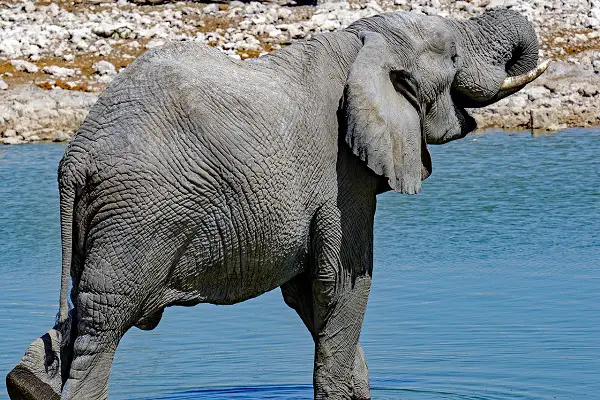
Animals that stop growing at adulthood have determinate growth. Most mammals and birds grow this way.
So do animals have unlimited growth? Some animals have indeterminate growth, which means they keep growing after they mature, usually more and more slowly. Many fish, amphibians, reptiles and invertebrates grow this way. It is not truly unlimited: growth slows sharply with age, and food, temperature and lifespan set practical limits.
Indeterminate growers can get bigger when food is plentiful and conditions are good.
Few become giants, though. Most die from predators, disease, accidents or food shortages long before they reach a very large size.
What Are The Animals That Never Stop Growing?
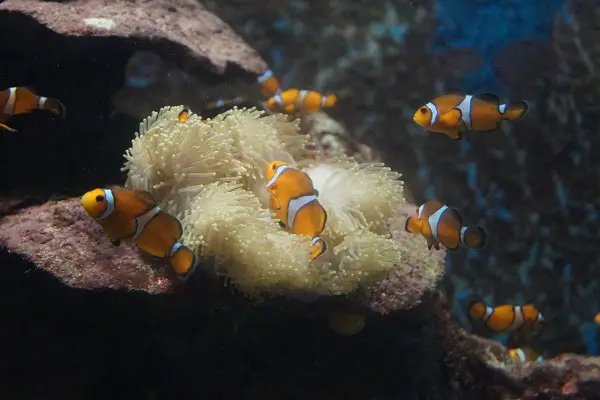
Here are some animals that keep growing for much or all of their lives.
Lizards
Many lizards grow quickly until they reach maturity, then continue growing slowly for the rest of their lives.
Lizard lifespans vary widely by species, from a year or less in some small species to decades in large ones.
In the wild, many lizards die young from predators and other dangers, so few reach their maximum size.
Snakes
Snakes grow fastest when young and keep growing slowly as adults. How fast they grow depends on how much they eat.
As snakes grow, they shed their skin. Young snakes shed more often because they are growing faster.
Even so, snakes cannot grow without limit. The longest living snakes, reticulated pythons, can exceed 20 feet, and the heaviest, green anacondas, can weigh several hundred pounds. Movie-sized giants do not exist.
Amphibians
Many amphibians, such as frogs and salamanders, keep growing after they mature, although growth slows with age.
Most amphibians have short lives in the wild, and their size is limited by their body plan and the need to keep their skin moist.
Corals
Corals are colonies of tiny animals called polyps. A colony grows as the polyps divide and build more skeleton.
Growth rates vary a lot. Massive boulder corals may add only millimeters to a centimeter or two per year, while branching corals such as staghorn can grow much faster. Reef-building corals grow best in warm, clear, shallow water.
Because a colony keeps adding polyps, some coral colonies can grow very large and live for centuries.
Sharks
Like many fish, sharks keep growing after maturity, but much more slowly.
Lifespans vary by species. Great white sharks take many years to reach adult size, and Greenland sharks are among the slowest-growing and longest-lived animals known.
Fishes
Most fish keep growing throughout life, with growth slowing as they age. Growth rates depend on species, food and water temperature.
Can a fish outgrow its tank? Yes. Goldfish and many other pet fish can grow far larger than people expect. A small tank does not keep a fish healthy at a small size; poor water quality and crowding stunt growth and harm health. Choose a tank or pond sized for the adult fish.
Most small fish species stay small because their adult size is set by their genes, and many have short lifespans.
Turtles
Turtles keep growing slowly after they mature, though growth in adults becomes very slow.
Many turtles and tortoises live a long time. Some pet turtles live for decades, so they are a long-term commitment.
Kangaroos
Male kangaroos keep growing after they reach maturity, which is one reason the biggest males are much larger than females.
Kangaroos are strong animals, and large males can deliver powerful kicks. Their main natural predator on the Australian mainland is the dingo.
What Are The Factors That Affect The Growth Of Animals?
Many factors affect how big an animal grows. The main ones are genes, diet and environment.
Let’s take a closer look at each.
Genes
Genes set the range of sizes an animal can reach, and whether it stops growing at adulthood.
Some genetic conditions affect growth. Animals, including dogs and cattle, can have forms of dwarfism.
In dogs, breed genetics also shape size. Small breeds finish growing within about a year, while giant breeds can take up to two years.
Diet and Food
Food has a big effect on growth. Young animals that are underfed may never reach their full size.
Overfeeding can also cause problems. In large-breed puppies, eating too many calories or too much calcium can lead to bone and joint problems, so feed a diet made for large-breed puppies and ask your vet how much to give.
Environment
The environment also affects growth. Temperature matters a lot for fish, amphibians and reptiles, which grow faster in warmer conditions.
Animals in places with many predators often die before they reach their full size, even if they could keep growing.
Animals living where food and water are scarce grow more slowly and may stay smaller.
What Animals Grow Very Big?
Below are seven of the largest animals on Earth.
Whales
Blue whales are the largest animals ever known to have lived. They can reach up to 110 feet long and weigh up to 330,000 pounds, according to NOAA Fisheries.
Blue whales feed almost entirely on krill, tiny shrimp-like animals, which they strain from the water through baleen plates.
Sharks
Sharks keep growing slowly throughout their lives.
The largest shark, and the largest fish, is the whale shark. Despite its size, it is a filter feeder that eats plankton and small fish.
Elephants
Elephants are the largest land animals. African elephant males stand about 10 to 10.5 feet at the shoulder and can weigh 12,000 to 15,000 pounds, according to San Diego Zoo Wildlife Alliance.
Elephants are herbivores that eat grasses, leaves, bark and fruit. Adults have few natural predators, though lions sometimes kill calves.
Giraffes
Giraffes are the tallest living animals. Males can reach up to 18 feet tall, and the record running speed of a giraffe is 34.7 miles per hour, according to San Diego Zoo Wildlife Alliance.
Giraffes live in the savannas and woodlands of Africa and eat mostly leaves, such as acacia. To drink, they spread their front legs wide and bend their long necks down to the water.
Bears
Polar bears and brown bears are the largest land carnivores. Most male polar bears weigh 660 to 1,400 pounds, and males may measure over 12 feet when standing on their hind legs, according to San Diego Zoo Wildlife Alliance.
Brown bears live in North America, Europe, and Asia. Polar bears live around the Arctic.
Ostriches
Ostriches are the largest living birds. Males stand 6.9 to 9 feet tall and weigh 220 to 287 pounds. They are too heavy to fly.
Ostriches have strong legs built for running. They can sprint at up to 43 miles per hour, and their kick can be powerful enough to kill a lion.
Saltwater Crocodiles
Saltwater crocodiles are the largest living reptiles. Large males can grow longer than 17 feet and weigh well over 1,000 pounds, while females are much smaller.
They live in coastal waters, rivers and swamps from India through Southeast Asia to northern Australia. They are ambush predators that can take large prey, so always follow local warning signs in crocodile areas.
Final Words
Most mammals and birds stop growing when they reach adulthood, because their genes and hormones end growth. Many fish, reptiles and amphibians keep growing slowly for life.
Even animals that never stop growing rarely become giants, because predators, disease and food limits usually end their lives first.
Sources
- Blue Whale, NOAA Fisheries
- Elephant, San Diego Zoo Wildlife Alliance
- Giraffe, San Diego Zoo Wildlife Alliance
- Polar Bear, San Diego Zoo Wildlife Alliance


