
How Do Kangaroos Sleep? This Is How They Sleep!
Contents
Kangaroos are marsupials that move by hopping. They can be very active, and males are known for boxing. Kangaroos love fighting mostly to compete for mates, while young males often play-fight.
Like every animal, kangaroos need rest. So how do kangaroos sleep?
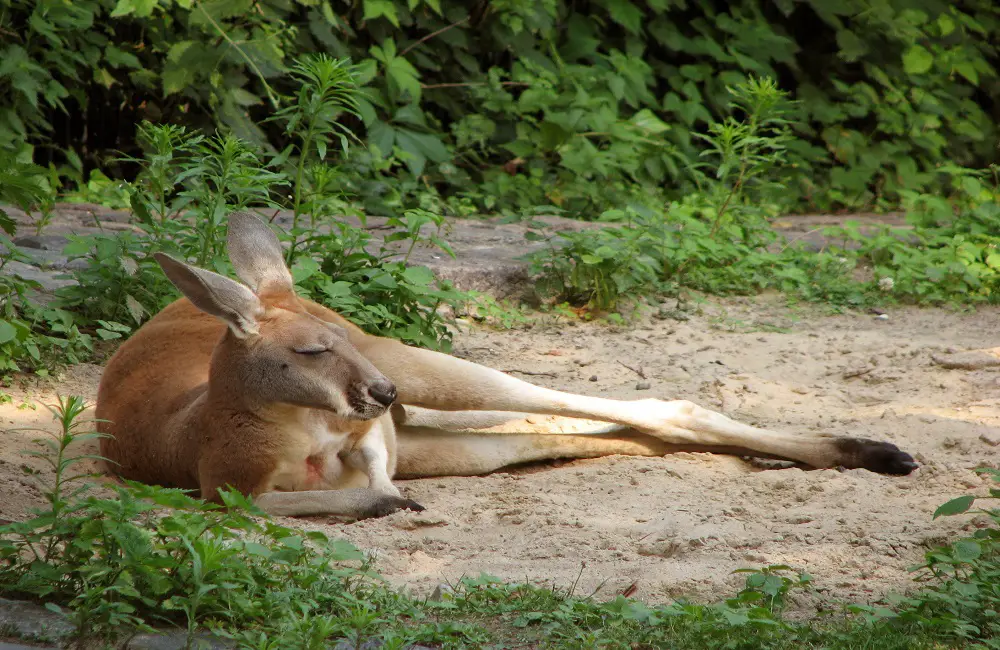
How do kangaroos sleep? Kangaroos often sleep lying on their side, with their hind legs stretched out and their belly exposed. They also rest sitting up or crouched, with their eyes closed or half closed. They usually rest in the shade during the day.
Below, we answer the most common questions about how, when and where kangaroos sleep.
When Do Kangaroos Sleep?
Kangaroos are mostly active from late afternoon through the night to early morning. They rest and sleep during the hottest part of the day.
Kangaroos are herbivores. They don't hunt; they graze on grasses and other plants. The Australian Museum notes that eastern grey kangaroos gather in large mobs at dusk to feed, and keep feeding into the early morning.
Kangaroos live in Australia, and tree kangaroos also live in New Guinea. In the heat of the day, they rest in the shade of trees and shrubs.
Large kangaroos aren't strictly nocturnal. Red kangaroos and grey kangaroos may be active during the day, especially in cool or cloudy weather, but they are most active around dusk, at night and around dawn.
During the day, resting kangaroos may still get up to drink, move to a better shady spot or change position.
Where Do Kangaroos Sleep?
Kangaroos rest in a sheltered, shady spot during the day, such as under a tree or bush. They choose places where they can keep cool and stay alert for danger.
Red kangaroos live on open plains and in sparse woodland, so they rest in the shade of small trees and shrubs.
According to the Australian Museum, eastern grey kangaroos usually rest in the shade or shelter of trees or scrub during the day.
Kangaroos often scrape a shallow bed in the ground before lying down. In hot weather, they may also lick their forearms to cool off.
Kangaroos rest in groups, called mobs, which helps them watch for danger. Even while resting, they can react quickly if something alarms them.
How Long Do Kangaroos Sleep?
Kangaroos spend much of the day resting and much of the night grazing.
How long do kangaroos sleep? There is no single answer. Kangaroos rest for long periods during the day, but they sleep in shorter stretches and stay alert to danger, so their sleep is broken up.
Grazing takes up a large part of a kangaroo's day and night, since grass is low in nutrients and they need to eat a lot of it.
Do Kangaroos Open Their Eyes While Sleeping?
Do kangaroos sleep with their eyes open? No. Kangaroos have eyelids and close their eyes to sleep.
Kangaroos may rest with their eyes half closed, which can look like sleeping with their eyes open. Animals without eyelids, such as fish and insects, are the ones that rest with their eyes open.
Do Kangaroos Love To Sleep In Trees?
Most kangaroos sleep on the ground. But one group, the tree kangaroos, lives and sleeps in trees.
Tree kangaroos look quite different from red and grey kangaroos. They have shorter hind legs, strong forearms and long tails for balance.
Tree kangaroos are marsupials that live in the rainforests of northeastern Queensland and New Guinea. They spend much of the day resting or sleeping on branches high in the trees.
Do Kangaroos Sleep While Standing?
Kangaroos don't sleep standing fully upright. They lie down or rest in a crouched, sitting position.
When they sleep, they usually lie down on the ground in the shade. A sleeping kangaroo often lies on its side with its head resting on the ground or propped on a forearm and its belly exposed.
Do Kangaroos Sleep At Night?
Kangaroos usually feed at night and rest during the day. They may take short rests at night between grazing, and some kangaroos are active during the day too, especially when it's cool.
Final Words
Kangaroos sleep lying on their side or resting in a crouch, usually in the shade during the day. They are most active from dusk to dawn, when they graze.
Their sleep is broken into short stretches, and they stay alert to danger even when resting.
Sources
- Eastern Grey Kangaroo, Australian Museum
- Red Kangaroo, Australian Museum


