
How Do Sheep Defend Themselves? (3 Defense Mechanisms Of Sheep)
Contents
Sheep are vulnerable animals. They are easy targets for predators such as coyotes, dogs, foxes and wolves.
So can sheep defend themselves? Do they fight back or run away? Let us find out.
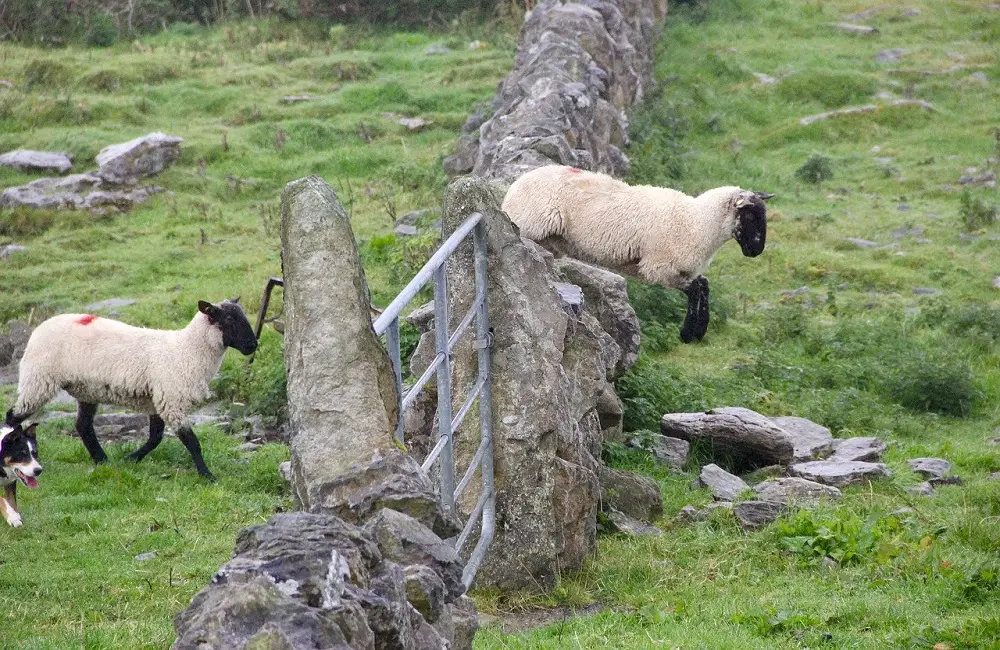
Can sheep defend themselves? Sheep have little ability to fight off predators. Their main defenses are staying together in a flock and running away. Farmers add a third layer of protection with guard animals and fencing.
Below are the main ways sheep defend themselves, plus the animals that prey on them.
How Do Sheep Defend Themselves?
Sheep are prey animals. They live in groups called flocks and rely on their instincts to stay safe.
Most sheep have no sharp teeth or claws, and many breeds have no horns. Their instinct is to flee, not fight.
Below are the three ways sheep defend themselves from their predators.
Gregariousness
Sheep are social animals. Staying together protects them, which is why sheep follow each other so closely.
Each sheep also has a "flight zone," a personal space around it. If a person or animal comes inside that zone, the sheep moves away. If the threat keeps coming, the flock runs.
This flocking instinct is very strong. A sheep separated from its flock becomes stressed and anxious, so sheep should never be kept alone.
When a flock spots a predator, the sheep bunch together. A lone sheep is far easier to catch than one in a tight group.
Sheep run away together, then regroup once they feel safe.
Sheep have wide-angle vision and good hearing, which help them notice danger early and react as a group.
Sheep Avoid And Flee Away
When sheep see a fox or coyote, their instinct is to avoid it and run. Running can trigger a predator's chase instinct, though, so flight doesn't always work.
Sheep that depend on people for protection are especially exposed. If predators get into a flock without guard animals or good fencing, the losses can be heavy.
Rams are larger, and many have horns. They will butt and fight, mostly against other rams, but a ram alone is rarely a match for a pack of coyotes or dogs.
Ewes can also stand their ground. A ewe protecting her lamb may face an intruder, such as a dog, and stamp her front foot as a warning.
If the threat doesn't back off, she may lower her head and charge. This works on some dogs, but it isn't much protection against a determined predator.
With The Help Of Their Friend Dog
Because sheep can't fight off most predators, farmers use guard animals.
Livestock guardian dogs, such as Great Pyrenees, Anatolian Shepherds and Maremmas, live with the flock and drive predators away. They are different from herding dogs like Border Collies, which move sheep but don't guard them.
Guardian dogs work best when they are raised with the flock from a young age. The number of dogs needed depends on the size of the flock, the land and the predators in the area.
Llamas and donkeys can also guard sheep. According to Colorado State University Extension, certain guard dog breeds, llamas and donkeys can exclude coyotes from pastures, and guard animals work best when bonded to the flock.
Good fencing helps too. The same guide recommends predator fences at least 5 1/2 feet tall, with wire mesh openings no larger than 6 inches.
Animals That Prey On Sheep
Predators kill many sheep each year, which hurts farmers' income. Who are the predators of sheep? Let us find out!
In the United States, coyotes and domestic or feral dogs are among the most common predators of sheep. Dogs sometimes injure or kill many sheep in one attack without eating them.
Foxes, bobcats, mountain lions, bears, wolves and eagles also kill sheep, especially lambs.
Many of these predators are protected. Eagles are protected by federal law, and wolves and grizzly bears are protected in many areas. Check federal and state rules, and contact your state wildlife agency or USDA Wildlife Services for help with problem predators.
Predation risk depends on where the farm is. Farms near coyote and fox habitat face more pressure than farms in areas with few predators.
Even in low-risk areas, it pays to prevent predation. Colorado State Extension advises using more than one method at a time and varying them so predators don't adapt.
Final Thoughts
Sheep defend themselves by flocking together and running away. Ewes may stamp and charge, but sheep rely mostly on people for protection. Guardian dogs, llamas, donkeys and good fencing all help.
Predators aren't the only threat. Disease, parasites, bad weather and accidents also cause many sheep deaths, so good overall care matters too.
Source: sheep101.info, bbc.com
Sources
- Boulder County Rural Living Resource Guide: Wildlife, Colorado State University Extension


