
Coyote Vs Dog: Defining Their Key Characteristics
Contents
- Main Differences Between Coyote Vs Dog
- The Physical Differences Between Coyote Vs Dog
- Genetic Background: Coyote Vs Dog
- Behavioral Differences Of Coyote Vs Dog
- Coyote Vs Dog Comparison On Habitat And Range
- Interactions With Other Animals
- Dog Vs Coyote: How Humans Shape Their Tale
- Final Thoughts
- Frequently Asked Questions
- Would a dog win against a coyote?
- Would coyotes attack a dog?
- Is a coyote afraid of a dog?
- What dog fought off 11 coyotes?
- Sources
Coyotes and dogs are close relatives, but one is a wild animal and the other has lived with people for thousands of years. Knowing the differences helps you identify what you're seeing and keep your pets safe.
Coyotes and domestic dogs belong to the same genus, Canis, but they differ in looks, behavior and lifestyle.
Here are the main differences.
Main Differences Between Coyote Vs Dog
The main differences between coyotes and dogs are:
- Coyotes have a bushy, black-tipped tail that they carry pointed down. Dogs usually carry their tails out or curled over the back.
- Coyotes are wild animals that avoid people, while dogs have been bred to live and work with humans.
- Coyotes are hunters and scavengers. Dogs' hunting instincts vary a lot by breed.
- Coyotes are fairly uniform in size and look, while dogs range from tiny to giant.
The Physical Differences Between Coyote Vs Dog
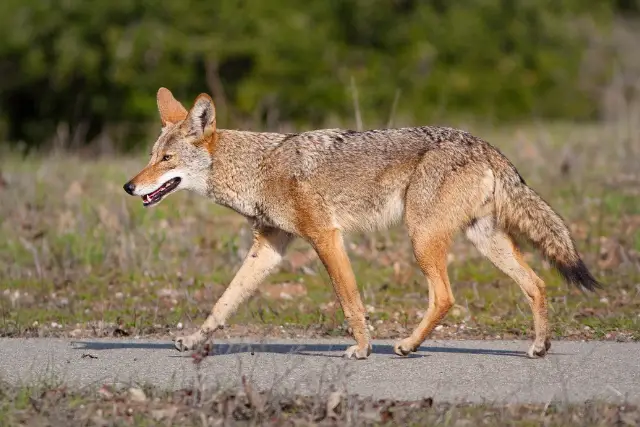
Coyotes and dogs are both canines, but a few features set coyotes apart.
Coyotes have a slim build, pointed ears and a narrow muzzle. Their coats are usually tan to buff or grayish, often with some orange on the ears and tail.
Size is fairly consistent. The National Park Service says Yellowstone's coyotes weigh about 25 to 35 pounds and stand 16 to 20 inches tall at the shoulder.
Dogs vary far more, from a tiny Chihuahua to a towering Great Dane.
Tail carriage is one of the easiest clues. According to the National Park Service, coyotes travel with their bushy, black-tipped tail pointed down, while dogs carry their tails out or curled up over the back. Coyotes also tend to travel in a straight path, while dogs often wander.
Why the differences? A coyote's look and build are shaped by life in the wild. Dogs' looks have been shaped by people through selective breeding.
Genetic Background: Coyote Vs Dog
Coyotes and dogs share a common ancestry but are separate species.
Both belong to the dog family, Canidae, and the genus Canis, along with wolves. The coyote is Canis latrans. The domestic dog descends from wolves and was shaped by thousands of years of living alongside people.
Because they're so closely related, coyotes and dogs can occasionally interbreed, producing "coydogs." This is uncommon in the wild.
Behavioral Differences Of Coyote Vs Dog

Coyotes and dogs behave very differently, thanks to evolution and domestication.
Coyotes are wild animals native to North and Central America. They often live as mated pairs or small family groups.
They communicate with a range of howls, yips and barks, for example to keep in touch with family members and to mark their territory.
Coyotes are opportunistic eaters. In Yellowstone, the National Park Service says they mainly eat voles, mice, rabbits, other small animals and carrion. They also eat insects, fruit and, in towns, garbage and pet food.
Pet dogs, by contrast, mostly eat the food we give them.
Dogs' behavior has been shaped by human contact and selective breeding. Some breeds keep strong hunting instincts, while others were bred for herding, guarding or companionship.
Domestication has made dogs more social with people and easier to train. Dogs read human cues, such as pointing and tone of voice, much better than wild canines do.
Coyote Vs Dog Comparison On Habitat And Range
Coyotes are highly adaptable. They live throughout North and Central America in deserts, forests, prairies, farmland, suburbs and even big cities.
Dogs, on the other hand, live wherever people do. Different breeds were developed in different parts of the world for local conditions. For example, the Siberian Husky, a sled dog, has a thick coat and great endurance suited to cold climates.
Pet dogs depend on us for food and shelter, while coyotes must find their own.
Even so, a dog chasing a squirrel is a reminder that our pets share a wild heritage with their coyote cousins.
Interactions With Other Animals
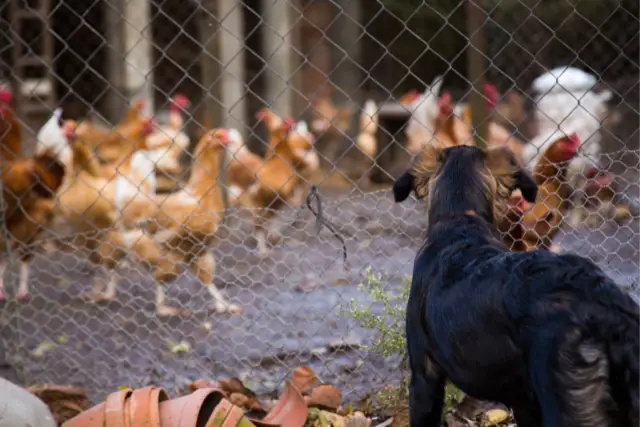
How do coyotes and dogs differ in how they deal with other animals?
Coyotes are predators of small animals, and in some areas they're also prey for larger predators such as wolves. They compete with foxes and other carnivores for food and territory.
Coyotes can also prey on small pets and young livestock such as lambs, calves and poultry. Dogs, by contrast, can be trained to live with livestock and even guard it.
Dog Vs Coyote: How Humans Shape Their Tale
As towns spread into coyote habitat, encounters between coyotes, pets and people become more common. Coyotes can also prey on livestock.
The National Park Service recommends these steps to reduce problems:
- Keep dogs on a leash.
- Go outside with small pets, especially in winter when coyotes have a harder time finding rodents.
- Keep cats indoors.
- Remove food sources from your yard, such as pet food, garbage, birdseed and open compost.
- Never approach or feed coyotes.
Final Thoughts
Coyotes and dogs are close relatives with very different lives. Coyotes are wild, adaptable hunters, while dogs are domestic companions shaped by people.
Knowing how to tell them apart, and how to keep pets safe, helps people, pets and coyotes live side by side.
Frequently Asked Questions
Would a dog win against a coyote?
It depends on the dog's size, the number of coyotes and the situation. Fights can seriously injure both animals, so it's best to prevent encounters in the first place.
Would coyotes attack a dog?
Yes, sometimes. Coyotes may attack a dog they see as a threat or competitor, especially near a den with pups, or a small dog they see as prey.
Is a coyote afraid of a dog?
Coyotes often avoid dogs, but reactions vary with the dog's size and behavior and the coyote's past experiences. Don't count on your dog to scare coyotes off.
What dog fought off 11 coyotes?
A Great Pyrenees named Casper fought off a pack of 11 coyotes attacking his sheep in Decatur, Georgia, in 2022, killing eight of them. He was badly injured but recovered.
Sources
- Coexisting with Coyotes, Cuyahoga Valley National Park, National Park Service
- Coyote, Yellowstone National Park, National Park Service


