
4 Different Reasons Why Bats Fly at Night (With Other Bat Facts)
Contents
- Reasons Why Bats Fly At Night
- 1. There Is More Food During Night
- 2. Much Safer
- 3. More Advantage
- 4. Foods Are Much Tastier
- How Long Do Bats Stay Out At Night?
- What Time Do Bats Go To Sleep?
- How Long Do Bats Sleep?
- Are All Bats Nocturnal?
- Why Do Bats Love To Live In Dark Places Like Caves?
- What Are The Habitat Of Bats?
- 1. Deserts
- 2. Woodlands
- 3. Cities
- Why Do Bats Make Noise?
- Final Words
- Sources
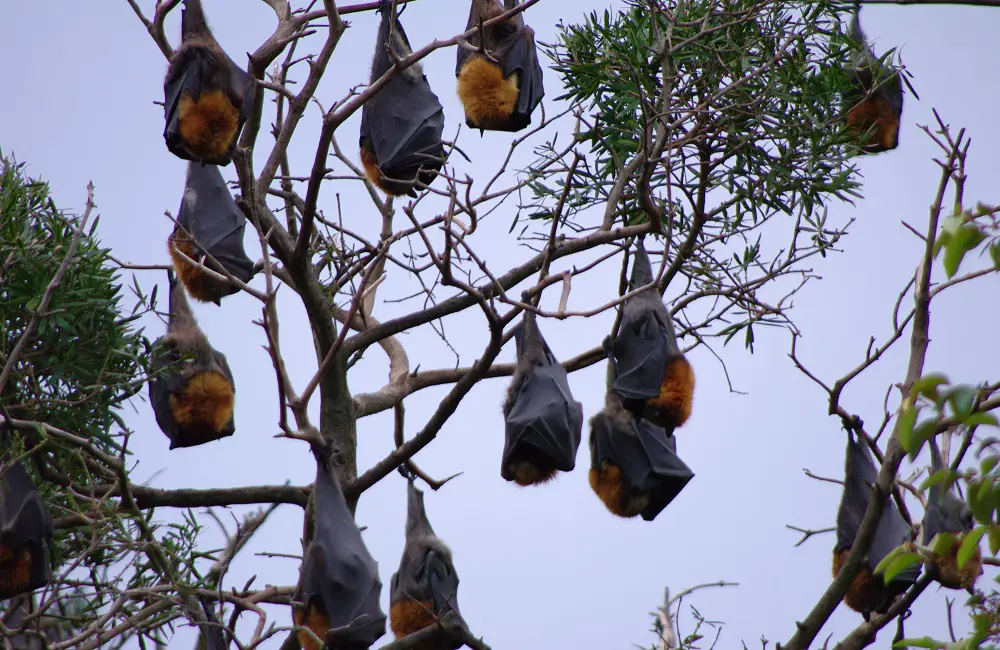
Bats are the only mammals that can truly fly. They have furry bodies and thin, leathery wings made of skin stretched over long finger bones. Bats roost in caves, trees, buildings and other sheltered places.
You have probably noticed that bats come out around dusk, and you rarely see them during the day. Why do bats fly at night?
Why do bats fly at night? Most bats are nocturnal because night is when many of the insects they eat are active, there is less competition from birds, and there are fewer daytime predators like hawks. Echolocation lets them find food and avoid obstacles in the dark.
Let's look at each reason, along with other bat facts.
Reasons Why Bats Fly At Night
Below are the main reasons most bats fly at night.
1. There Is More Food During Night
Many of the insects bats eat, like moths, beetles and mosquitoes, are active at night.
Most insect-eating birds hunt during the day. At night, bats have the air, and the insects, mostly to themselves.
2. Much Safer
Flying in daylight would expose bats to predators that hunt by sight, like hawks and falcons.
Night isn't completely safe. Owls hunt at night, and snakes, raccoons and house cats also catch bats. But darkness gives bats better cover.
Bats in cities and suburbs also benefit from flying when fewer people are around.
Some scientists think that competition with birds and the risk from daytime predators pushed bats to become nocturnal over millions of years.
3. More Advantage
Many people think bats are blind, but that's a myth. Bats are not blind. They have small eyes that work well in dim light, though their vision is less sharp than ours.
Most bats that eat insects rely on echolocation. They make high-pitched calls and listen to the echoes to find prey and avoid obstacles in total darkness.
That gives bats a big advantage at night, when insects can't easily see them coming.
4. Foods Are Much Tastier
This reason ties back to the first one. Moths are a favorite food for many bats, and most moths fly at night.
Fruit bats and nectar bats also feed at night. Many night-blooming flowers are pollinated by bats.
How Long Do Bats Stay Out At Night?
Bats are not the villains Hollywood makes them out to be. They control insect populations, and some bats pollinate flowers and spread seeds for plants like bananas, figs, agave and cacao.
Most bat species are nocturnal. They leave their roosts at night to feed, drink, mate and socialize.
How long do bats stay out at night? It depends on the species, the season and how much food is around. Many insect-eating bats feed for a few hours after dusk, rest, and then feed again before dawn.
When they are done, they return to their roost and hang upside down to sleep.
What Time Do Bats Go To Sleep?
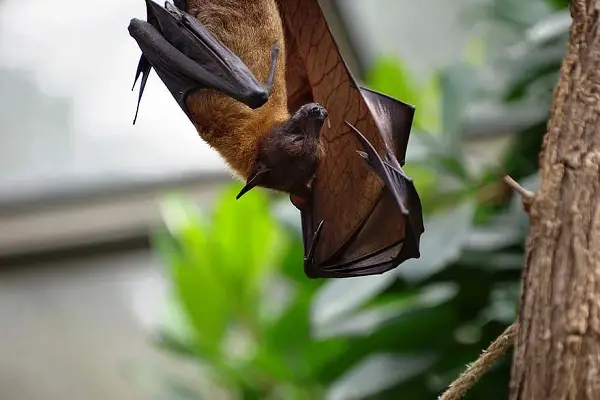
Bats become active around dusk. Some species leave their roosts while it is still light, while others wait until it is fully dark.
If you live in a city or near water, you may see bats swooping around streetlights and ponds in the evening. They are usually hunting insects attracted to the light or water.
Many bats feed in two bursts, one after dusk and one before dawn, with rest in between.
What time do bats go to sleep? Most bats return to their roosts before sunrise. They spend the day hanging upside down in caves, trees, buildings or other sheltered spots, where they sleep, groom and socialize.
How Long Do Bats Sleep?
Bats are nocturnal, so they are active at night and sleep during the day. They become active again as the sun goes down.
How long do bats sleep? Bats sleep through most of the day. Some species, like the little brown bat, sleep up to about 20 hours a day. This saves energy for flying, hunting and echolocating at night.
Are All Bats Nocturnal?
Almost all bats are nocturnal, but there are exceptions. Bats sometimes fly in daylight, and a few populations regularly hunt during the day.
On Tioman Island in Malaysia, researchers have observed bats hunting during the day. The species identified was Blyth's horseshoe bat.
Blyth's horseshoe bats live in parts of South and Southeast Asia, from India to the Malay Peninsula, mostly in forested areas.
On Tioman Island, these bats were seen hunting insects in broad daylight. That is unusual, since nearly all other bats feed at night.
There are more than 1,400 bat species around the world. Depending on the species, bats eat insects, fruit, nectar, pollen, fish, frogs or even blood.
Scientists think competition with birds and the danger from daytime predators helped push bats toward a nocturnal lifestyle. Islands with fewer predatory birds may allow exceptions like the Tioman bats.
Why Do Bats Love To Live In Dark Places Like Caves?
Bats live in groups called colonies, and many leave their roost together at dusk. Caves are popular roosts because they are dark, sheltered and have stable temperatures.
When thousands of bats fly in and out of a cave, the air is full of their calls. Bats that fly familiar routes often rely on memory instead of paying close attention to their echolocation.
Bat expert Donald R. Griffin called this the "Andrea Doria effect," after a ship that crashed into another despite having radar. Bats relying on memory sometimes crash into new obstacles placed along their usual flight paths.
Don't enter caves with roosting bats. Disturbing bats can harm them, especially during hibernation, and bats can carry rabies.
Bats use echolocation to avoid obstacles and to catch prey. Many can find and grab flying insects in complete darkness.
Echolocation works by making calls, often too high-pitched for people to hear, and listening to the echoes that bounce back. Some bats also listen for the tiny sounds prey make, like the rustle of an insect's wings.
Bats roost in dark places like caves because they are sheltered from weather and hidden from predators. Caves also keep a steady temperature, which helps bats save energy.
Not all bats roost in caves. Many roost in trees, under bark, in rock crevices, under bridges and in buildings. Most fruit bats rely more on their good eyesight and sense of smell than on echolocation.
What Are The Habitat Of Bats?
Bats live almost everywhere on Earth except the polar regions and some remote islands. Many prefer warm places, and in cold seasons some hibernate while others migrate.
What are the habitats of bats? Bats live in deserts, forests and woodlands, grasslands, wetlands, caves, suburbs and cities.
1. Deserts
Bats can survive in deserts, and many species live in the deserts of the southwestern United States.
Desert bats include the big free-tailed bat, the Brazilian free-tailed bat and the California myotis.
But how do these bats survive in the desert?
Desert bats have adaptations to save water. For example, research suggests their skin contains fats that help reduce water loss, and they roost in cool, sheltered spots during the day.
2. Woodlands
Woodlands are areas covered with trees. Many bats live in woodlands because trees provide roosts in hollows, cracks and under loose bark.
Woodland bats include Bechstein's bat, the long-legged myotis and the serotine bat. Noctules also use tree holes as roosts.
Woodlands also have lots of insects, which makes them good feeding areas.
3. Cities
Many bats live in cities and towns, roosting in attics, walls and under bridges. Loss of natural roosts has pushed some species to use buildings.
If a bat is living in your home, call a wildlife professional to remove it safely. Don't try to catch a bat with your bare hands.
Bats are helpful to humans. They eat huge numbers of insects, including crop pests and mosquitoes.
Bats are also important pollinators and seed dispersers for many plants that people use. Because bats are sensitive to environmental change, scientists also use them as indicators of ecosystem health.
Why Do Bats Make Noise?
If you live in a city, you may have heard bats squeaking at night. Why do bats make noise?
Many bat calls are ultrasonic, meaning they are too high for human ears. Bats use these for echolocation. But bats also make sounds people can hear, like chirps and squeaks.
Why do bats make noise? Bats use sounds to communicate with each other, not just to navigate. Researchers have found that bats make different calls when they argue over food, roosting spots and mating.
In one study, researcher Yossi Yovel and his team recorded audio and video of a group of Egyptian fruit bats around the clock for about two and a half months. They analyzed roughly 15,000 bat calls.
The team found that much of the chatter in the roost was arguing. Yovel said:
"Nearly all of the communication calls of the Egyptian fruit bat in the roost are emitted during aggressive pairwise interactions, involving squabbling over food or perching locations and protesting against mating attempts,"
"What they're saying is stuff like: Why did you wake me up? Get out of my way," Yovel says. "In the case of mating, it's usually the female protesting against a male who is trying to mate with her."
Final Words
Bats can spread diseases, including rabies. In the United States, contact with infected bats is the leading cause of human rabies deaths.
Never touch a bat with bare hands. If a bat bites or scratches you, wash the area with soap and water and seek medical care right away. Rabies treatment works if it starts before symptoms appear.
Bats are also very valuable to nature, and many species are declining. Enjoy them from a distance and help protect them.
Sources
- Are bats blind?, U.S. Geological Survey
- About Rabies, Centers for Disease Control and Prevention


