
3 Animal Groups That Have No Tongues (Animal With Longest Tongue Revealed!)

Contents
For humans and many other animals, the tongue does a lot of work at mealtime. We use it to taste, move food around and swallow.
Our tongues are covered in taste buds. Taste buds are sensory organs that detect tastes such as sweet, salty, sour, bitter and savory, which helps animals tell good food from bad.
But many animals get by without a tongue at all.
What animals have no tongues? Sea stars and other echinoderms, insects and crustaceans don't have a true tongue like ours. They still find, taste and eat food in other ways.
Let's look at how these animals manage without one.
What Is The Importance Of Tongues For Some Animals?
For humans, the tongue is essential for talking, tasting, chewing and swallowing.
Animals with tongues, including mammals, birds, reptiles, amphibians and fish, use them to catch food, move it around the mouth and swallow. Many also use their tongues to taste, groom or sense their surroundings.
For these animals, losing the tongue's use can make eating very hard.
Animals without tongues have other body parts that do the same jobs.
These Are The Animals That Have No Tongues
Below are three groups of animals that have no tongues and still eat just fine:
1. Echinoderms
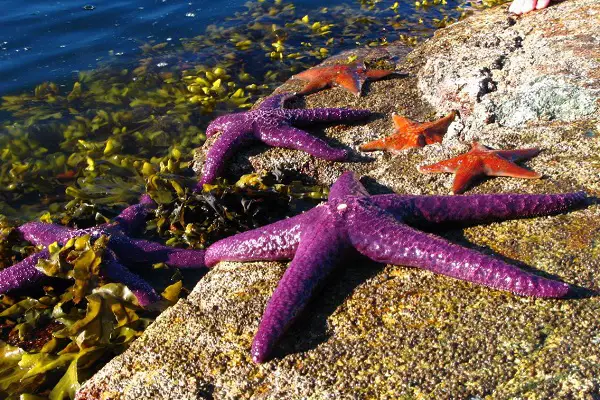
Echinoderms are members of the phylum Echinodermata. All of them live in the ocean.
Echinoderms live from the shoreline to the deepest parts of the sea floor.
Many echinoderms can regenerate lost body parts, such as arms, and some can reproduce by splitting. They have no brain and no heart.
Animals that belong to the echinoderms are:
- Sea stars
- Sea Urchins
- Sea Cucumbers
- Crinoids
- Brittle stars
- Blastoids (extinct)
- Cystoids (extinct)
- Eocrinoids (extinct)
Echinoderms eat many different foods. Many sea stars are predators that eat snails, clams, mussels, crustaceans and worms. Sea urchins mostly graze on algae, and sea cucumbers feed on bits of food in sand and mud.
Sea stars have no tongue, so how do they eat? Some swallow small prey whole. Others push their stomach out of their mouth, wrap it around prey like a mussel, and digest it outside their body.
2. Crustaceans
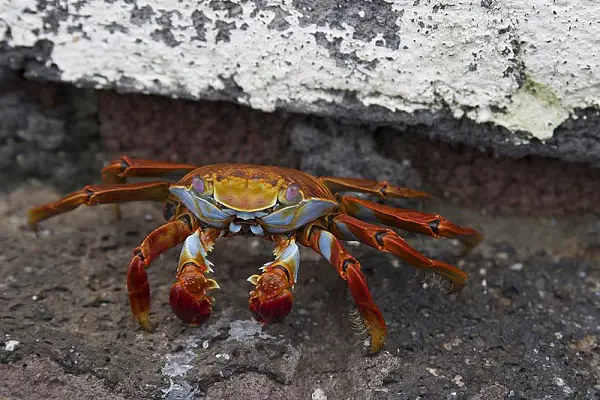
Crustaceans are arthropods, like insects and spiders. The group includes crabs, lobsters, shrimp, krill, barnacles and woodlice.
Scientists have described tens of thousands of crustacean species.
Major groups of crustaceans include:
- Branchiopoda
- Remipedia
- Cephalocarida
- Maxillopoda
- Ostracoda
- Malacostraca
Most crustaceans live in the ocean. Some live in fresh water, and a few, like woodlice and land crabs, live on land. Barnacles attach themselves to rocks, docks and ship hulls.
Crustaceans eat many kinds of food. Many are scavengers that eat dead plants and animals. Some, like crabs, shrimp and prawns, often feed at night and hide in crevices during the day.
Crabs and lobsters can also be active predators that catch and crush live prey with their claws.
Instead of a tongue, crustaceans handle food with several pairs of mouthparts. They also have chemical sensors on their antennae and legs that work like taste.
3. Insects
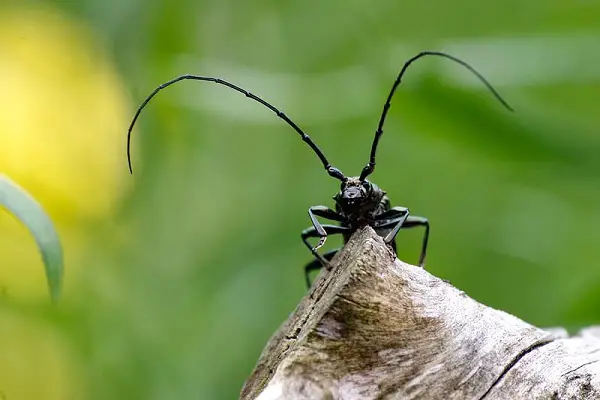
Insects are six-legged arthropods. They are the largest group of animals on Earth, with about a million described species and many more not yet named.
Insects live almost everywhere: in homes, forests, deserts and fresh water. Very few live in the ocean.
Some insects are pests, but many are essential. They pollinate crops, break down dead plants and animals, and recycle waste.
Most insects reproduce sexually. Females lay eggs that are fertilized by males' sperm.
Some insects can also reproduce without mating, a process called parthenogenesis. Aphids, for example, can give birth to many young without a male.
Insects that reproduce this way can multiply very fast. In honeybees and many ants and wasps, unfertilized eggs develop into males.
Insects don't have a true tongue. Instead, they have mouthparts built for their diet: jaws for chewing leaves or wood, straw-like mouthparts for sipping nectar, or piercing ones for sucking blood or plant sap. Some, like honeybees, have a tongue-like mouthpart for lapping nectar.
Many insects taste with more than their mouths. Butterflies and flies have taste receptors on their feet, so they can taste food just by landing on it. Insects also taste with their antennae and mouthparts.
Animals That Use Their Tongues To Get Food
Now let's look at animals that use their tongues to get food.
Animals that use their tongues to get food include:
- Mammals
- Reptiles
- Amphibians
- Birds
1. Mammals
Mammals are vertebrates that breathe air with lungs, even those that live in water, like dolphins and whales. All mammals have tongues.
What do mammals eat? Mammals can be grouped into herbivores, carnivores and omnivores.
Herbivores eat grass, leaves, roots and fruit (example: elephant). Carnivores eat meat, either from prey they hunt or from carcasses (example: lion). Omnivores eat both plants and animals (example: human).
Mammals use their tongues to taste food, move it into position for chewing and push it back for swallowing. Some, like anteaters and giraffes, also use their tongues to grab food.
2. Reptiles
Reptiles are vertebrates in the class Reptilia, under the phylum Chordata. The group includes lizards, snakes, turtles and crocodilians.
What do reptiles eat? Many reptiles eat insects, birds, fish, mammals or other reptiles. Some, like tortoises and green iguanas, are mostly plant eaters.
How often a reptile eats depends on its species, size, age and activity. Many large snakes can go weeks between meals.
Reptiles use their tongues in different ways. Chameleons shoot out long, sticky tongues to catch insects. Snakes and many lizards flick their forked tongues to pick up scents, which they "smell" with an organ in the roof of the mouth.
3. Amphibians
Amphibians are vertebrates in the class Amphibia. They include frogs, toads, salamanders and caecilians, and they live in fresh water, on land and even in trees.
What do amphibians eat? Adult amphibians are mostly carnivores. They eat insects, slugs, worms and sometimes small mammals.
Frogs are a good example of tongue-users. Most frogs catch insects with their tongues.
A frog's tongue is attached at the front of its mouth. That lets the frog flip it out quickly to catch prey.
The sticky tongue grabs the insect, and the frog pulls it back into its mouth. When not in use, the tongue lies folded back on the floor of the mouth.
4. Birds
Birds are warm-blooded vertebrates in the class Aves. Almost all birds have wings, but some, like ostriches and emus, can't fly.
Birds eat seeds, fruit, insects, worms, nectar, fish and meat. Birds of prey like eagles eat other animals. Birds use their tongues to handle food and swallow.
Bird tongues are usually less fleshy and muscular than mammal tongues, and they come in many shapes.
Hummingbirds have long, forked tongues that lap up nectar. Woodpeckers have very long tongues that can reach deep into holes to grab insects.
Do Fishes Have Tongues?
Fish are cold-blooded vertebrates that live in salt water and fresh water. Most breathe with gills.
Fish eat many different foods: insects, plants, algae, plankton and other fish. Large predators like many sharks mostly eat other fish and marine animals.
Fish have a "tongue," but it is not like a mammal's. It is a bony or cartilage ridge on the floor of the mouth.
In some fish, this tongue has teeth on it that help them grip slippery prey.
Fish tongues have little or no muscle, so most fish can't move their tongues or stick them out like we can. Many fish have taste buds on their lips, in their mouths and even on their skin.
What Animal Has The Longest Tongue?
Do you know what animal has one of the longest tongues?
The giant anteater has one of the longest tongues of any land mammal. Its tongue is about 2 feet long.
Giant anteaters live in Central and South America. They have disappeared from some countries in their range.
They live in tropical and dry forests, savannas and open grasslands. They stay where ants and termites are plentiful.
Anteaters have no teeth, so how do they eat? They rip open ant and termite nests with their claws and flick their long, sticky tongues in and out very fast. They eat about 140 insects from a mound before moving on, so they don't destroy the colony.
All anteater species have long tongues, but the giant anteater's is the longest. Its whole body, from the tip of its snout to the end of its tail, is 6 to 8 feet long.
Final Words
Every animal needs food to survive. Eating gives animals the energy and nutrients they need to stay healthy.
Some animals have no tongues, but they still find, taste and eat food in other ways. Tongue or no tongue, every animal has its own way of getting a meal.
Sources
- Giant Anteater, Smithsonian's National Zoo and Conservation Biology Institute


