How to Stop Dog Pooping at Night (3 Methods That Help)
Contents
- Tips on How To Stop Your Dog From Pooping at Night
- 1. Establish a Routine
- 2. Proper Training and Regular Workouts
- 3. Use a Crate to Control Night Pooping.
- How To Stop Your Dog From Pooping at Night
- Medical Reasons
- Behavioral Reasons
- Other Methods for Stopping Your Dog From Pooping at Night
- Conclusion
- Frequently Asked Questions
- What are the best techniques for preventing nighttime pooping?
- Can change in its diet control night pooping?
- Can crate training work for senior dogs?
- Sources
Has your well-trained adult dog started pooping at night? Well, this isn’t uncommon as dogs can seem well trained during the day and then leave you a present at night.
The good news is that most cases have a cause you can find and fix.
Tips on How To Stop Your Dog From Pooping at Night
If your dog is constantly pooping at night, there are several strategies you can try to address this issue. Keep in mind that sudden changes in behavior might be indicative of a health problem. So, it’s a good idea to consult a veterinarian if the behavior persists.
Here are some general tips to help stop your dog from pooping at night:
1. Establish a Routine
Create a consistent daily routine for feeding, playtime, and bathroom breaks. Dogs often feel more secure and are less likely to have accidents when they have a predictable schedule. Here are steps pet owners can take to create a routine that encourages appropriate bathroom habits:
Regular Feeding Schedule: Feed your dog at the same times each day. This helps regulate their digestive system and makes it easier to predict when they might need to go to the bathroom.
Scheduled Potty Break: Take your dog outside for bathroom breaks on a regular schedule, including just before bedtime. Ensure that they have an opportunity to empty their bladder and bowels before settling in for the night.
Morning Exercise: Provide your dog with sufficient exercise in the morning. Physical activity helps regulate their digestive system and promotes a more consistent bathroom schedule.
Evening Exercise: A short evening walk or play session can encourage your dog to eliminate waste before the night.
Designated Bathroom Area: Take your dog to the same designated bathroom area each time. The scent will encourage them to go, and they’ll associate that spot with a potty break.
Positive Reinforcement: Praise and reward your dog when potty training, especially at the appropriate times. Positive reinforcement helps reinforce the behavior you want.
Last Water Before Bed: For a healthy puppy in house training, you can pick up the water bowl a couple of hours before bed, then offer a final trip outside. Don’t limit water for a dog with a medical condition, or in hot weather, unless your vet says to.
2. Proper Training and Regular Workouts
Regular workouts and training are key to addressing nighttime pooping, particularly when they’re young. Proper training, particularly potty training, can help reinforce boundaries and great bathroom habits.
Start by creating a reliable bathroom break schedule. The Indoor Pet Initiative at Ohio State suggests taking adult dogs out about every four hours while awake, and puppies after eating, naps and play.
Regular workouts can promote a healthy digestive system while reducing the likelihood of nighttime accidents.
You can also engage your pet in daily workouts that can improve their health. A tired dog can sleep soundly all night long.
Positive reinforcement and patience are crucial in a successful training session. With time, your pet will be well-adjusted and house-trained. And when it does poop in the house while you potty train it, you shouldn’t scold it; instead, you should clean the waste.
Clean it with an enzyme-based cleaner that removes the odor. Lingering smells can draw your dog back to the same spot.
3. Use a Crate to Control Night Pooping.
A crate can help with night pooping, because most dogs avoid soiling their sleeping area. Crate training has to be a good experience for your pet. Pick a crate big enough to stand up, turn around and lie down in, then add some favorite toys.
Whether it’s a rescue dog or a spirited pup, a right-sized crate can help discourage accidents.
When crate training your pet, you should do the following:
Introduce the crate Gradually: Introduce the crate gradually and make it a positive space. Start by leaving the crate door open during the day. You can also place treats, toys, and comfortable bedding inside to encourage your dog to explore and enter voluntarily.
Associate the Crate with Positive Experiences: Feed your dog meals near the crate and place treats inside, creating positive associations. Gradually move the food and treats closer to the back of the crate over time.
Close the Door for Short Periods: Once your dog is comfortable entering the crate, start closing the door for short periods while you’re present. Gradually increase the duration as your dog becomes more accustomed to being confined.
Associate Crate with Sleep: Encourage your dog to enter the crate before bedtime by using a cue phrase like “bedtime” or “time for sleep.”
Nighttime Routine: Before bedtime, take your dog outside for a final bathroom break. Ensure they have the opportunity to eliminate waste. Then, place your dog in the crate for the night.
Be Consistent: Use the crate every night to establish a routine. Don’t reward attention-seeking whining, but if a puppy or a dog with diarrhea whines in the night, take them out on leash for a quick, boring potty trip. A dog that soils the crate even after short periods may have separation anxiety, so talk to your vet.
Morning Bathroom Break: As soon as you wake up, take your dog outside for an immediate bathroom break. This reinforces the idea that the crate is for sleeping, and they get to relieve themselves as soon as they are out.
How To Stop Your Dog From Pooping at Night
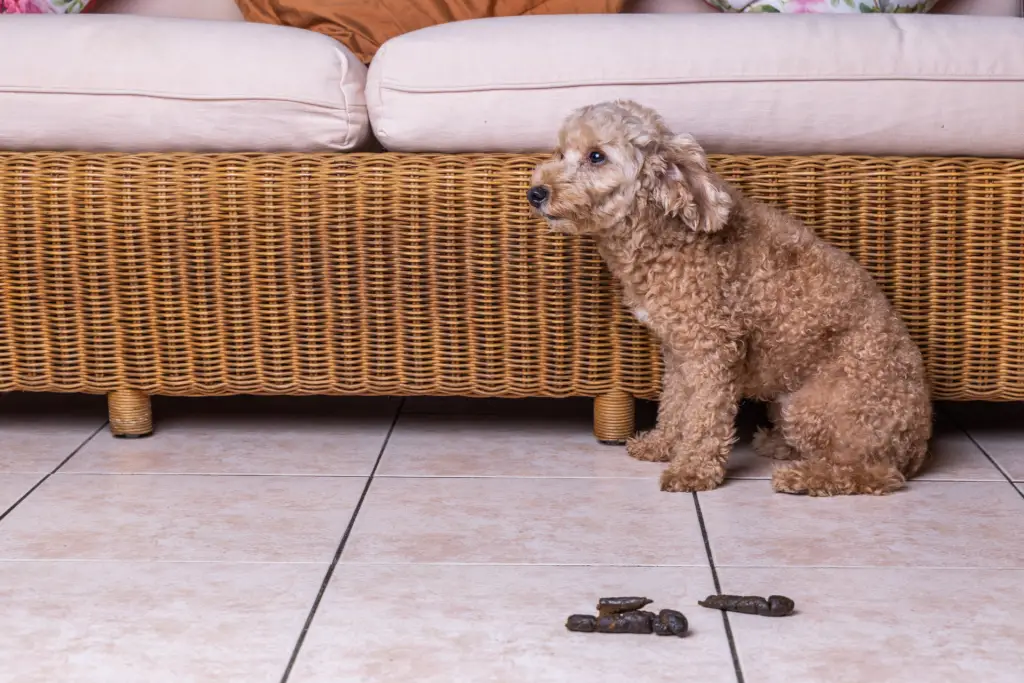
Let’s find out the cause of the problem.
Before you try any solution, you should first find out the cause of nighttime pooping. After all, there is no one-fits-all solution for dogs that poop at night.
There are several reasons why a dog poops at night, and addressing the issue involves understanding the underlying cause. So we have divided the causes of nighttime pooping into 2 categories (medical and behavioral reasons).
Medical Reasons
Several medical reasons can lead to changes in a dog’s bowel habits, including pooping at night. If your dog is exhibiting this behavior, it’s crucial to consult with a veterinarian to rule out any underlying health issues. Some of the medical reasons that may contribute to dogs pooping at night include the following:
Joint Issues
Your trained dog may be reluctant to go outside or posture to poop because of joint pain. Large breeds and senior dogs are most often affected.
Large breeds like Akitas and German Shepherds are prone to hip dysplasia, and arthritis is common in older dogs.
Pain can make it hard to get up, use stairs or hold a squat, so ask your vet about pain control.
Food Intolerance or Diarrhea
Food allergies or sensitivities can cause stomach upset, diarrhea and changes in bowel habits. See your vet if diarrhea lasts more than a day or two, or right away if there is blood, vomiting or lethargy.
Your dog’s diet may need to be adjusted to address these issues.
Other medical reasons that cause diarrhea include:
Gastrointestinal disorders: Various Disorders such as inflammatory bowel disease (IBD), colitis, or other gastrointestinal problems can cause changes in bowel habits.
Parasites: Internal parasites, such as roundworms, hookworms and whipworms, can cause digestive upset and more frequent bowel movements. Your vet can check a stool sample.
Other Medical Reasons
Pancreatitis: Inflammation of the pancreas, known as pancreatitis, can cause digestive issues, including diarrhea. This condition may cause discomfort and increased bowel movements.
Inflammatory Conditions: Conditions such as colitis or other inflammatory conditions of the intestines can result in increased frequency of bowel movements.
Endocrine Disorders: Hormonal imbalances, like those associated with disorders like Cushing’s disease or hypothyroidism, can affect a dog’s metabolism and digestive system.
As the Merck Veterinary Manual notes, dogs with medical conditions can defecate in the wrong places, and a vet can rule these out. Training won’t fix a medical cause, but treating the condition often will.
Behavioral Reasons
Anxiety or Stress
Dogs can experience anxiety or stress, and this can manifest in various behaviors, including changes in bathroom habits. Changes in the household, new surroundings, or separation anxiety could contribute to nighttime pooping.
Signs that point to separation anxiety include accidents only when you are away or out of reach, plus pacing, howling or chewing. The ASPCA’s separation anxiety guide covers treatment.
Not Fully Trained
Without proper training, your dog can start pooping at night and behave during the day. Your presence during the day can force them to poop outside, but in your absence, they revert to their instincts.
You can fix this by going back to house training basics. Adult dogs can learn too; it just takes consistency.
Little-To-No Breaks During the Day.
If you don’t give your pet time to poop/pee during the day, then it can do that at night. It would help if you gave your pet ample time to relieve itself during the day to avoid accidents at night.
New Home or Routine
A newly adopted dog may not yet know where you want it to go or how to signal that it needs out. This often improves as the dog settles in and learns your routine.
Other Methods for Stopping Your Dog From Pooping at Night
Monitor Diet: Pay attention to your dog’s diet and feeding schedule. Feeding your dog earlier in the evening may give them ample time for digestion before bedtime.
Create a Comfortable Sleeping Space: Make your dog’s sleeping area comfortable and secure. Some dogs may be anxious or uncomfortable in their sleeping space, leading to nighttime accidents.
Increase Exercise: Ensure your dog gets enough exercise during the day. Physical activity can help regulate their digestive system and promote a more consistent bathroom schedule.
Consult a Veterinarian: If the behavior persists despite your efforts, consult with a veterinarian to rule out any underlying health issues. Some medical conditions can cause changes in bathroom habits.
Conclusion
Stopping nighttime pooping requires consistency, understanding, and patience. Instead of scolding your pet for doing it, you should first find the cause of the problem. And then pick a perfect solution for the problem.
If it’s medical, your vet can treat it. If it’s behavioral, go back to a consistent routine and house training.
Frequently Asked Questions
What are the best techniques for preventing nighttime pooping?
Use crate training, avoid late meals, take your dog out right before bed, and keep a reliable bathroom schedule.
Can change in its diet control night pooping?
It can. Feeding at set times, earlier in the evening, often helps. If you suspect a food intolerance, ask your vet before switching to a new diet.
Can crate training work for senior dogs?
Yes, crate training can work for senior dogs and gives them a safe place to sleep. Pick the right crate size, and have your vet check any older dog that suddenly starts having accidents.
Sources
- Housetraining, Indoor Pet Initiative, The Ohio State University
- Behavior Problems in Dogs, Merck Veterinary Manual
- Separation Anxiety, ASPCA