Why Does My Dog Only Eat From My Hand? Answered!
Contents
- 7 Reasons Why Your Dog Wants To Eat From Your Hand
- Your Dog Is Anxious And Scared
- Your Dog Is Busy Guarding You
- Your Dog Wants To Interact With You
- Your Dog Is Bored
- Your Dog Has Full Stomach
- Your Dog Is Sick
- Your Dog Became Used To It
- 6 Effective Ways To Make Your Dog Eat On Its Own
- Change The Location
- Change The Eating Time
- Put Another Delicious Food
- Form A Meal Time
- Train Them Again
- Go To Your Vet
- Related Questions
- How Long Can Dogs Not Eat?
- What Time Should I Feed My Dog?
- Can I Feed My Dog After They Vomit?
- Final Thoughts
- Sources
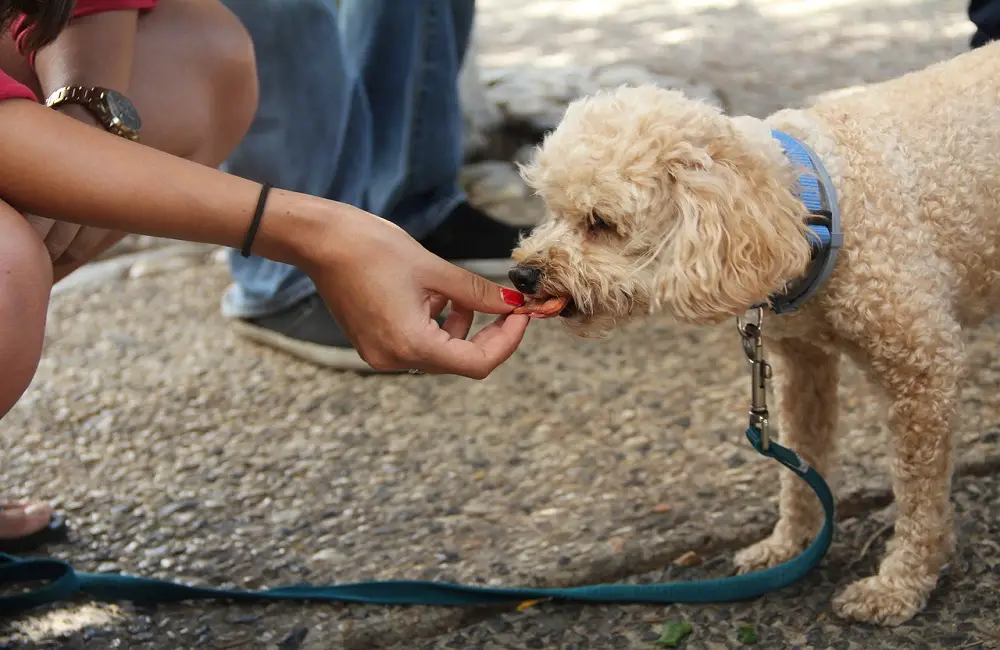
Does your dog only eat from your hand and ignore its bowl? It can feel like your hands have become its food bowl.
If this sounds familiar, here are the most likely reasons and what you can do about it.
Why does my dog only eat from my hand? Common reasons include anxiety at the bowl (from other pets, noise or being left alone), wanting your attention, too many treats, and simple habit. A dog that suddenly stops eating from its bowl can also be sick or in pain, so check with your vet.
Below, we'll go through the different reasons your dog may only eat from your hand, and then the steps that can help it eat on its own again.
First, let us look at why dogs want to eat from your hands.
7 Reasons Why Your Dog Wants To Eat From Your Hand
Below are seven reasons why your dog wants to eat from your hands. After that, we will show you ways to change this habit.
Your Dog Is Anxious And Scared
If you have two or more dogs, one may guard the food or crowd the others at mealtime. A shy dog may then eat less or avoid its bowl.
If you start hand-feeding the shy dog, it may learn to wait for your hand instead of eating with the other dogs. It may come to see your hand as the safe place to eat.
Your scared dog may prefer your hand because it feels protected when you are close by.
Some dogs are also scared of the place where they eat. Loud appliances like washing machines or dishwashers near the bowl can make a dog nervous. Most dogs eat better in a quiet spot.
Many owners feed their dogs right before leaving for work or school. Some dogs start linking mealtime with being left alone and won't eat until their owner is home. Dogs with separation anxiety may prefer to be hand-fed.
Your Dog Is Busy Guarding You
Some dogs are very alert to what's happening outside, such as birds, other dogs or people walking by. A dog that is busy watching the window may ignore its food.
If you hand-feed a distracted dog, it may learn to wait for you to bring the food to it. Once it is calm, it will usually go back to its bowl.
Feeding in a quiet room away from windows can help.
Your Dog Wants To Interact With You
Many dogs spend long hours alone while their owners are at work or school. When you come home, they want your attention, and hand-feeding gives them that.
Dogs that are shy or anxious are especially likely to prefer eating with you right there.
The best way to change this is to give your dog attention in other ways. Spend time playing, training and walking together so mealtime isn't the only time your dog gets your focus.
Your Dog Is Bored
Some dogs are picky eaters. A dog may eat more eagerly from your hand simply because hand-feeding makes the food more interesting.
Don't switch foods or brands every day. Sudden diet changes can upset a dog's stomach and can make picky eating worse. If you want to change foods, mix the new food in gradually over about a week, or follow your vet's advice.
Food puzzles, snuffle mats and short training sessions can make mealtime more interesting without changing the food.
Your Dog Has Full Stomach
Your dog may not be hungry at mealtime because it has eaten too many treats or table scraps during the day.
A dog that is already full may only eat when you make a game of it by hand-feeding. Cutting back on extras usually helps.
Your Dog Is Sick
A dog that suddenly stops eating from its bowl may be sick or in pain. Dental disease, stomach upset, fever, parasites and many other illnesses can reduce appetite.
Dental pain is common in older dogs and can make chewing kibble hard. If your dog has a sore mouth, it may only take soft pieces from your hand. Have your vet check its mouth and teeth.
Your Dog Became Used To It
If you often hand-feed your dog, it may simply get used to it. Your dog learns that waiting gets it hand-fed.
Over time, it may stop eating from its bowl at all. That's why it's best to use hand-feeding as a short-term tool, not a daily routine.
6 Effective Ways To Make Your Dog Eat On Its Own
Here are some ways to help your dog eat from its bowl again. If your dog isn't eating at all, see your vet first.
Below are six ways to help your dog eat on its own instead of from your hands.
Change The Location
The first tip is to move your dog's food bowl. This works well for dogs that are scared, anxious or lack confidence.
Put the bowl in a quiet, safe spot away from loud appliances and away from other pets that might crowd it.
If you have several dogs, give each dog its own bowl and feed them apart. You can feed each dog in its own crate or room so a pushy dog can't scare a shy one away.
Change The Eating Time
If your dog won't eat because it knows you are about to leave, change the feeding time.
Try feeding your dog when you will be home for a while afterward. Your dog can then eat without linking food with being left alone.
Put Another Delicious Food
For picky eaters, a small spoonful of wet food mixed into the regular food can make the meal more appealing.
Keep toppers small so the main diet stays complete and balanced. If you want to add fresh foods like plain cooked chicken, ask your vet how much is appropriate. Avoid foods that are toxic to dogs; the ASPCA's list of people foods to avoid includes onions, garlic, grapes and raisins.
Form A Meal Time
Dogs often eat better with a regular schedule. This helps if hand-feeding and picky eating are getting worse.
Cut back on treats between meals, and don't feed your dog from the table.
Offer the bowl for about 20 to 30 minutes. If your dog doesn't finish, pick it up. Offer fresh food at the next meal. Don't leave wet food out, because it can spoil.
Over time, your dog learns that food comes at mealtimes and that it should eat then. With fewer extras, most healthy dogs come to their bowl hungry.
If your dog skips more than a meal or two, or seems unwell, stop and call your vet.
Train Them Again
If the methods above don't work, go back to basics. Start by hand-feeding with your hand held over the bowl.
Move your hand closer to the bowl until your hand is in the bowl. Then drop the food into the bowl while your hand stays nearby. Slowly pull your hand away over several meals.
Go To Your Vet
The most important tip is to see your vet if your dog's eating changes. A dog that won't eat from its bowl or your hand may have dental pain, an illness or an injury.
If your dog has not eaten for more than a day, or is vomiting, lethargic or losing weight, call your vet right away.
Related Questions
How Long Can Dogs Not Eat?
Don't wait to find out. If an adult dog skips food for more than a day, call your vet. Puppies, small dogs, and dogs with health problems like diabetes need help sooner.
What Time Should I Feed My Dog?
Most adult dogs do well with two meals a day, about 8 to 12 hours apart. Puppies need more frequent meals. Ask your vet what suits your dog's age and health.
Can I Feed My Dog After They Vomit?
Call your vet for advice, especially if your dog vomits more than once, is a puppy, or seems unwell. If your vet says it's okay, offer a small amount of bland food once your dog has kept water down for a few hours.
Final Thoughts
Your dog may only eat from your hand because it feels anxious at the bowl, wants your company, is full of treats, or is simply used to it. A quiet feeding spot, a regular schedule and gradual retraining usually help.
If your dog's appetite changes suddenly, or it won't eat at all, see your vet. Be patient with your dog and never punish it for not eating.
Source: goodnesspetfood.com, fluffyplanet.com
Sources
- People Foods to Avoid Feeding Your Pets, ASPCA Animal Poison Control Center